The first sign you’re near the festival isn’t a sound. It’s a color. Strings of yellow flags snap over shophouse doorways throughout Phuket Town, and vendors selling all-white ritual clothing set up folding tables on street corners days before anything official begins.
What the festival actually is
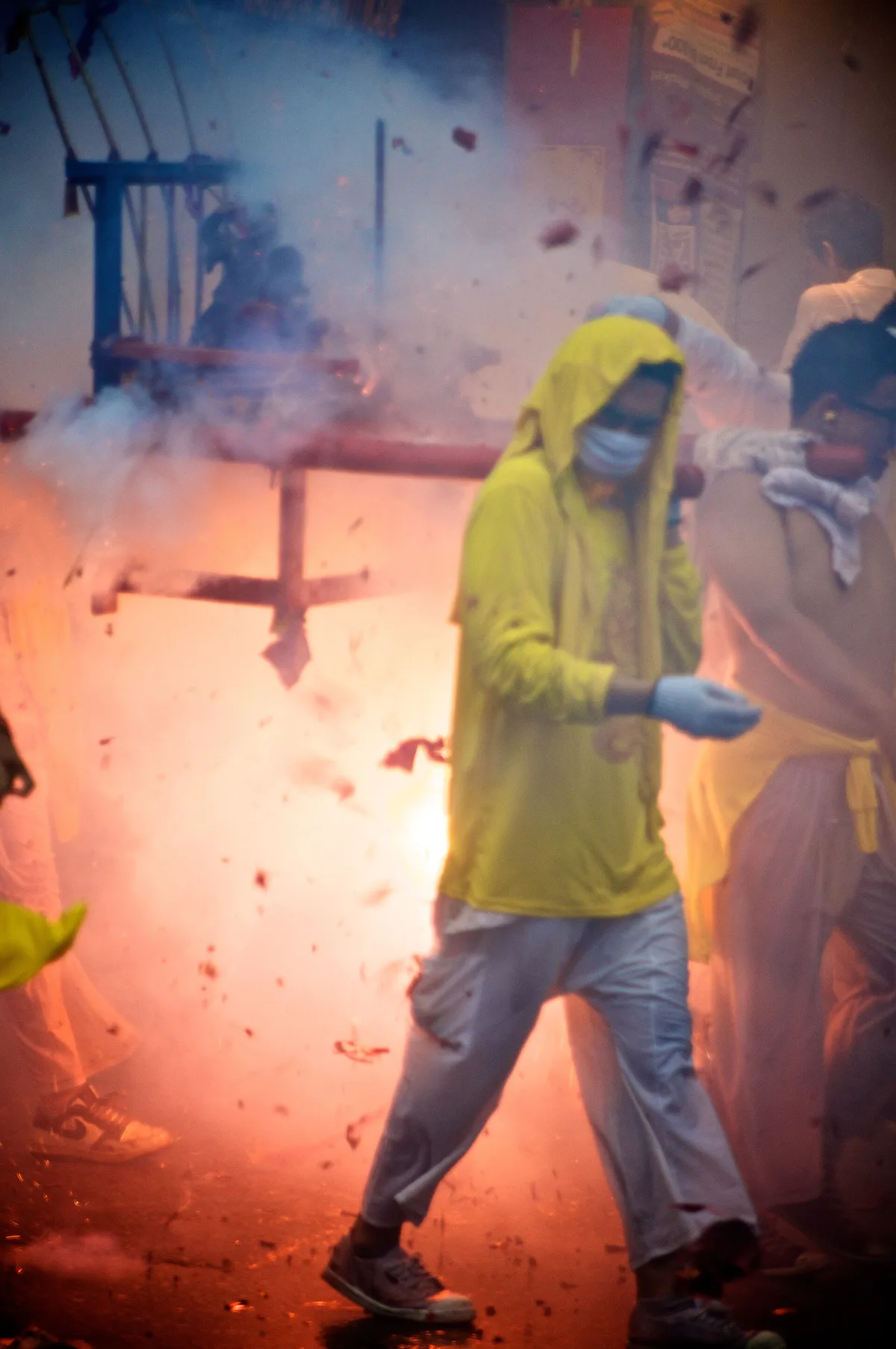
The Phuket Vegetarian Festival, or Nine Emperor Gods Festival, is a nine-day Taoist purification rite brought by Hokkien Chinese immigrants generations ago. Participants abstain from meat, alcohol, and other indulgences to cleanse body and spirit. The visible part, the part that pulls in crowds with cameras, is the street processions, where entranced devotees called ma song pierce their cheeks with skewers, blades, and even branches, believed to channel deities and absorb the community’s misfortune.
Getting there and the venues
Most of the action centers on Phuket Town, not the beach resorts. Key sites include:
- Jui Tui Shrine on Ranong Road, the main shrine, epicenter of the loudest processions
- Bang Niew Shrine, known for particularly intense piercing rituals
- Sui Boon Tong Shrine, smaller, more local in feel
If you’re staying in Patong or Kata, taxis and songthaews run into Phuket Town in 30–45 minutes. Renting a scooter gives more flexibility but expect road closures near shrines during processions. Plan to walk the last stretch.
When to go each day
Processions typically move at different times on different days, often starting mid-morning and running into the evening, with some of the most intense piercing rituals happening in the afternoon. There’s no single fixed daily schedule across the island, each shrine sets its own procession times and route. Confirm timing and tickets on the official site or local tourism board listings before heading out, since routes and hours vary shrine by shrine and can shift day to day.
What to eat (and how to order it)
Even if you skip the processions, the food is worth the trip. Street stalls across Phuket Town switch entirely to vegetarian and vegan menus for the nine days, marked by yellow flags and signs reading “jay”.
- Look for the yellow flag, it signals a jay-certified stall
- Try khanom jeen (rice noodles with curry-style sauces made without meat)
- Mock-meat dishes made from soy, mushroom, and taro are everywhere and genuinely good
- Prices are budget-friendly, often just a bit more than regular street food
How to visit like a local
Locals arrive early and dress modestly, white clothing is traditional for those observing the fast, and even spectators do well in white or light, plain colors out of respect. Avoid black.
Don’t eat meat, drink alcohol, or bring non-jay food near shrine areas during the festival; it’s considered deeply disrespectful given the purification theme.
For the piercing processions, get to your viewing spot at least 30–45 minutes early, locals claim curb space on plastic stools long before the drums and firecrackers signal a procession is approaching. Firecrackers are thrown directly at the ma song as they pass, so keep a few meters of distance and expect smoke, noise, and debris underfoot.
Payment at food stalls and shrines is overwhelmingly cash-based, carry small Thai baht notes, as vendors rarely have change for large bills. Entry to shrines and processions is free; donation boxes are common and appreciated but never mandatory.
Beyond the processions
If the crowds and skewers aren’t for you, the shrines themselves are worth a quieter daytime visit, incense smoke curling through carved wooden beams, drummers rehearsing, families lighting joss sticks. Phuket Old Town’s Sino-Portuguese shophouses on Thalang and Dibuk roads make a good walking detour between shrine visits, especially in the cooler early morning hours before the day’s events start.
Frequently asked questions
When exactly is the Phuket Vegetarian Festival in 2026?
It runs October 10–18, 2026, across Phuket Town and surrounding shrines. Confirm exact daily procession schedules on the official festival or Phuket tourism site, as they vary by shrine.
Do I need tickets?
No. Street processions and shrine visits are free and open to the public — there's no ticketing system for the main events.
Where is the best place to watch the processions?
Jui Tui Shrine on Ranong Road in Phuket Town hosts some of the biggest processions, with Bang Niew Shrine known for especially intense piercing rituals.
What should I wear or avoid?
Wear white or light, modest clothing as a sign of respect — avoid black. Don't bring meat or alcohol near shrines or processions during the nine days.
How do I get from the beach areas to the festival?
From Patong or Kata, taxis and songthaews reach Phuket Town in about 30–45 minutes. Expect road closures near shrines, so plan to walk the final stretch.
Plan your trip to Phuket
Thailand eSIM & staying connected →
Some links above are affiliate links — if you book through them, Wander Atlas earns a small commission at no extra cost to you. It's how we keep every guide free.