Red clay beside the Paraná
This is professional tennis without the barriers. A Challenger event sits one step below the main ATP Tour. That puts you a few metres from players who are climbing the rankings, or fighting their way back up.
Rosario’s edition is played on clay, the surface Argentine tennis grew up on. You hear the slide before the shot, and the lines get swept between sets. A ball mark on the court settles a disputed call.
The 2027 edition takes place in February 2027. The tournament traditionally falls in the first week of February, which puts it in the South American clay swing of the early season.
How the week is built
Challenger tournaments follow a familiar pattern. Qualifying usually fills the opening days. The main draw then runs through the week and ends with the singles and doubles finals.
That shape matters for how you plan your time:
- Qualifying and early rounds: the most matches at once, spread across several courts, with room to wander between them.
- Quarterfinals onward: fewer matches, more focus on the main court, and the biggest crowds of the week.
- Doubles: often scheduled around the singles, and a good way to see quick volleying from close range.
The order of play comes out one day at a time, as it does across the tour. The organiser publishes the dates, venue details and ticket links on its official site and social channels. Those channels also carry the daily schedule.
Getting to Rosario
Rosario is Argentina’s third-largest city. It sits on the west bank of the Paraná River in Santa Fe province, roughly 300 km northwest of Buenos Aires.
- By air: Rosario International Airport (Islas Malvinas) lies northwest of the centre and has domestic links, mainly with Buenos Aires.
- By coach: long-distance buses from Buenos Aires’s Retiro terminal reach Rosario’s Terminal Mariano Moreno in about four hours, with frequent departures.
- In town: taxis and app rides cover the city well, and the centre is compact enough to walk.
Most visitors stay in the city centre or near the riverside Costanera. Both put the old downtown and the river parks within walking distance.
Watching a Challenger match, Argentine style
Argentine tennis crowds know the game well and let you hear it. The rules in the stands are the same as anywhere on tour, though, and spectators here keep to them.
- Move only at changeovers. People wait at the gate or the top of the stand until the players sit down after an odd-numbered game.
- Silence during points. Clapping and shouts of “¡Vamos!” come between points, never during a rally.
- Phones on silent, and no flash photography during play.
- Sun and shade. February is midsummer here, hot and often humid. Regulars come with hats, sunscreen and water, and they prefer the late-afternoon sessions.
Off court, cash in pesos and local card payments both get used around town. Plenty of Argentines carry a thermos and a mate gourd everywhere they go, including the tennis.
Between matches: the river city
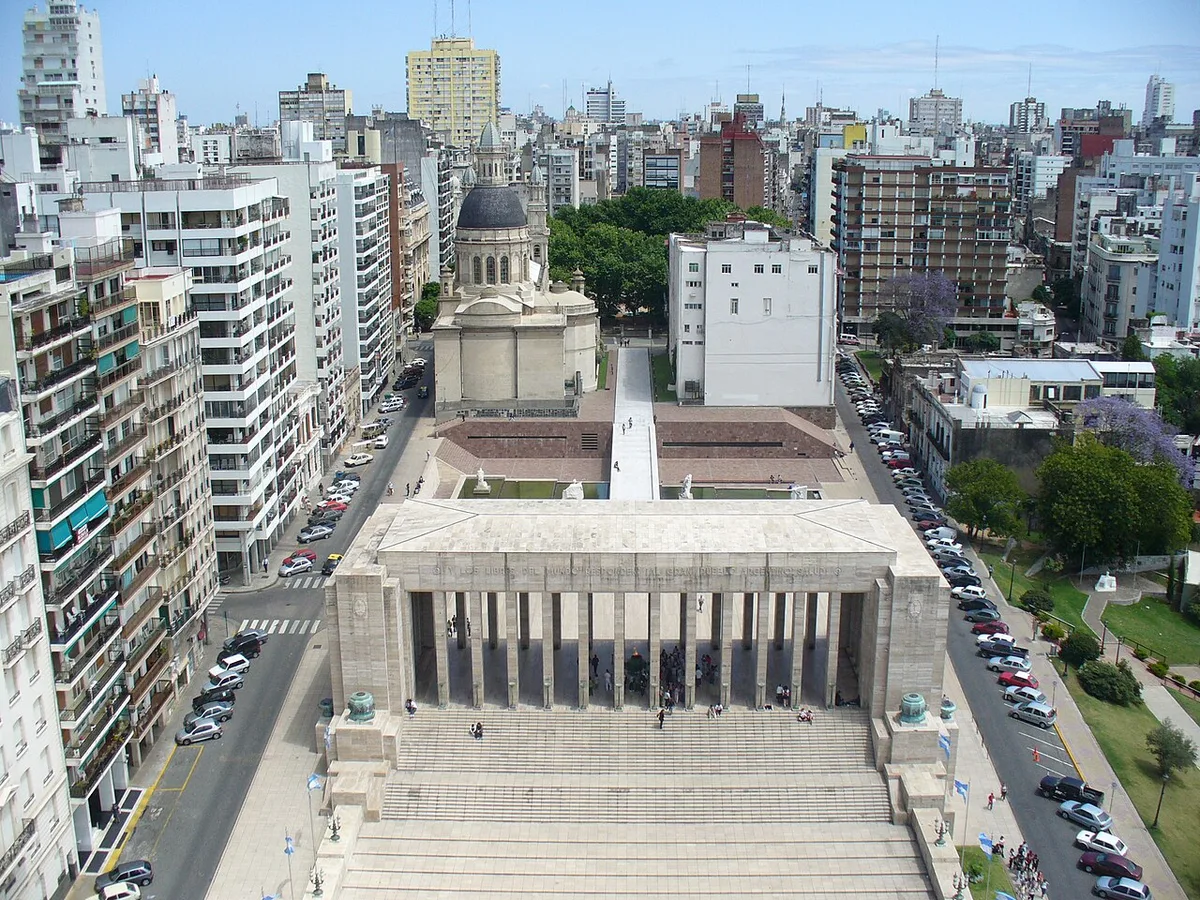
The tournament leaves your mornings or evenings free, and Rosario repays the time. The Monumento Nacional a la Bandera stands on the riverfront where Manuel Belgrano first raised the Argentine flag in 1812. Its tower has a view over the Paraná and its islands.
Further along, the Costanera turns into a long riverside promenade with beaches and parrillas. In the summer evenings it fills with walkers, cyclists and people fishing.
Parque de la Independencia, south-west of the centre, holds a rose garden, a lake and the stadium of Newell’s Old Boys. Boats from the riverfront cross to the island beaches opposite the city.
Who you might see
Challenger fields in South America usually lean towards clay specialists. Argentine, Brazilian, Chilean and other South American players fill much of the draw, alongside Europeans who come over for the swing.
For many of them, a title in Rosario is worth ranking points that can open the door to main-tour qualifying. You see the full range on one court: young players on the way up, veterans on the way back, and long scrappy baseline rallies.
The entry list and draw come from the ATP and the tournament organiser. Both appear on the ATP Challenger Tour section of the ATP website and on the tournament’s own channels.
Frequently asked questions
When is the Rosario Challenger in 2027?
It takes place in February 2027. The tournament traditionally falls in the first week of February. The organiser lists the exact dates on its official channels, and the ATP Challenger Tour calendar on the ATP website shows them too.
How long does the tournament last?
About a week. Qualifying comes first, then the main draw runs through to the singles and doubles finals at the end of the week.
How do I get to Rosario from Buenos Aires?
Long-distance coaches from Retiro terminal take about four hours to Rosario's Terminal Mariano Moreno. Rosario International Airport (Islas Malvinas) also has domestic flights.
Where are tickets and the venue listed?
The tournament organiser publishes the venue, ticket links and daily order of play on its official site and social channels.
What else is there to do in Rosario during the tournament?
You can visit the Monumento Nacional a la Bandera, walk the Costanera along the Paraná River, explore Parque de la Independencia or take a boat to the island beaches across the river.
Plan your trip to Rosario
Argentina eSIM & staying connected →
Some links above are affiliate links — if you book through them, Wander Atlas earns a small commission at no extra cost to you. It's how we keep every guide free.
Related guides
 event
Racing Club 10K/5K Race: Dates, Tickets & Venue (Avellaneda)
 event
Anuel AA: Dates, Tickets & Venue (Buenos Aires)
 event
Argentina Comic Con December 2026: Dates, Tickets & Venue (Buenos Aires)
 Ended