
Stand at the end of any lane in the Parte Vieja and look up. A green hill rises straight out of the rooftops, and a stone figure with outstretched arms stands on its summit. That is Monte Urgull: 123 metres of oak, laurel and old military stonework between the Old Town and the open Bay of Biscay.
Most visitors to San Sebastián spend their hours on La Concha’s sand or working through pintxo bars. Fewer climb the hill above them. That leaves Urgull’s paths quieter than the waterfront below, even though it is a short walk from the busiest streets in the city.
A fortress the city turned into a park
For centuries Urgull was military ground, not a place for a stroll. The hill guarded the walled town, and its slopes still carry the evidence:
- Gun batteries cut into the rock, some with cannons still pointing out to sea.
- Ramps and stone walls zigzagging up toward the summit.
- Castillo de la Mota, the fortress crowning the top.
The town was besieged and burned in 1813 during the Peninsular War, and the hill was fought over in that siege. Once the walls lost their military role, Urgull became a public park. The defences stayed where they were, now softened by moss and tree roots.
Paths up from the Old Town and the port
There is no single entrance. Several stepped paths climb out of the city, and they all meet on the upper slopes. The address on Subida al Castillo, at the harbour end, is one way in, but these are the usual starting points:
- Plaza de la Trinidad, behind the San Telmo Museum at the eastern edge of the Parte Vieja.
- The fishing port, where paths climb from near the Aquarium.
- Paseo Nuevo, the seafront promenade that loops around the base of the hill, with stairways leading up from it.
San Sebastián has no metro. The Old Town is about a 20-minute walk from the Renfe station across the Urumea river. City buses stop along the Alameda del Boulevard, a few minutes from the foot of the hill. Once you are in the Parte Vieja, you walk.
The paths are paved or stepped and shaded by trees, but they are steep in places. At an unhurried pace, plan on 20–30 minutes to the castle. Allow 1.5–2 hours if you want to explore the batteries and side paths.
The Sacred Heart and Mota Castle
The summit has two parts that work together. Castillo de la Mota is a compact stone fortress with battlements on the hilltop. Above it stands the Sagrado Corazón, a monumental statue of Christ added in the mid-20th century. It is the figure you see from all over the city.
Inside the castle there is a small exhibition on the history of the city. Its hours and access are separate from the park, so check them before you plan around a visit. Even without going in, you can walk the castle’s outer terraces.
From the top, the whole layout of Donostia opens up below you:
- La Concha curving west to the far headland.
- Isla Santa Clara sitting in the mouth of the bay.
- Monte Igueldo on the opposite side, with its old funicular.
- Zurriola beach and Monte Ulía to the east, beyond the river mouth.

The English Cemetery on the north slope
This is the part of Urgull most people walk straight past. On the seaward side of the hill, the Cementerio de los Ingleses holds the graves of British soldiers. They died in the fighting around San Sebastián in the 19th century, including the First Carlist War of the 1830s.
Nothing about the place is grand. There are weathered headstones under the trees and a memorial facing the open Atlantic. It sits off the main path to the summit, so look for the signs on the north slope. After the busy summit terraces it is a quiet place to stop.
Climbing it the Donostia way
Locals call the city Donostia and the hill simply Urgull. You will see both Basque and Spanish names on the signs. A few habits make the visit easier:
- Treat it as a loop, not a round trip. Go up from Plaza de la Trinidad and come down toward the port or Paseo Nuevo, so you see both sides of the hill.
- Bring water. The paths are shaded, but the upper stretches are a genuine climb, and the summit is a place to sit for a while.
- Wear shoes with grip. The steps and cobbles get slippery after the region’s frequent rain.
- Keep your voice down near the English Cemetery. It is still a burial ground.
- Time pintxos for afterwards. The bars of Calle 31 de Agosto are at the foot of the Trinidad path. At the counter, point at what you want or order from the hot menu on the board. Paying at the end is normal.
Arriving early in the morning usually means you share the batteries with joggers and dog walkers rather than tour groups. Late in the day, the low sun lights the bay from the west.
When the gates open and close
Monte Urgull is a park with gates. At the moment Google lists it as open 8am–9pm every day of the week. Park hours like these shift through the year, and summer evenings often run later than winter ones. Check the San Sebastián city council’s site for this month’s times before planning a sunrise or sunset climb.
Within the listed hours, the hill works at almost any time of day. Mornings are cooler and good for the climb. Afternoons are better for photographing La Concha with the light behind you. On grey Atlantic days the hill is still worth climbing: the batteries and the woods suit a bit of mist.
Pairing Urgull with the rest of the waterfront
The hill fits easily into a day on foot, because everything near it is close:
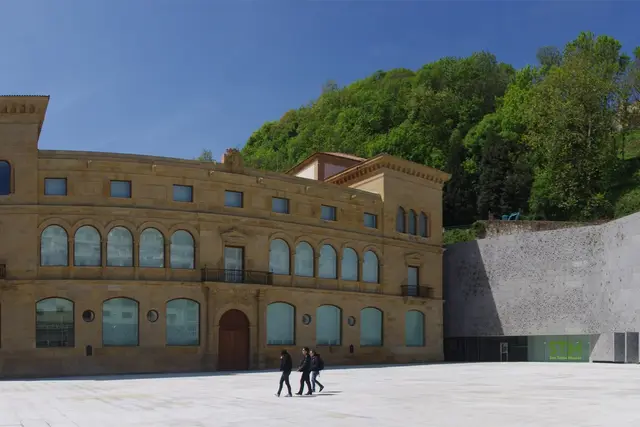
- San Telmo Museum, the Basque history museum in a former convent at the foot of the Trinidad path.
- The Aquarium, at the end of the fishing port beneath the hill’s western slope.
- Paseo Nuevo, the promenade around the base, where waves often break over the sea wall in rough weather.
- Basilica of Santa María del Coro, the Baroque church at the end of Calle Mayor, directly below the hill.
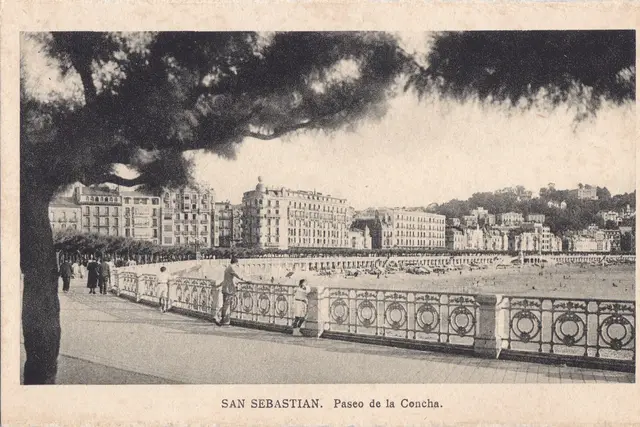
- La Concha promenade, which continues west from the port toward Monte Igueldo.
A good half-day: San Telmo in the morning, Urgull up and over by midday, a slow walk back along Paseo Nuevo, then pintxos in the Parte Vieja.
Frequently asked questions
How do I get up Monte Urgull?
Walk. Stepped paths climb from Plaza de la Trinidad, next to the San Telmo Museum in the Parte Vieja, and from the fishing port near the Aquarium. Stairways also lead up from Paseo Nuevo. The summit is about 20–30 minutes from the Old Town.
What are Monte Urgull's opening hours?
It is a gated park. Google currently lists it as open 8am–9pm daily, but park hours change through the year. Check the San Sebastián city council's official site for this month's times.
How long should I spend on Monte Urgull?
About 1.5–2 hours lets you reach Castillo de la Mota and the Sacred Heart statue and look around the old gun batteries. It also leaves time for the English Cemetery on the north slope. A quick climb to the top and back takes under an hour.
What is at the top of Monte Urgull?
Castillo de la Mota, a hilltop fortress with a small exhibition on the city's history, and the large Sagrado Corazón (Sacred Heart) statue. From the terraces you see La Concha, Isla Santa Clara, Monte Igueldo and Zurriola beach. The castle exhibition keeps its own hours, so check them separately.
What is near Monte Urgull?
The San Telmo Museum, the Aquarium, the Basilica of Santa María del Coro and the pintxo bars of the Parte Vieja are all at the foot of the hill. Paseo Nuevo loops around its base and connects to the La Concha promenade.
Plan your trip to San Sebastian
Spain eSIM & staying connected →
Some links above are affiliate links — if you book through them, Wander Atlas earns a small commission at no extra cost to you. It's how we keep every guide free.
Related guides
 attraction
San Telmo Museum: San Sebastian Travel Guide (4.5★)
 attraction
Alderdi Eder Park: San Sebastian Travel Guide (4.6★)
 attraction
Paseo de La Concha: San Sebastian Travel Guide
 hidden gem