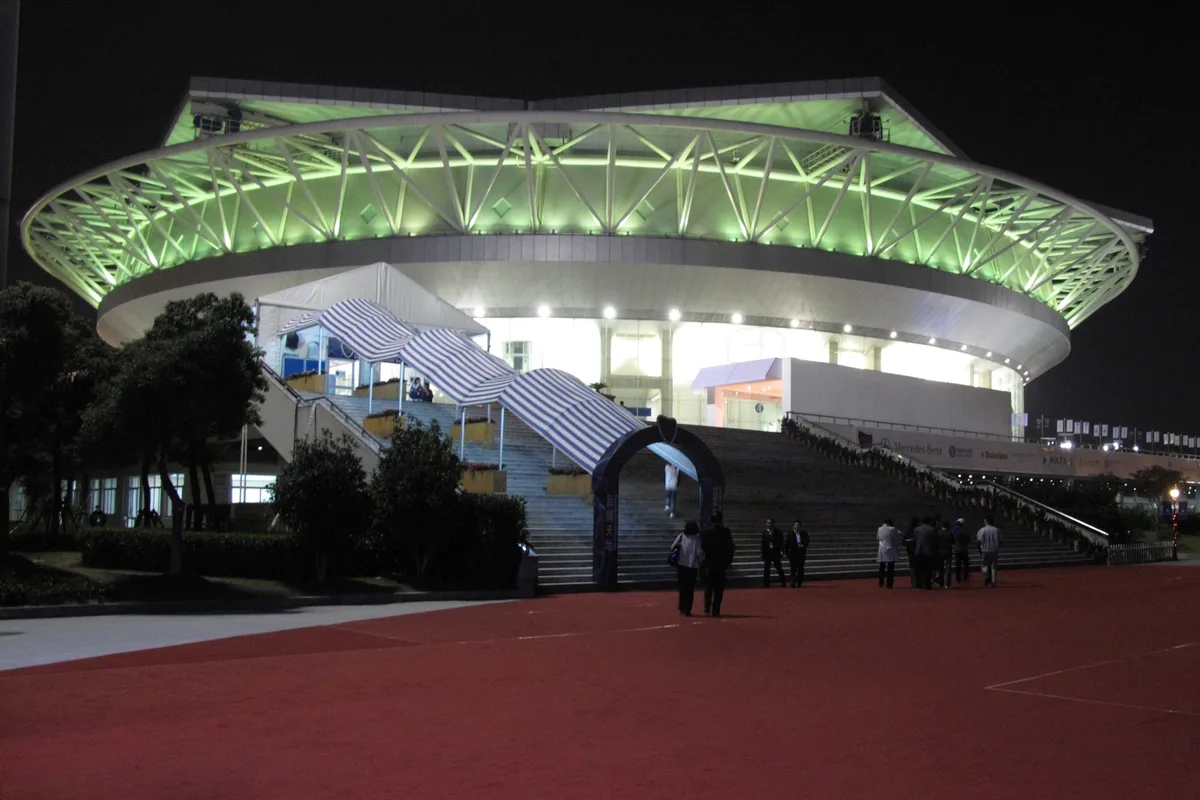
What the Rolex Shanghai Masters actually is
This isn’t just another stop on the tennis calendar. The Rolex Shanghai Masters is one of only nine ATP Masters 1000 tournaments in the world, the rung directly below the four Grand Slams, and it’s the sole Masters 1000 event anywhere in Asia.
That status pulls a deep field: multiple top-ten seeds, a 96-player singles draw, and a doubles competition that regularly features Grand Slam champions. The tournament usually spans roughly ten days of tennis once qualifying rounds are folded in, building toward a Sunday final.
Qi Zhong Tennis Center, the venue
Qi Zhong Tennis Center is a purpose-built complex in Minhang District, southwest Shanghai, and the 2026 tournament was set there. Its main stadium has a retractable roof shaped like a magnolia flower, Shanghai’s city emblem. The stadium seats around 15,000, and the roof closes in about six minutes when rain threatens.
The grounds hold several show courts beyond the main stadium, so even a general-admission ticket usually gives close-up access to practice courts and outer-court matches featuring seeded players.
- Getting there: Metro Line 5 to Dongchuan Road, followed by a taxi or shuttle, is the most reliable route from central Shanghai
- Driving in is possible, but parking near the venue fills up fast on marquee match days
- The trip takes close to an hour from People’s Square or the Bund during peak traffic
Tickets, tiers, and what to expect on price
Ticket tiers for 2026 ranged from single-session outer-court passes up to premium stadium seats for the semifinals and final, with the latter priced well above early-round sessions. Pricing shifts year to year and by seat category, so figures quoted in different places rarely match exactly.
The final weekend is traditionally the hardest ticket at this tournament. Stadium seats for the semifinals and championship match usually sell out well ahead of the event, while early-round sessions and outer-court passes are far easier to find.
The night-session ritual
Shanghai’s crowd has a distinct rhythm: day sessions draw a mixed crowd of tennis regulars and curious first-timers, but the evening sessions are where the atmosphere shifts. Under lights, with the stadium roof often closed against the autumn evening chill, night matches on the main court tend to feature the tournament’s biggest names and pull the loudest, most engaged crowds of the week.
Night matches in the second week are usually the high point. By then the draw has typically thinned to quarterfinalists and semifinalists, and the stadium atmosphere is at its most charged.
Getting in without the scramble
Match days move a large number of spectators through a handful of entry gates, and queues tend to build just before the first scheduled match. Security screening resembles airport-style checks: bags get scanned, and large bags or outside food and drink are commonly restricted.
Mobile ticketing is standard at the venue, and gate staff scan tickets straight from phone screens. Food and drink inside the grounds are sold via cashless payment almost everywhere, so a linked mobile payment app or card is quicker than cash.
Beyond the baseline: what else to plan around the tournament
Qi Zhong sits a fair distance from Shanghai’s usual tourist core, so most visitors treat it as a dedicated half-day or evening trip rather than something to bolt onto a Bund stroll. The surrounding Minhang District is largely residential and low on standalone attractions.
For a longer Shanghai stay, a base near a Metro Line 5 or Line 1 station makes for the easiest commute out to Dongchuan Road. The People’s Square, Xintiandi, and Bund areas are all roughly 45 minutes to an hour from the venue by taxi or metro-plus-transfer.
Practical notes for first-time attendees
October in Shanghai is generally mild, with warm days easing into cool evenings, which is part of why the tournament sits comfortably in the autumn calendar. Night sessions can feel cool even after a warm afternoon, especially when the stadium roof stays open.
- Language: English signage exists at the venue, but ticket staff and vendors may have limited English, so key phrases or a translation app help
- Photography: cameras are typically fine for personal use, while professional equipment with long lenses is often restricted
- Autographs and practice courts: the time well before a session starts offers the best chance of seeing players warm up on the practice courts, where access is more relaxed than inside the main stadium
Frequently asked questions
What are the dates for the Rolex Shanghai Masters 2026?
The tournament was set for October 7-18, 2026. Some listings extended the window from October 5 to cover qualifying rounds.
Where is the Rolex Shanghai Masters held?
The 2026 edition was set for Qi Zhong Tennis Center in Minhang District, southwest Shanghai. The venue is roughly 45 minutes to an hour from central Shanghai by taxi or metro.
How do I get to Qi Zhong Tennis Center by public transport?
Metro Line 5 runs to Dongchuan Road station, and a short taxi or shuttle ride covers the rest of the way to the venue. This is generally more reliable than driving, since parking near the courts fills up on big match days.
How much are tickets and when should I buy them?
Prices for 2026 varied by session and seat tier, from outer-court passes to premium stadium seats for the semifinals and final. Final-weekend sessions at this tournament usually sell out well ahead of time.
Is the Rolex Shanghai Masters worth combining with Shanghai sightseeing?
The venue sits away from the main tourist areas like the Bund and Xintiandi, so most visitors treat it as its own half-day or evening outing rather than pairing it directly with sightseeing.
Plan your trip to Shanghai
China eSIM & staying connected →
Some links above are affiliate links — if you book through them, Wander Atlas earns a small commission at no extra cost to you. It's how we keep every guide free.
Related guides
 event
Charlie Puth - Whatever's Clever! World Tour: Dates, Tickets & Venue (Shanghai)
 event
China International Import Expo (CIIE): Dates, Tickets & Venue (Shanghai)
 Ended
ChinaJoy 2026 Shanghai: Dates, Venue & Tickets
 event