How this guide was made: Editor-reviewed, AI-assisted. Facts are pulled from live Google Places data; images are licensed or public domain. See our editorial policy.
Why Stanley Market is worth the trip
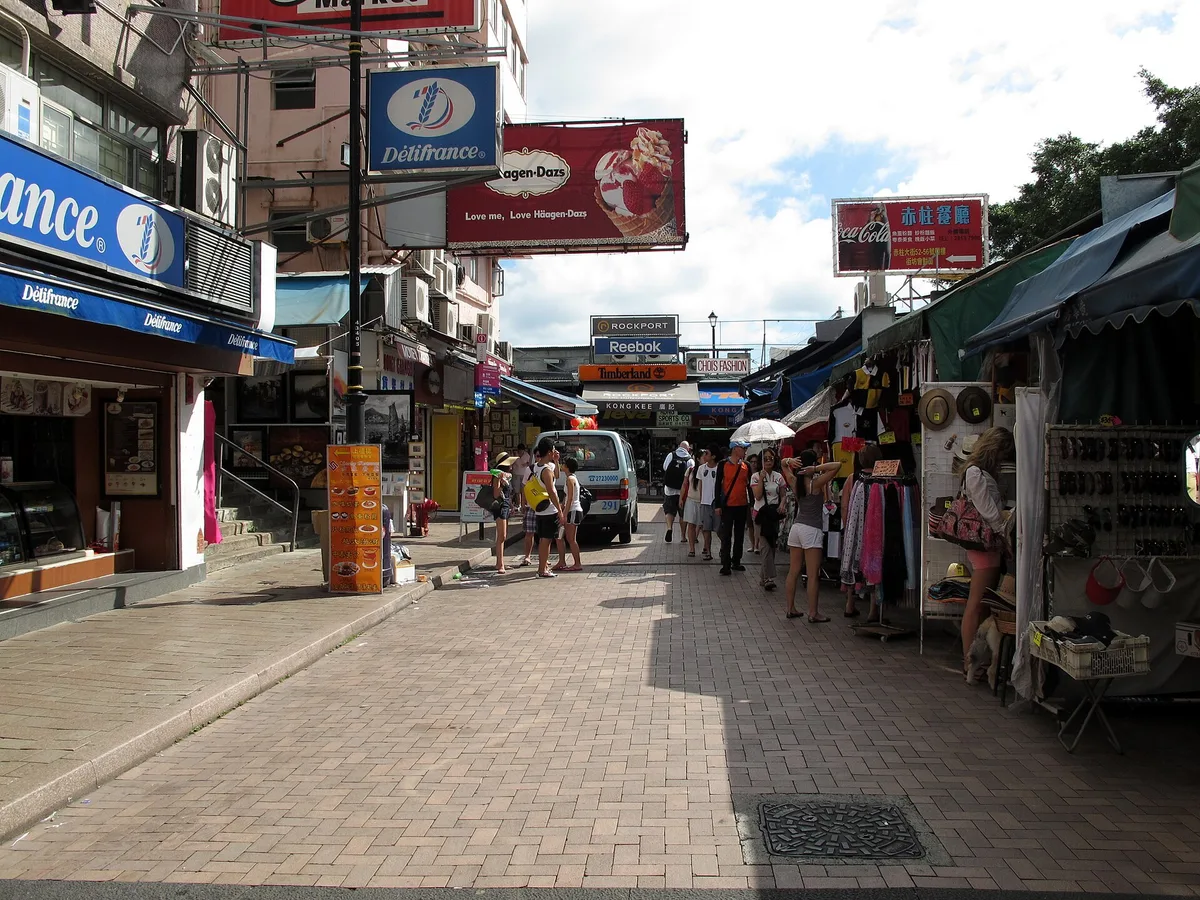
You come to Stanley Market for the maze, not the merchandise. The moment you duck off Stanley Main Street into the covered alley, the light drops, the ceiling closes in, and stalls press in from both sides selling everything from cheongsams to phone cases.
It’s a genuinely old-school Hong Kong street market, no glass storefronts, no air conditioning to speak of, just canvas awnings and hand-painted signs. With over 8,000 reviews and a solid 4-star rating, it’s clearly well-visited, but the appeal is exactly this unpolished, slightly chaotic texture.
Getting there
Stanley sits on the south side of Hong Kong Island, and there’s no MTR station directly in the neighborhood.
The easiest route is bus:
- From Central (Exchange Square bus terminus), take bus 6, 6X, 6A or 260
- From Causeway Bay, bus 73 also runs
- A taxi from Central takes roughly 25–30 minutes depending on traffic
The market itself runs along Stanley New Street, just steps from where the buses drop you.

What to see and buy
The stalls blur together at first glance, but a few categories are worth slowing down for.
- Silk and linen clothing, cheongsams, robes, and tailored shirts at negotiable prices
- Souvenirs and crafts, chops (carved name stamps), lacquerware, painted fans
- Casual and outdoor brands, Stanley has long had a reputation for discounted sportswear and outlet finds
- Knock-off accessories, bags and watches that vendors will not call fakes, but you’ll know
Bargaining is expected almost everywhere here. Vendors quote high to tourists as an opening move, not a final offer.
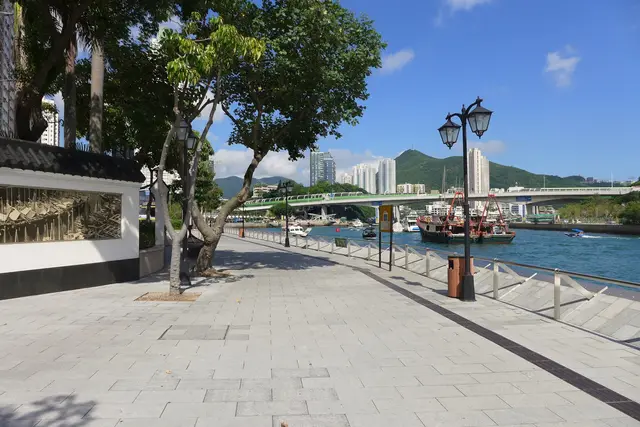
Beyond the market itself, the lanes spill out toward Stanley’s waterfront promenade, where Murray House, a relocated colonial-era building, now houses restaurants with harbour views. Stanley’s Tin Hau Temple, one of Hong Kong’s older seaside temples, is a short walk further along and worth the detour.
When to go
Both weekdays and weekends tend to stay relatively calm outside of peak weekend hours.
The exception is the weekend midday stretch. On Saturdays and Sundays around midday, tour buses and day-trippers flood in and the alleys narrow to a shuffle.
If you’re visiting on a weekend, aim to arrive right at 10am or hold off until after 5pm, when the light softens and the crowd thins for the walk along the waterfront.
Plan on an hour for the market itself, longer if you’re bargaining seriously or combining it with lunch at Murray House.
How to visit like a local
Cash still moves faster than cards here, most stallholders accept it without hesitation, though some now take mobile payments for larger items. Carry small notes; it speeds up haggling and avoids awkward change disputes.
Bargaining is the local etiquette, not an insult. Start at roughly half the quoted price and meet somewhere in the middle, vendors expect the back-and-forth and often enjoy it more than a silent transaction.
The mistake most visitors make is treating the market as the entire destination and leaving straight after. Locals treat it as a warm-up: browse the lanes, then walk five minutes to the waterfront for the actual view and a sit-down meal.
Avoid the narrow main alley between noon and 5pm on weekends if you dislike crowds, duck into the side lanes instead, where the same vendors sell at the same prices with far less elbow-to-elbow squeezing.
Wear something you can layer or peel off easily; the covered lanes trap heat, especially from spring through early autumn, and there’s little airflow once you’re deep inside.
Frequently asked questions
How do I get to Stanley Market from Central?
Take bus 6, 6X, 6A or 260 from the Exchange Square bus terminus in Central — the ride takes about 25–30 minutes and drops you right near Stanley New Street.
When is the quietest time to visit?
Both weekdays and weekends stay calm from 10am to 7pm. Just avoid weekends between 12pm and 5pm, when tour groups and day-trippers pack the lanes.
How long should I spend at the market?
An hour is enough for a browse; give it two if you plan to bargain properly. Pair it with a walk to the waterfront and Murray House afterward.
Should I bargain, and how much?
Yes — haggling is standard practice. Start around half the asking price and negotiate toward the middle; vendors expect it.
What's nearby worth visiting after the market?
Stanley's waterfront promenade, the relocated colonial-era Murray House with its harbour-view restaurants, and the seaside Tin Hau Temple are all a short walk away.
Plan your trip to Stanley
Some links above are affiliate links — if you book through them, Wander Atlas earns a small commission at no extra cost to you. It's how we keep every guide free.