Why go
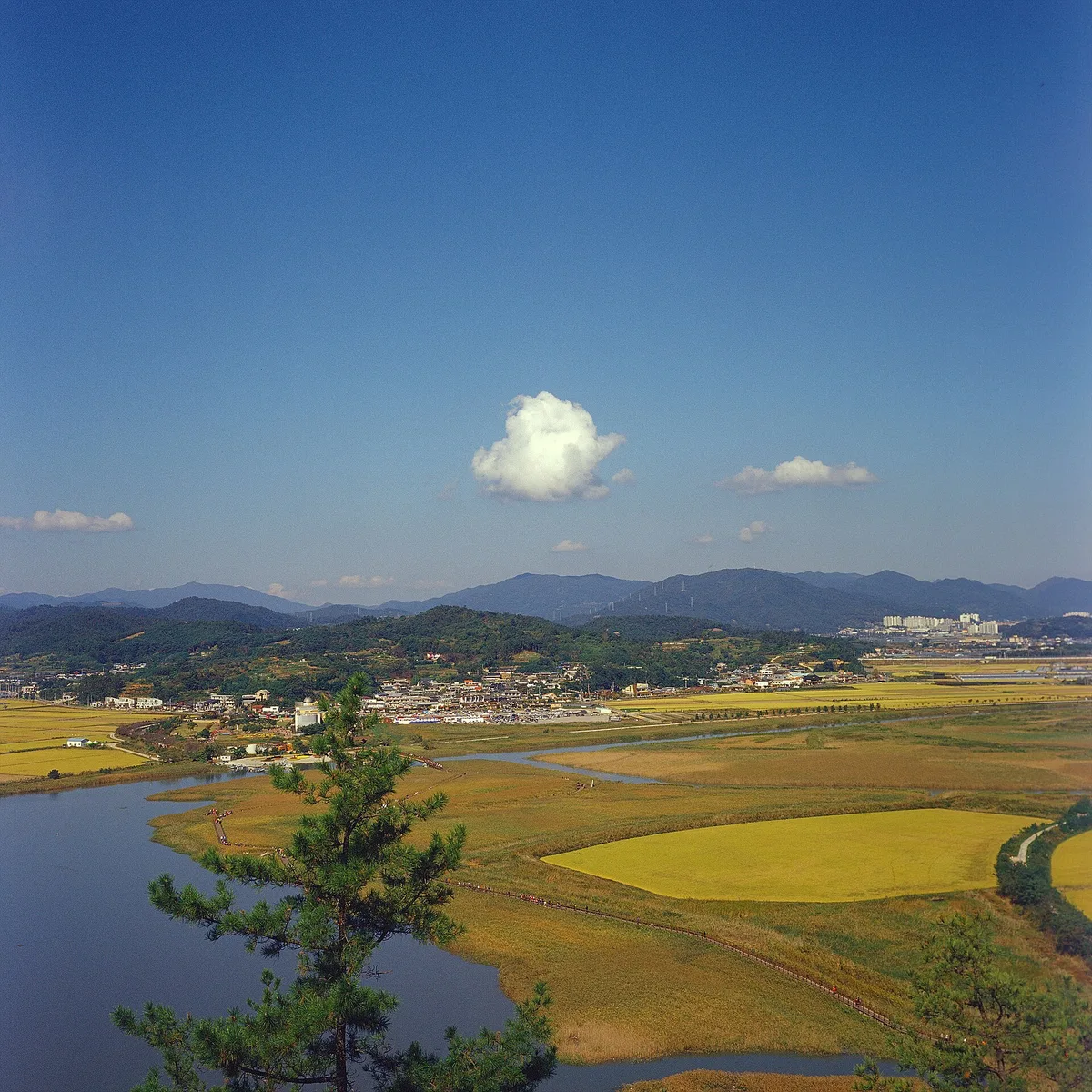
Suncheon Bay is one of the largest and best-preserved tidal wetlands in the world, and it’s the reason Suncheon markets itself as South Korea’s “Garden City.” The reserve’s silver-green reed fields (called galdae in Korean), tidal mudflats, and resident cranes have made it a UNESCO-listed Ramsar wetland, while the neighboring Suncheon Bay National Garden, built for the 2013 Suncheon Garden Expo, turned the area into a full-day destination combining landscaped international gardens with raw coastal ecology.
Few places in Korea let you walk from manicured French and Italian-style garden plots into an untouched tidal marsh within the same afternoon.
Getting there
Suncheon Bay is a few kilometers south of downtown Suncheon, which itself is reachable by KTX from Seoul (roughly 2.5–3 hours) or by train/bus from Yeosu and Gwangju. From Suncheon Station or the Suncheon Bus Terminal, local city buses (routes 1, 2, and 66 are commonly used by visitors) run directly to the Suncheon Bay National Garden entrance; a taxi from the station takes about 15–20 minutes.
There is no subway in Suncheon, so bus or taxi is standard. Many visitors also arrive via organized day tours from Yeosu or Gwangju, since the bay pairs naturally with Yeosu’s coastal sights.

What to see and do
Suncheon Bay National Garden is the entry point most people use. It’s divided into themed zones (a Lake Garden, Dream Bridge, and pavilions representing different countries’ garden design traditions) connected by wide, shaded paths. A monorail (Skycube) runs between the National Garden and the wetland entrance for those who don’t want to walk the roughly 2 km connecting road.
Past the garden, the Suncheonman Wetland Reserve is the main event. A long boardwalk winds through reed beds toward the open mudflat, where you can spot fiddler crabs, mudskippers, and, especially from November through February, migratory birds including hooded cranes, white-naped cranes, and Eurasian spoonbills. Suncheon Bay is one of the best sites in Korea for winter birdwatching.
The signature view is from Yongsan Observatory, a roughly 40–50 minute uphill walk (with stairs) from the wetland boardwalk. From the top, the reed beds curve into the tidal channel in the classic S-shape seen on postcards and travel posters. It’s most photogenic in late afternoon light, an hour or so before sunset.
When to go
Each season shows a different bay. Autumn (late September through October) is the postcard season, when the reeds turn golden-silver and sway densely along the channel. This is also the most crowded period. Winter (December–February) trades the reeds for migratory cranes and a starker, quieter landscape. Spring brings green shoots and mild walking weather, while summer is lush but hot and humid, with fewer birds.
Regardless of season, plan to arrive by early-to-mid afternoon so you have time for both the garden and the wetland walk before the observatory sunset light.
Nearby and practical tips
The Suncheon Bay area sits close to Suncheon Drama Filming Set, a recreated mid-20th-century Korean streetscape used in period TV dramas, worth an add-on stop if you have extra time. Downtown Suncheon also has traditional markets worth a detour for a meal after the bay. The region is known for fresh seafood and kkomak (cockle) dishes, a local specialty tied to the bay’s tidal flats.
Combined admission tickets covering both the National Garden and the Wetland Reserve are typically sold at a shared entrance gate. Check current pricing and seasonal operating hours on the official Suncheon city tourism site before you go, since both change with the season. Bring layered clothing if visiting in winter for the cranes, and comfortable walking shoes year-round, since the boardwalk-to-observatory route involves uneven terrain and stairs.
Frequently asked questions
How long should I plan to spend at Suncheon Bay?
A minimum of 4 hours to cover the National Garden and the wetland boardwalk; 5–6 hours if you also climb to Yongsan Observatory and want time for photos at sunset.
What's the best time of year to visit?
Late September to October for the golden reed fields, or December to February for migratory cranes and other wetland birds. Autumn is more crowded; winter is quieter but colder.
How do I get from Suncheon Station to the bay?
Take a local city bus (commonly routes 1, 2, or 66) directly to the Suncheon Bay National Garden entrance, or take a taxi, which takes about 15–20 minutes.
Is Yongsan Observatory a difficult climb?
It's a moderate uphill walk with stairs, taking roughly 40–50 minutes round-trip access from the wetland boardwalk. Manageable for most fitness levels but wear proper walking shoes.
Can I combine this with other Suncheon attractions?
Yes — the Suncheon Drama Filming Set is nearby and makes an easy add-on, and downtown Suncheon has markets serving local seafood, including cockle (kkomak) dishes tied to the bay's tidal flats.
Plan your trip to Suncheon
South Korea eSIM & staying connected →
Some links above are affiliate links — if you book through them, Wander Atlas earns a small commission at no extra cost to you. It's how we keep every guide free.