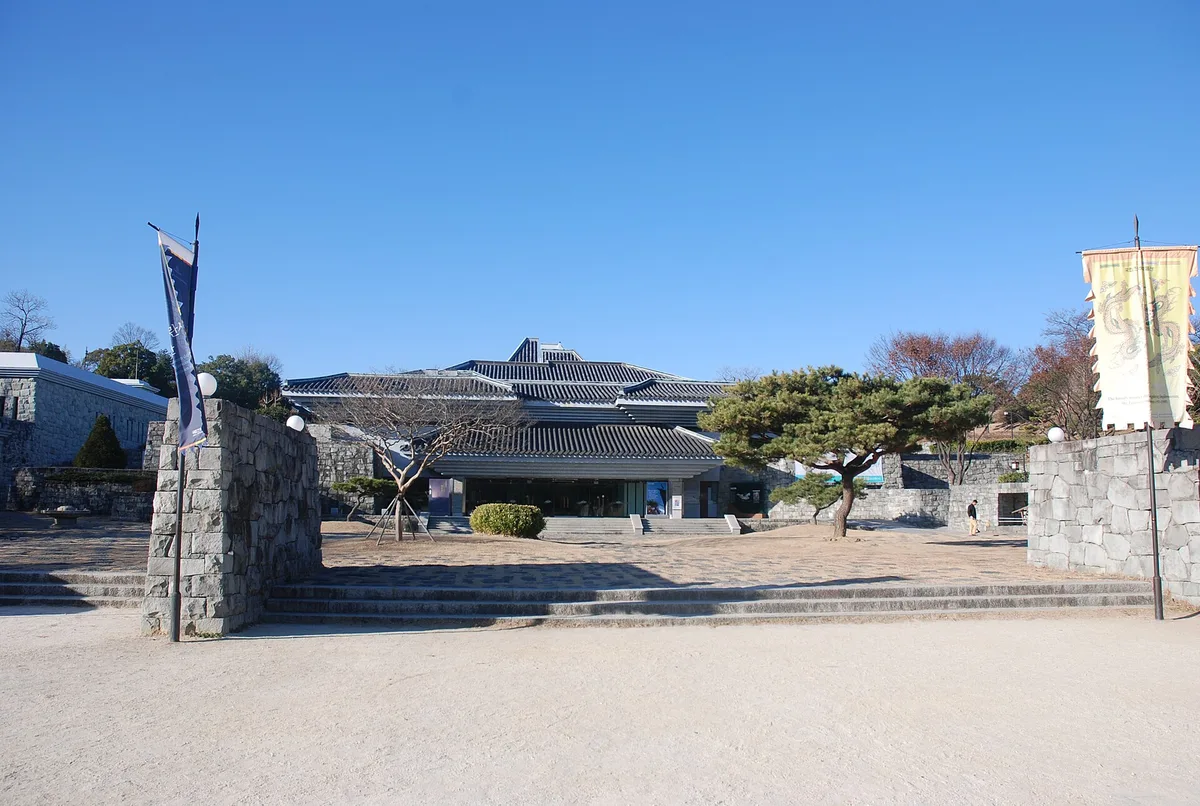
Why Jinju National Museum matters
Most visitors come to Jinju for the fortress and the river festival, then discover almost by accident that the museum tucked inside the fortress walls is one of the more thoughtfully built history museums in the country. The permanent collection isn’t a generic run through Korean prehistory. It’s built specifically around the Imjin War (1592–98), the Japanese invasions that turned Jinjuseong into the site of two of the war’s bloodiest sieges.
You walk in expecting a regional museum and leave having absorbed a genuinely gripping military and social history, told through matchlock guns, turtle-ship models, commanders’ armor, and painted screens depicting the battles.
Getting there
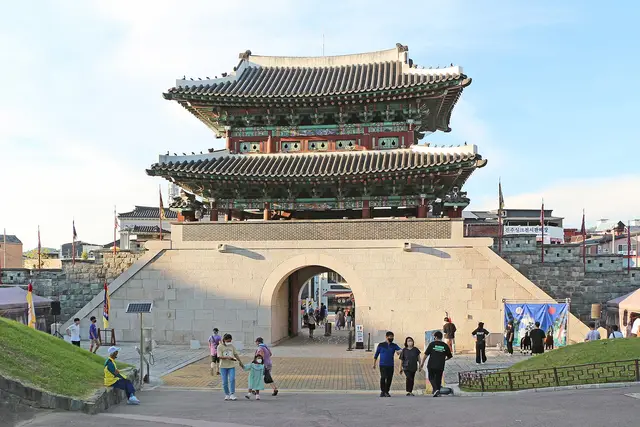
The museum sits at 626-35 Namgang-ro, inside Jinjuseong Fortress on the north bank of the Namgang River, in central Jinju. There’s no KTX or subway line into Jinju itself (you’ll arrive by intercity bus or train into Jinju Station, then take a short taxi ride (about 10–15 minutes) or a local city bus toward Jinjuseong/Chokseongnu. If you’re coming from Jinju’s downtown hotel strip near the Jungang Market, it’s an easy 20-minute walk along the riverside path, which is a pleasant approach in itself) you get your first view of the fortress walls and the pavilion roofline before you even reach the entrance gate.
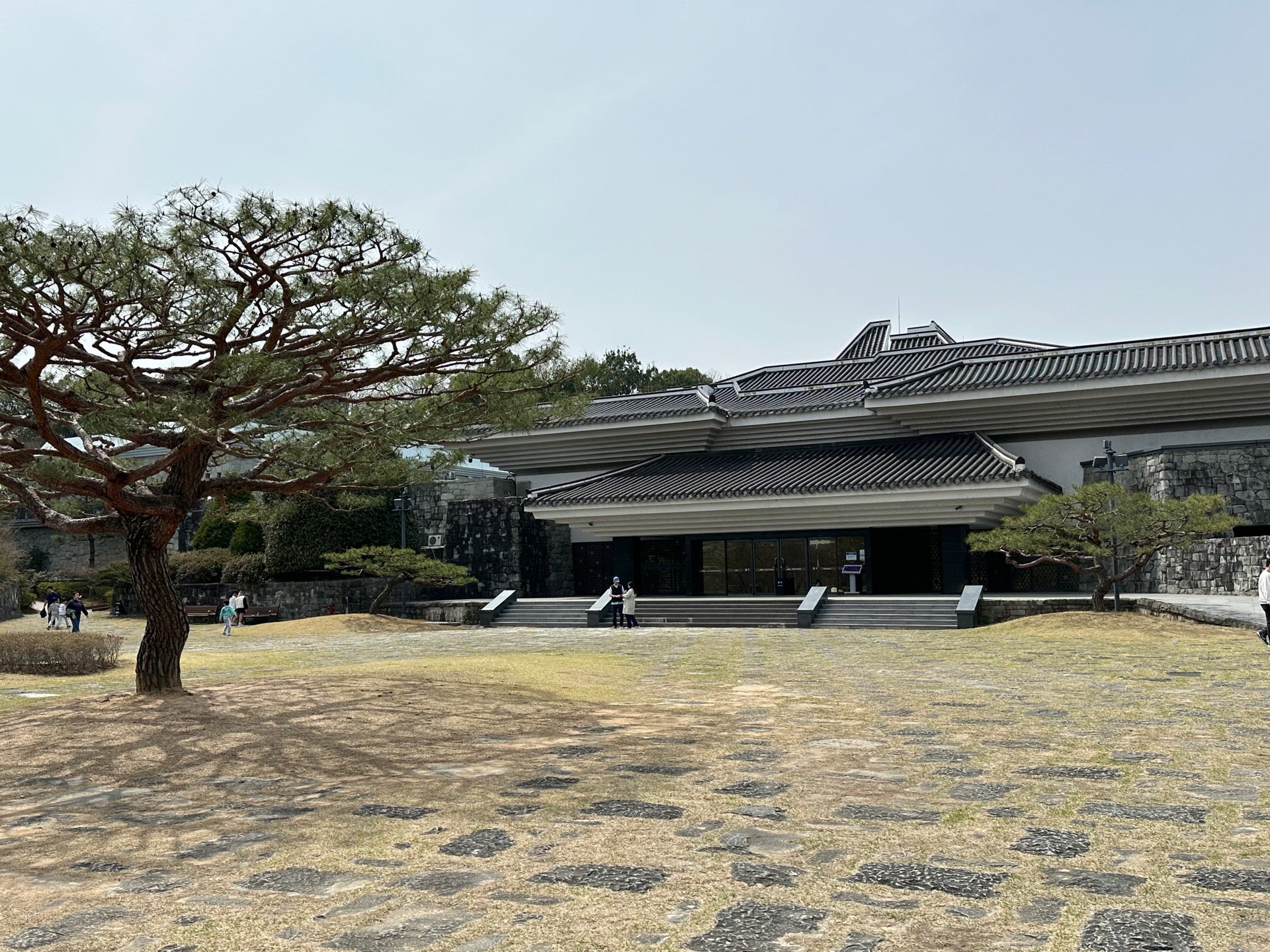
What you’ll actually see inside
The core exhibit is the Imjin War gallery, and it’s worth slowing down here rather than skimming. Look for the diorama and models reconstructing the 1592 and 1593 sieges of Jinjuseong, the first a stunning Korean victory against overwhelming numbers, the second a catastrophic fall in which most of the city’s defenders and civilians died. Cases hold matchlock rifles, swords, and armor recovered from the period, alongside painted battle screens that render the smoke and chaos of the siege in flat, vivid color.
A separate wing steps back further in time, tracing Gyeongsangnam-do’s Gaya-era and prehistoric artifacts, pottery, tomb goods, and bronze pieces that ground the region’s history long before the 16th-century wars. The building itself, designed by architect Kim Swoo-geun, is worth noticing too: its dark, fortress-like concrete form and internal courtyards deliberately echo the stone walls surrounding it, so the architecture never feels at odds with the setting.
Budget roughly 90 minutes for a normal pace, or a full two hours if you read the English-language panels closely and linger in the special exhibition hall, which rotates temporary shows on regional history and art.
Pairing it with the fortress
Because the museum sits inside Jinjuseong, you can treat the whole visit as one outing. After the galleries, walk the fortress ramparts along the river, you get sweeping views down over the Namgang, and continue to Chokseongnu Pavilion, the wooden pavilion famous for its connection to Nongae, the gisaeng who died pulling a Japanese general off the fortress cliff into the river below.
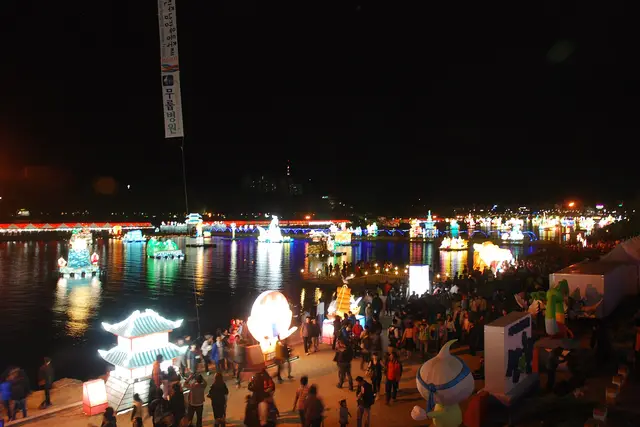
In spring, the fortress grounds fill with cherry blossoms; in autumn, the same paths are shaded by fortress trees turning color. If your visit coincides with early October, the Jinju Namgang Yudeung (Lantern) Festival transforms the riverbank right outside the museum into a floating sea of lanterns after dark.
How to visit like a local
Go on a weekday morning if you can, Jinjuseong and the museum draw school groups and weekend crowds from Busan and Changwon, so mornings before 11am are noticeably calmer. Admission to the museum has typically been free or very low-cost as a national museum, but confirm current hours and any fees before you go, since these do shift. There’s no need to book ahead; entry is walk-in.
Most Koreans visiting simply pay respects quietly at the Imjin War exhibits rather than rushing through, so slow your pace to match (this isn’t a checklist attraction. Cash isn’t really a factor here since entry is minimal, but bring a card or mobile pay for the fortress-area cafés and snack stalls outside. The mistake first-time visitors make is treating the museum as a quick add-on before the fortress views) flip that: come for the museum first, since the historical context it gives makes the fortress walls and Chokseongnu Pavilion far more meaningful once you’re standing on them.
Wear shoes good for uneven stone paths, since the fortress grounds are as much a part of the visit as the galleries themselves.
Frequently asked questions
How do I get to Jinju National Museum without a car?
Take a bus or train to Jinju Station, then a 10–15 minute taxi or local city bus to Jinjuseong (Jinju Fortress); the museum is inside the fortress grounds. It's also a scenic 20-minute riverside walk from downtown Jinju.
How much time should I plan for the visit?
Around 90 minutes for a normal visit, up to two hours if you read the Imjin War exhibits closely and check the special exhibition hall.
What's the best time of day to avoid crowds?
Weekday mornings are calmest; the museum sees more visitors from weekend day-trippers and school groups later in the day.
Is there an entrance fee?
As a national museum it has historically had free or minimal admission, but confirm current hours and fees on the day, since these can change.
What else is nearby worth combining with the visit?
Walk the Jinjuseong fortress walls along the Namgang River and visit Chokseongnu Pavilion right next to the museum; if you're there in early October, the Jinju Namgang Lantern Festival lights up the riverbank at night.
Plan your trip to Jinju
South Korea eSIM & staying connected →
Some links above are affiliate links — if you book through them, Wander Atlas earns a small commission at no extra cost to you. It's how we keep every guide free.