Grand Canal: Venice Travel Guide
✓ Facts verified via Google Places · Jul 31, 2026
At a glance
How this guide is made
Produced with AI assistance and reviewed against live data sources. Facts such as hours, ratings, and location come from Google Places; images are licensed or public domain. Details can change — please verify before visiting. Editorial policy
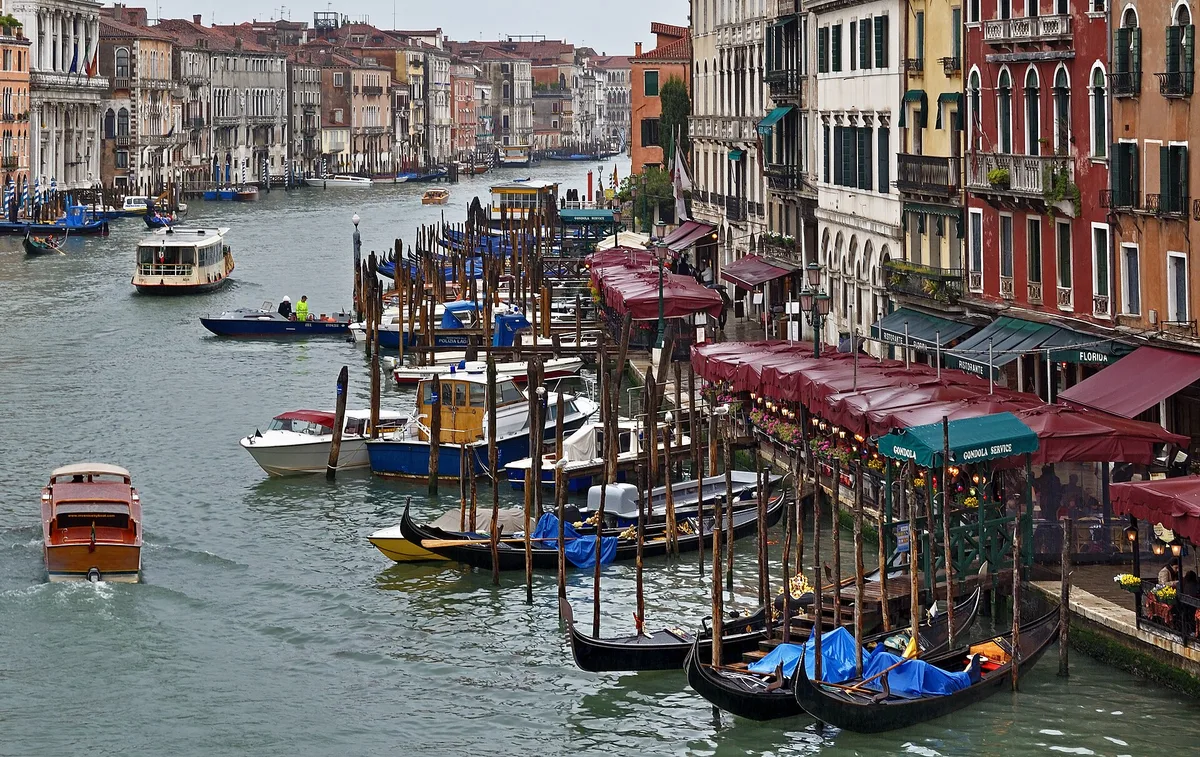
The moment your water bus pulls away from the dock and swings into the current, you understand why Venice never bothered building roads. The Grand Canal isn’t a sight you visit so much as a route you move through, a broad, brown-green ribbon of water tracing a backwards “S” through the city, lined on both banks with palazzi whose stucco has been softened by centuries of tide and salt air.
Gondolas rock in the wake of passing boats, laundry lines flutter above water-level doorways, and every few hundred meters a bridge or a bell tower interrupts the skyline just enough to make you reach for your camera.
Why it’s worth your time
This is Venice’s real main street, and it always has been. For a thousand years, merchant families built their grandest facades directly onto the water here, because arriving by boat was the only arrival that mattered. Today the same palazzi (Ca’ d’Oro, Palazzo Grassi, the Peggy Guggenheim Collection’s Palazzo Venier dei Leoni) still face the canal rather than any street behind them.
You don’t need a ticket or a booked slot to experience it; you just need to get on the water, which is what makes it one of the most naturally rewarding things to do in the city.
Getting on the water
The cheapest and most local way to see the canal is the ACTV vaporetto Line 1, which chugs the full length of the canal from Piazzale Roma or the train station (Santa Lucia) down to San Marco and the Lido, stopping at nearly every dock along the way. It’s slower than Line 2, which skips stops, and that’s the point, sit or stand near the front for the best sightlines.
A single vaporetto ticket covers the whole route; multi-day transit passes make more sense if you’re riding more than twice. For a few euros and about two minutes, you can also cross via traghetto, one of the stripped-down gondolas that ferry locals and visitors standing up between fixed points where bridges are far apart, a genuinely local way to cross rather than a tourist gimmick.

What to look for along the way
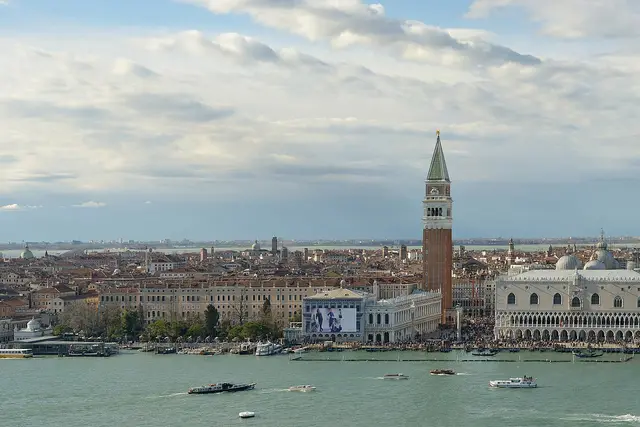
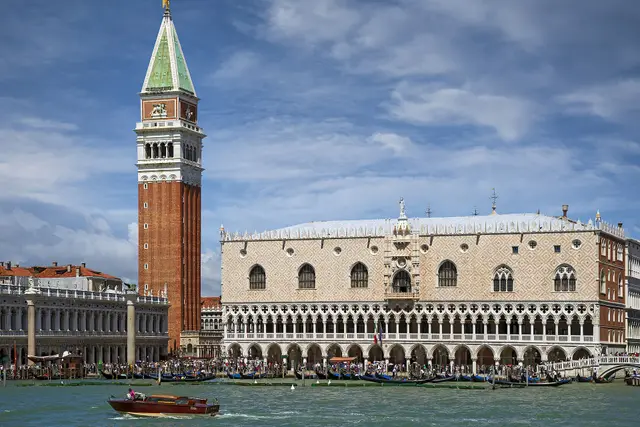
Four bridges span the canal, and each marks a distinct stretch of the journey: the modern glass-and-steel Ponte della Costituzione near the station, the wooden Ponte dell’Accademia, the marble Ponte di Rialto (the oldest and most famous, lined with shops), and Ponte degli Scalzi. Between Rialto and San Marco you pass the Baroque dome of Santa Maria della Salute and the wide mouth of the canal opening into the San Marco basin, with the Doge’s Palace and the campanile rising ahead.
Keep an eye out for the Ca’ d’Oro’s filigree Gothic facade and the unfinished, boxy Palazzo Venier dei Leoni, now the Guggenheim. None of this requires stopping. It’s a moving gallery you take in from your seat.
When to go
Traffic on the canal is heaviest through the late morning and afternoon, when vaporetti, water taxis, delivery boats and gondolas all compete for the same lanes and the docks fill with people waiting to board. Mornings before 9am and the hour after sunset are calmer, with softer light on the water and far less jostling at the stops, sunset especially turns the palazzo facades a deep gold that’s worth timing a ride around.
If you’re set on a gondola rather than a vaporetto, book ahead for early evening, when the light is best and the canal traffic starts to thin.
How to visit like a local
Locals treat the vaporetto the way any commuter treats a bus, they validate their ticket at the yellow machines before boarding, they don’t linger blocking the doors, and they let people off before pushing on. If you only want to cross the canal rather than ride its length, use a traghetto stop instead of walking to the nearest bridge; it costs a couple of euros and Venetians use it constantly.
The classic tourist mistake is treating a gondola ride as the only way to see the canal (it’s romantic but expensive and slow, while the vaporetto gives you the same views for a fraction of the cost. Whichever you choose, stand or sit toward the bow rather than fighting for a window seat inside the cabin, and keep your ticket or pass on you) spot checks happen.
Frequently asked questions
What's the best way to see the Grand Canal without a tour?
Ride ACTV vaporetto Line 1 end to end — it stops at nearly every dock and costs the same as a single transit ticket. Sit near the bow for the clearest views.
How long does it take to see the whole canal?
A one-way Line 1 vaporetto ride from the train station to San Marco takes roughly 40-45 minutes; add extra time if you hop off at Rialto or the Salute.
Is a gondola ride necessary to experience the canal?
No — it's a romantic but pricier option best done in early evening light. The vaporetto gives you the same views at a much lower cost.
When is the Grand Canal least crowded?
Before 9am and in the hour after sunset, when boat traffic and dock queues both thin out noticeably compared to midday and afternoon.
What are the main landmarks to watch for from the water?
Ponte di Rialto, Ponte dell'Accademia, Ca' d'Oro, Santa Maria della Salute, and the Palazzo Venier dei Leoni (Peggy Guggenheim Collection) are the standouts along the route.
Plan your trip to Venice
Some links above are affiliate links — if you book through them, Wander Atlas earns a small commission at no extra cost to you. It's how we keep every guide free.