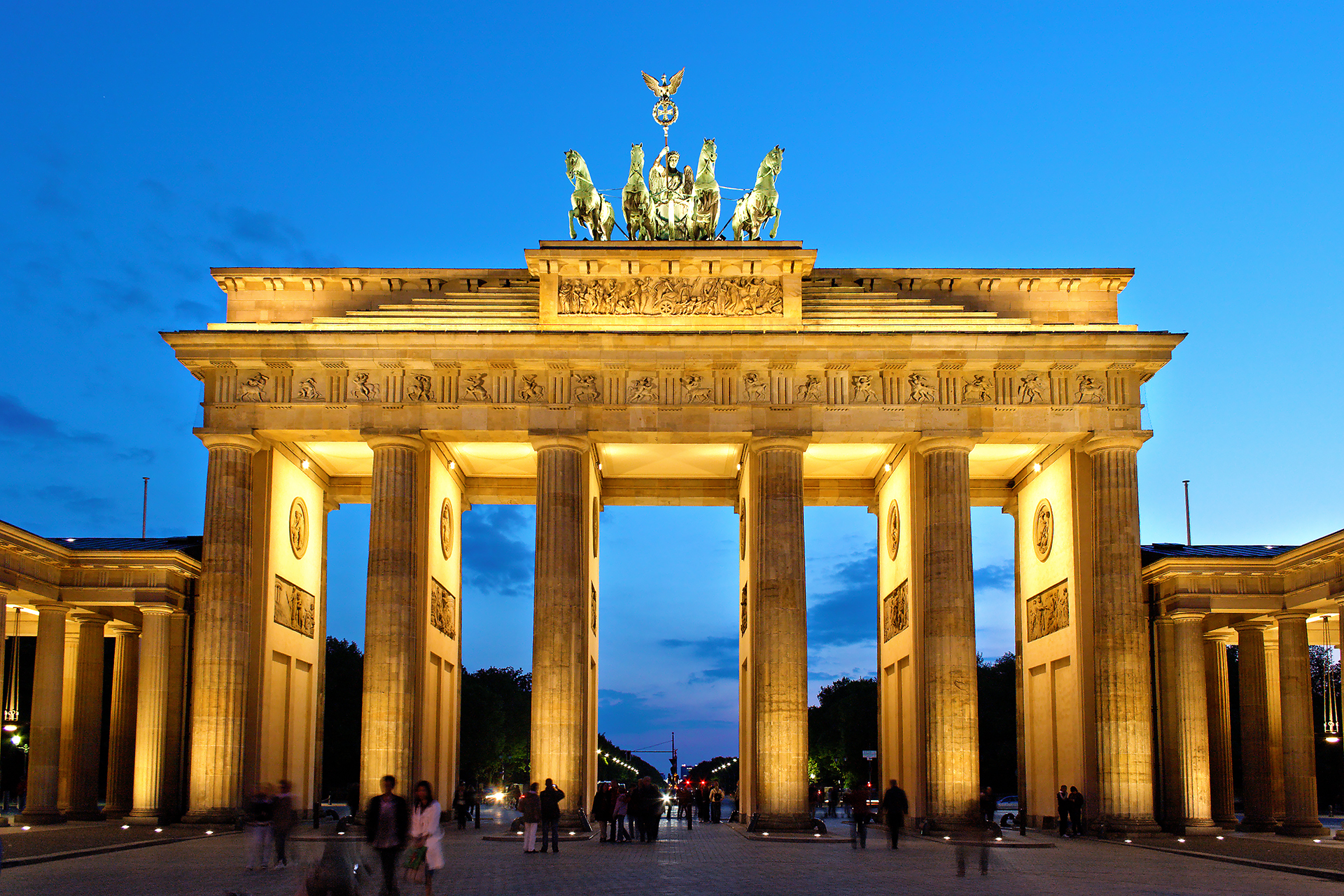
Most visitors from the US, UK, Canada, Australia, and similar countries can still enter Germany visa-free for up to 90 days in any 180-day period, though a new EU entry system now records biometrics at the border; always double-check your specific requirements before flying.
This is a plain-English summary, not legal or medical advice. Entry and visa rules change — always confirm on the official sources linked below before you book or fly.
Climate at a glance
Monthly highs, lows and rainfall in Berlin · NASA POWER 10-year average
Temperature range Rain Best months
| Month | High °C | Low °C | Rain (mm) |
|---|---|---|---|
| Jan | 3 | -2 | 55 |
| Feb | 6 | -1 | 48 |
| Mar | 10 | 1 | 40 |
| Apr | 14 | 4 | 30 |
| May | 19 | 8 | 36 |
| Jun | 26 | 14 | 64 |
| Jul | 26 | 15 | 77 |
| Aug | 26 | 15 | 51 |
| Sep | 22 | 11 | 38 |
| Oct | 16 | 7 | 56 |
| Nov | 8 | 2 | 47 |
| Dec | 4 | 0 | 49 |
Public holidays
Expect crowds, closures and pricier rooms around these dates.
- Jan1 New Year's DayNeujahr
- Mar26 Good FridayKarfreitag
- Mar29 Easter MondayOstermontag
- May1 Labor DayErster Mai
- May6 Ascension DayChristi Himmelfahrt
- May17 Pentecost MondayPfingstmontag
- Oct3 German Unity DayTag der Deutschen Einheit
- Dec25 Christmas DayErster Weihnachtstag
- Dec26 Second Day of ChristmasZweiter Weihnachtstag
Visa & entry
Germany is part of the Schengen Area, so entry rules are set at the EU level, not just by Germany alone.
Visa-free short stay
US, Canada, Australia, Japan and other visa-liberalisation countries
No visa needed for short stays
Schengen Type C visa
Citizens of countries without visa liberalisation, e.g. India, China, South Africa
Must be obtained before arrival
EES biometric recording. Since 10 April 2026 the EU Entry/Exit System records a photo and fingerprints instead of stamping passports.
Rules may change. Dates, fees, and exemptions for EES and ETIAS can change with little notice, so confirm before flying.
Read the full section
Germany is part of the Schengen Area, so entry rules are set at the EU level, not just by Germany alone. If you hold a passport from the US, Canada, Australia, Japan, or another country with a visa liberalisation agreement with the EU, you don’t need a visa for short stays. If you are from a visa-free country, you can visit Germany for up to 90 days without a visa. Citizens of many other countries, including India, China, and South Africa, still need a Schengen Type C visa before arrival; this short-stay visa has maximum validity of 90 days in a 180-day period and costs €90 for most adults.
Two important EU-wide systems have changed how border crossings work in 2026. The digital Entry/Exit System (EES) became fully operational on 10 April 2026, and is used at the external borders of all EU member states (with the exception of Cyprus and Ireland), in addition to Iceland, Liechtenstein, Norway and Switzerland. This means your passport may no longer be stamped; instead, a photo and fingerprints are recorded.
The other system, ETIAS, is NOT yet required. As of mid-2026, you do not need ETIAS: the new €20 travel authorisation launches in the last quarter of 2026 and won’t be mandatory until around April 2027. Once active, visa-exempt travelers will generally need a European Travel Information and Authorisation System (ETIAS) travel authorization before traveling to Germany and other Schengen countries, but ETIAS is not a visa and does not change the existing 90-day visa-free allowance. The fee is modest: a service fee of €20 per application or person, with travelers under 18 and over 70 exempt from the fee.
Because these systems and their launch dates keep shifting, treat everything above as a snapshot, not a guarantee. Before booking or flying, confirm your personal requirements on the official Auswärtiges Amt (German Federal Foreign Office) visa pages and the EU’s official ETIAS/EES information portal, since exact dates, fees, and exemptions can change with little notice.
Getting around
Germany has a dense, reliable public transport network: city U-Bahn (subway) and S-Bahn (suburban rail), trams, and buses in most cities, plus regional trains connecting towns, and high-speed ICE/IC trains linking major cities.
Rolling monthly subscription, €63 per month from 1 January 2026, covers all local/regional transport but not ICE/IC/EC long-distance trains; cancel by the 10th of a month to end it that month-end.
Use Deutsche Bahn's ICE/IC network for speed or FlixBus coaches for cheaper, slower journeys.
Renting a car suits rural regions like the Black Forest or Bavarian Alps, but note unlimited-speed Autobahn sections and strict drink-driving laws.
Read the full section
Germany has a dense, reliable public transport network: city U-Bahn (subway) and S-Bahn (suburban rail), trams, and buses in most cities, plus regional trains connecting towns, and high-speed ICE/IC trains linking major cities.
For visitors planning more than a few local trips, the Deutschlandticket is worth knowing about. It is a rolling monthly subscription valid on all local and regional public transport across Germany, including buses, trams, subways, S-Bahn lines, and regional trains (RE/RB) in every federal state. As of 2026, the Germany Ticket (or D-Ticket) costs €63 per month from January 1, 2026. Keep in mind it does NOT cover long-distance trains (ICE, IC, EC); those still need separate tickets. It is sold as an auto-renewing monthly subscription, and you can cancel by the 10th of a month to end it that month-end.
For single or short trips, local transport associations (Verkehrsverbünde) sell single tickets, day passes, and multi-ride tickets; prices vary by city and rose modestly in 2026 due to rising operational costs. Long-distance travel between cities is best done via Deutsche Bahn’s ICE/IC network, or by budget coach companies like FlixBus for cheaper, slower journeys. Renting a car gives flexibility for rural regions like the Black Forest or Bavarian Alps, but note Autobahn sections without speed limits and strict drink-driving laws.
Trains and buses are generally punctual but can suffer delays; apps like DB Navigator (for trains) and city-specific transit apps are essential for real-time planning and ticket purchases.
Money & costs
Carry cash for small shops, bakeries, markets, and rural areas, though cards are widely accepted in cities.
Visa and Mastercard work at most ATMs and larger retailers; American Express is accepted less widely.
Call 116 116, the universal European blocking hotline, to block a lost or stolen card.
Expect higher costs in Munich, Frankfurt, and Berlin compared with smaller towns.
Read the full section
The currency is the euro (€). Germany remains more cash-reliant than some neighbours, especially in smaller shops, markets, and some restaurants or cafés, though contactless card and mobile payments (Apple Pay, Google Pay) are now widely accepted in cities, supermarkets, and chain stores. It is still wise to carry some cash for small purchases, bakeries, or rural areas.
Visa and Mastercard debit/credit cards work at most ATMs (Geldautomaten) and larger retailers; American Express is accepted less widely. Contactless payment is standard on public transport and in most urban businesses. If your card is lost or stolen, a universal European blocking hotline exists: the official emergency numbers in Germany are 112 for ambulance and fire services and 110 for police, while 116 116 is used for blocking lost or stolen cards.
Typical daily budgets vary widely by city and travel style: budget travellers can manage on roughly €60 to €90 a day covering hostel accommodation, public transport, and simple meals, while mid-range travellers might spend €120 to €200 a day for a private hotel room, restaurant meals, and sightseeing. Expect higher costs in Munich, Frankfurt, and Berlin compared with smaller towns.
Best time to visit
Germany has a temperate climate with four distinct seasons, so the “best” time depends on your priorities.
AutumnMild weather, Oktoberfest, and autumn colours
- Jan
- Feb
- Mar
- Apr
- May
- Jun
- Jul
- Aug
- Sep · Best
- Oct
- Nov
- Dec
Best
Read the full section
Germany has a temperate climate with four distinct seasons, so the “best” time depends on your priorities.
Late spring to early autumn (May through September) brings the warmest, sunniest weather, making it ideal for outdoor sightseeing, hiking in regions like the Black Forest, and enjoying beer gardens. This is peak tourist season, so expect higher prices and more crowds at major sights.
Autumn, especially September and early October, offers mild weather and is prime time for Oktoberfest in Munich (typically mid-September to the first weekend of October) and for enjoying the change of colours in forests and vineyards. Winter (December) transforms German cities with famous Christmas markets (Weihnachtsmärkte), though temperatures can be cold, particularly in the north and in the Alps. Shoulder seasons (April, late October, November) tend to offer lower prices and thinner crowds, at the cost of less predictable weather.
For a balance of pleasant weather, manageable crowds, and lower costs, many travel guides recommend visiting in May, June, or September.
Emergencies & safety
Free, works from any phone even without a SIM card; use this if unsure between 112 and 110
Free, works from any phone even without a SIM card
For urgent but not life-threatening medical help outside GP hours
Watch for pickpockets in crowdsOperators can switch to EnglishGet travel insurance for medical careUse orange roadside emergency phones
Read the full section
Germany is considered one of the safest countries in Europe for travellers, though normal city precautions against pickpocketing apply in crowded tourist areas and on public transport.
The official emergency numbers in Germany are 112 for ambulance and fire services, and 110 for police. These numbers are free and work from any phone, even without a SIM card. For urgent-but-not-life-threatening medical help outside GP hours, call 116117 (the on-call medical service).
If you’re ever unsure between 112 and 110 in a genuine emergency, call 112, as they coordinate with police too. Operators at both 112 and 110 can typically switch to English if needed. On motorways, do not stop except in a genuine emergency, and look for the orange roadside emergency phones if you cannot reach help by mobile. If you need non-urgent police assistance, each city has its own non-emergency contact line; check local tourism resources for the number in the city you are visiting.
Travel insurance covering medical treatment is strongly recommended for all visitors, since German healthcare, while excellent, is not free for tourists without applicable insurance (EU/EHIC arrangements only cover EU nationals).
Official sources
- German Federal Foreign Office, Visa Service
- Federal Foreign Office, Visa Navigator / Visa Information
- EU Entry/Exit System and ETIAS information (German Missions Abroad)
- Official ETIAS Information
- Deutsche Bahn, Deutschlandticket information
- Deutschlandticket official site
- German National Tourist Board, visit Germany
- Destination Germany, official travel information
AI-assisted and web-researched, reviewed against official sources on October 2, 2026. Rules and prices change — verify on the official links above. See our Editorial policy.