3-Day Itinerary
3-Day Busan Itinerary:Markets, Coastline & Hillside Villages
This is a 3-day Busan itinerary: day one covers Jung-gu markets and viewpoints before crossing to a hillside village in Saha-gu, day two moves from a Nam-gu coastal skywalk into Haeundae-gu for art and beach time, and day three runs from a Gijang cliffside temple through a Haeundae market to an evening in the fishing village of Cheongsapo.
✓ Hours, ratings, and directions come from Google Places · routes are computed from real coordinates · updated September 9, 2026
How this guide is made
Produced with AI assistance and reviewed against live data sources. Facts such as hours, ratings, and location come from Google Places; images are licensed or public domain. Details can change — please verify before visiting. Editorial policy
Day 1 · Old Busan markets to hillside villages
Day one stays in Jung-gu for a market-and-viewpoint morning before crossing to Saha-gu for a hillside finish. Start with the stalls of Gukje Market, climb to Yongdusan Park and Busan Tower for harbor views, then wrap the day among the pastel houses of Gamcheon Culture Village.
- Morning
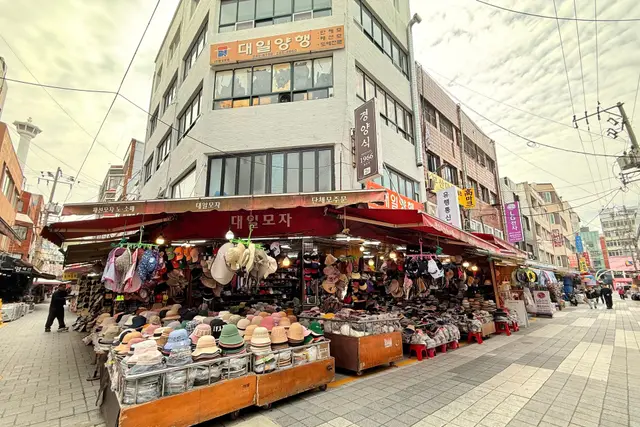
Gukje Market
A sprawling postwar-era market that's best explored on foot, making it a natural, low-key opener for the day in Jung-gu.
Quietest: 9–11 AM Time to allow: ~1.5 hHow to get there
The market sits in Jung-gu, Busan's old downtown core, within easy walking distance of two Metro Line 1 stations. From Jagalchi Station, take Exit 3 and walk roughly 8–10 minutes north; from Nampo Station, Exit 3 also works and cuts the walk to about 5–7 minutes through the Nampo-dong shopping streets. Both routes are flat and well-signed once you're in the district. Look for the arched entrances marking Gukjesijang-ro and the surrounding gil (alleys).
- Take the subway or a taxi Directions →
- Afternoon
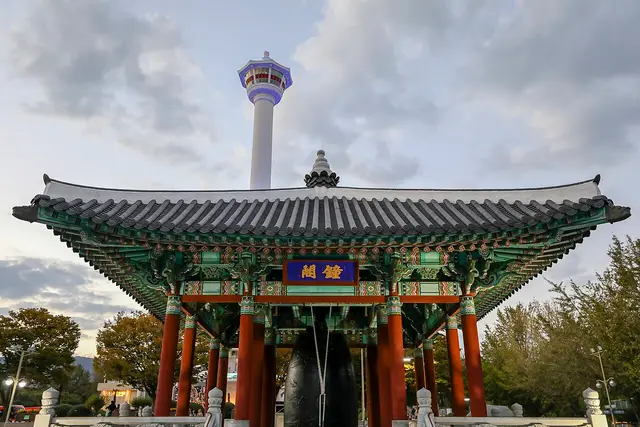
Busan Tower
Sitting atop Yongdusan Park, it delivers a 360-degree harbor and rooftop view for just a short elevator ride up, making it an easy pairing with the park below.
Time to allow: ~1 hHow to get there
The tower sits inside Yongdusan Park, and the walk up is part of the experience. From Nampo Station (Busan Metro Line 1), take Exit 1 or 7 and follow the signs toward the park. It's about a 10-minute uphill walk through Nampo-dong's shopping streets.
- ~1 min walk (0.1 km) Directions →
- Afternoon
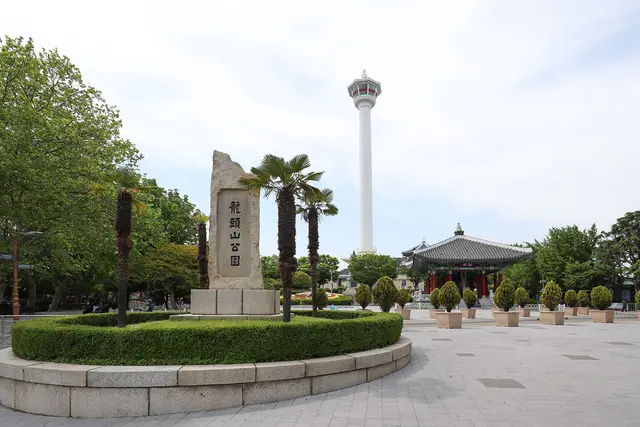
Yongdusan Park
Busan's hilltop green space anchors Busan Tower and the surrounding views, and its central Jung-gu location makes it a natural link between the market and the tower.
Time to allow: ~53 minHow to get there
The easiest approach is Nampo Station (Busan Metro Line 1), Exit 7, which puts you at the base of the hill in central Nampo-dong.
- Take the subway or a taxi Directions →
- Evening
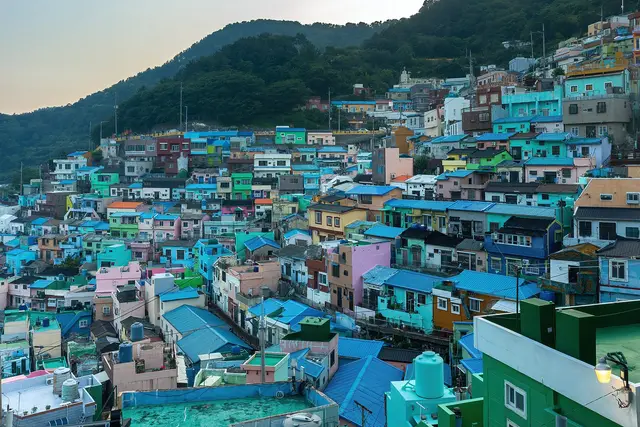
Gamcheon Culture Village
The pastel hillside houses, murals, and stairway galleries of Saha-gu make for an atmospheric close to the day, with soft late-afternoon light for photos.
Time to allow: ~2.5 hHow to get there
The village sits at 203 Gamnae 2-ro, Saha-gu, on a steep hillside inland from Busan's coast. The most reliable route is Busan Metro Line 1 to Toseong Station, Exit 6, then either a short taxi ride (roughly 10 minutes) or the local Saha-gu shuttle/village bus that loops up toward the entrance, signs and taxi stands near the exit point toward Gamcheon.
Day 2 · Coastal skywalk to Haeundae's shoreline
Day two begins in Nam-gu at the Oryukdo Skywalk, then heads into Haeundae-gu for an art stop at MUSEUM 1 in Centum City before settling in for the evening along Haeundae's beach and boardwalk.
- Morning
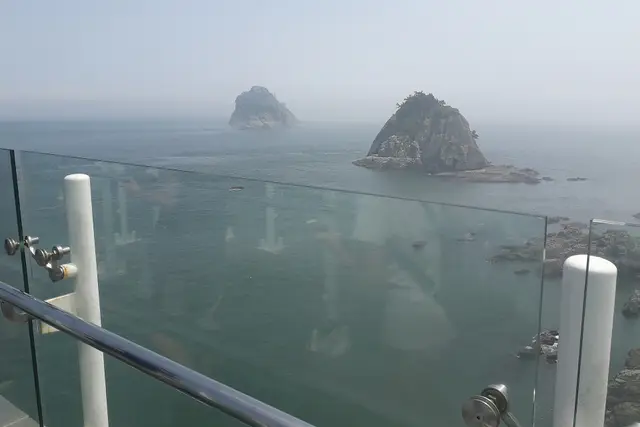
Oryukdo Skywalk
A free glass-floored platform jutting out over the sea toward Oryukdo island, it's a striking, quick way to start the day on Nam-gu's coast.
Time to allow: ~38 minHow to get there
- From Kyungsung University/Pukyong National University Station (Busan Metro Line 2), it's roughly a 15–20 minute bus ride plus a short walk
- Take the subway or a taxi Directions →
- Afternoon
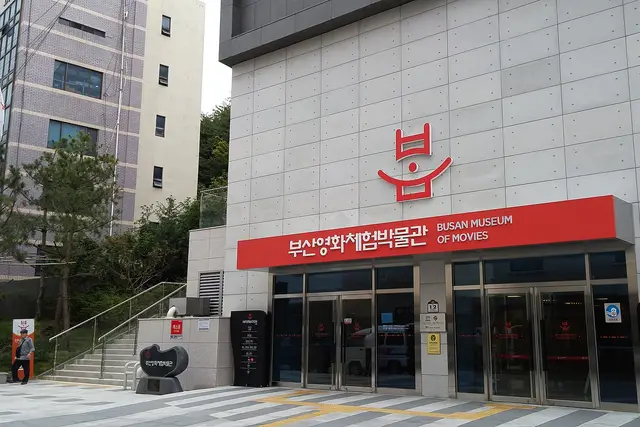
MUSEUM 1
A contemporary art and design space in Centum City, it offers an easy indoor pairing with the surrounding Haeundae-gu shopping district for the afternoon.
Time to allow: ~2 hHow to get there
The museum sits at 20 Centum-seo-ro in Haeundae-gu, right in the Centum City complex. The easiest approach is Busan Metro Line 2 to Centum City Station. Take the exit that feeds directly into the underground concourse connecting to Shinsegae department store, and you can walk there almost entirely indoors, which matters if it's raining or during Busan's humid summer months. From Haeundae Beach itself it's a short taxi ride or a couple of stops on the metro, so it pairs naturally with a beach morning and a museum afternoon.
- Take the subway or a taxi Directions →
- Evening
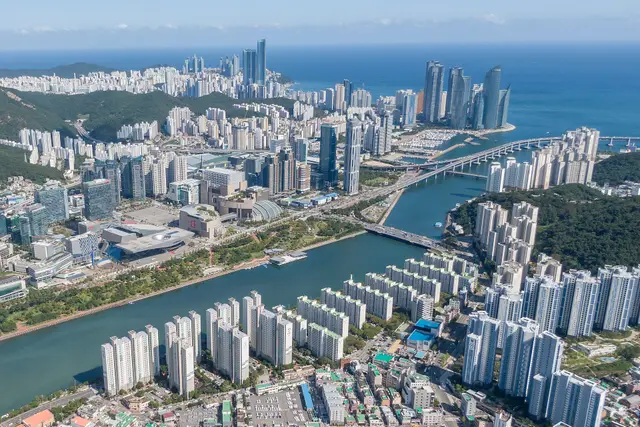
Haeundae in Busan
The long sand strip, Dongbaek Island coastal walk, and nearby aquarium give this stretch of Haeundae-gu enough to fill a relaxed evening by the water.
Time to allow: ~4 hHow to get there
Take Busan Metro Line 2 to Haeundae Station. Exit 3 or Exit 5 leads onto Guemgangno, a straight shot toward the sand that takes about 10–15 minutes on foot, passing convenience stores, motels, and street food carts along the way. If arriving from Seomyeon or Nampo-dong, the Line 2 ride runs roughly 40–50 minutes depending on transfers, so budget travel time accordingly.
Day 3 · Cliffside temple to fishing-village sunset
Day three moves from Gijang's coastline to Haeundae, opening at the cliffside Haedong Yonggungsa Temple, moving on to graze through Haeundae Traditional Market, and closing with a slower-paced evening in the fishing village of Cheongsapo.
- Morning
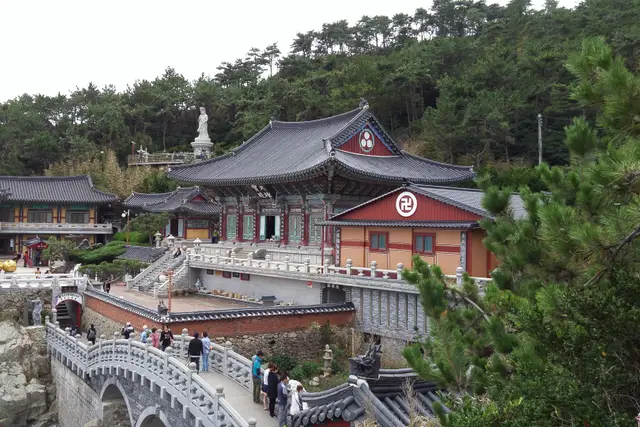
Haedong Yonggungsa Temple
A cliffside temple built into volcanic rock right above the surf, it's a distinctive, free-to-enter start to the day in Gijang.
Quietest: 7–8 AM Time to allow: ~1.5 hHow to get there
From Haeundae or Busanjin, take bus 181 directly to the temple. It's the simplest option and drops you close to the entrance. Alternatively, ride the subway to Haeundae Station (Line 2) and transfer to a taxi or the 181 bus from there.
- Take the subway or a taxi Directions →
- Afternoon
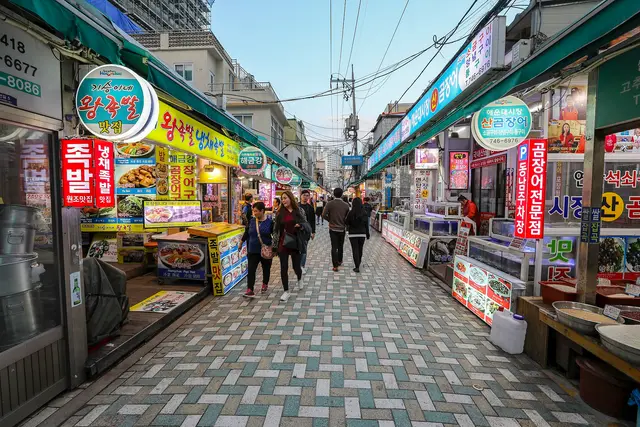
Haeundae Traditional Market
A covered alley of street food and produce stalls just back from Haeundae Beach, it's a compact, hunger-friendly midday stop.
Time to allow: ~1 hHow to get there
Take Busan Metro Line 2 to Haeundae Station, and leave via Exit 5. From there it's roughly a 10-minute walk northeast, following the signs toward the beach, the market alley branches off Gunam-ro before you reach the sand.
- Take the subway or a taxi Directions →
- Evening
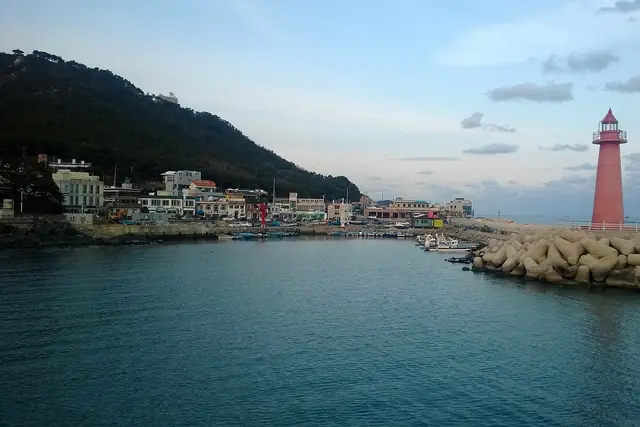
Cheongsapo in Busan
This small fishing village with its striped lighthouse, harbor tanks, and skywalk makes for a scenic, slower-paced sunset finish to the trip.
Time to allow: ~4 hHow to get there
Cheongsapo has no subway station of its own; the closest is Haeundae Station on Busan Metro Line 2. From Exit 5, you can either take a short taxi ride (about 10–15 minutes) or walk the scenic route: head up Dalmaji-gil (Dalmaji Road), the winding, pine-lined coastal road above Haeundae Beach that locals call "Korea's Napa Valley" for its curves, then descend the stairs and slopes toward the harbor.
Frequently asked questions
How should I get around for this Busan itinerary?
The stops are spread across several districts — Jung-gu, Saha-gu, Nam-gu, Haeundae-gu, and Gijang — so transit or taxis are needed between most stops each day rather than walking, aside from the short walk between Yongdusan Park and Busan Tower.
What's the best time of day to visit the markets?
Both Gukje Market and Haeundae Traditional Market are calmest in the morning hours, so visiting them earlier in the day helps you move freely before crowds build.
Is this itinerary heavy on walking?
Each day mixes on-foot exploring, like the market stalls, park paths, and village stairways, with longer transit hops between districts, so comfortable shoes are worth it even though distances between areas are covered by transit.
Should I plan around weekends or weekdays?
Several stops, including Busan Tower, Yongdusan Park, Oryukdo Skywalk, MUSEUM 1, and Haedong Yonggungsa Temple, are noticeably calmer on weekdays, so weekday visits are a good default if your schedule allows it.
How much time should I set aside for the evening stops?
The evening stops on days one, two, and three — Gamcheon Culture Village, Haeundae, and Cheongsapo — are all designed as longer, unhurried visits, so it's worth keeping the rest of each day's plans lighter to leave room for them.
Plan your trip to Busan
South Korea eSIM & staying connected →
Some links above are affiliate links — if you book through them, Wander Atlas earns a small commission at no extra cost to you. It's how we keep every guide free.