Haeundae Traditional Market: Busan Travel Guide (4.2★)
When to visit South Korea: month-by-month weather, crowds and holidays →
✓ Facts verified via Google Places · Aug 30, 2026
At a glance
Opening hours
- Monday: 9:00 AM – 10:00 PM
- Tuesday: 9:00 AM – 10:00 PM
- Wednesday: 9:00 AM – 10:00 PM
- Thursday: 9:00 AM – 10:00 PM
- Friday: 9:00 AM – 10:00 PM
- Saturday: 9:00 AM – 10:00 PM
- Sunday: 9:00 AM – 10:00 PM
Live foot-traffic data via BestTime.app
How this guide is made
Produced with AI assistance and reviewed against live data sources. Facts such as hours, ratings, and location come from Google Places; images are licensed or public domain. Details can change — please verify before visiting. Editorial policy
Why go
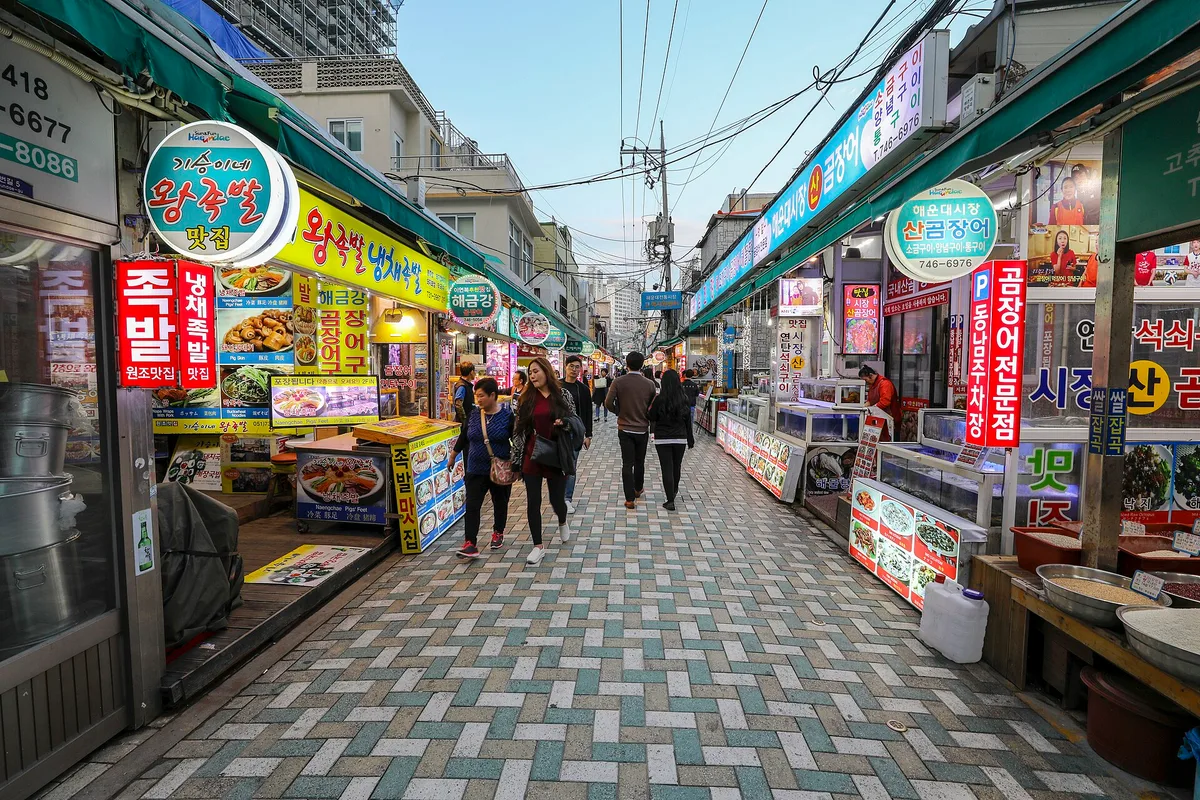
You come here for the gap between the beach and the backstreets. Haeundae Beach draws the crowds with its sand and skyline, but two minutes inland the market alley runs narrow, low-roofed, and thick with steam from a dozen food stalls. It’s not a secret, locals and tourists both eat here, but it’s where the neighborhood actually feeds itself.
Getting there
The market sits at 22-1 Gunam-ro 41beon-gil, in Haeundae, a short walk from the beach’s main strip.
Take Busan Metro Line 2 to Haeundae Station, and leave via Exit 5. From there it’s roughly a 10-minute walk northeast, following the signs toward the beach, the market alley branches off Gunam-ro before you reach the sand.
Taxis from anywhere in Haeundae are cheap and simple if you’re carrying beach gear.
What to eat
This is a grazing market, not a sit-down meal. Stalls sell small portions meant for eating standing up or walking.
Look for:
- Ssiat hotteok, a Busan specialty, a fried sweet pancake stuffed with seeds and nuts, molten in the center
- Chungmu-style gimbap, small, sauceless rice rolls served with spicy squid
- Fresh sashimi and grilled seafood stalls near the market’s seaward end
- Fish cakes (eomuk) on skewers, served in their own hot broth
- Korean-Chinese noodles and dumplings from a few sit-down counters mid-alley
Portions are small and cheap enough that the right move is to buy from three or four stalls rather than fill up at one.
What to see
Beyond the food, it’s a working market. Produce sellers, dried anchovies stacked in wooden crates, banchan vendors ladling kimchi into plastic tubs for regulars who’ve shopped here for years. The covered roof keeps it usable in rain, and strings of bulbs light the alley once the sun drops, which is when it gets genuinely atmospheric, steam rising off grills, the clatter of tongs on hot plates, vendors calling out prices.
It’s compact. You can walk the full length in ten minutes, though eating your way through takes longer.
When to go
The market runs 9am to 10pm every day of the week, so there’s no wrong day to time your visit.
Crowds are lightest from 9am to 11am, on both weekdays and weekends, early enough that some stalls are still setting up, but the alley is easy to move through. Weekend evenings are the opposite: 5pm to 10pm sees the heaviest foot traffic, as dinner crowds stack up alongside beachgoers heading in after the sand cools.
If your priority is photos and breathing room, morning wins. If you want the full sensory hit (grills roaring, crowds three-deep at the busiest stalls) go at dusk and accept the squeeze.
How to visit like a local
Come with small bills. Many stalls are cash-preferred or cash-only, and card readers can be slow or absent at the smallest counters.
Order by pointing. Most vendors are used to gesturing customers, and menus are often just photos taped to the stall.
Don’t sit down expecting table service; most of this market is built for eating on your feet, plate in hand, standing near the stall you bought from. That’s normal here, not a sign you’re doing it wrong.
The mistake visitors make is treating this as a quick photo-op on the way to the beach. Give it a real hour. Walk the alley once end-to-end scoping out stalls, then double back and actually eat.
If you’re here on a weekend evening and the crowd feels like too much, the market’s daily 9am opening means you can simply return the next morning during the 9–11am lull instead of fighting the crowd.
Pair it with a beach walk before or after, Haeundae Beach is close enough that sandy feet and market food go together naturally, and it’s the easiest way to bookend a visit without backtracking across the neighborhood.
Frequently asked questions
How do I get to Haeundae Traditional Market?
Take Busan Metro Line 2 to Haeundae Station and leave via Exit 5. It's about a 10-minute walk northeast toward the beach; the market alley branches off Gunam-ro.
When is the quietest time to visit?
Both weekdays and weekends are calmest from 9am to 11am, right after the market opens for the day.
What time should I avoid?
Skip 5pm–10pm on weekends if you don't like crowds — that's when dinner traffic and beachgoers overlap and the alley gets tight.
How much time should I set aside?
An hour is enough to walk the alley and eat from a few stalls. It's a compact market, easily paired with a beach visit.
What should I order?
Try ssiat hotteok (seed-stuffed sweet pancake), Chungmu-style gimbap, skewered eomuk fish cakes, and grilled or fresh seafood near the market's seaward end. Bring cash — many stalls don't take cards.
Plan your trip to Busan
Some links above are affiliate links — if you book through them, Wander Atlas earns a small commission at no extra cost to you. It's how we keep every guide free.
Related guides


This spot is Day 3 of our Busan 3-day itinerary