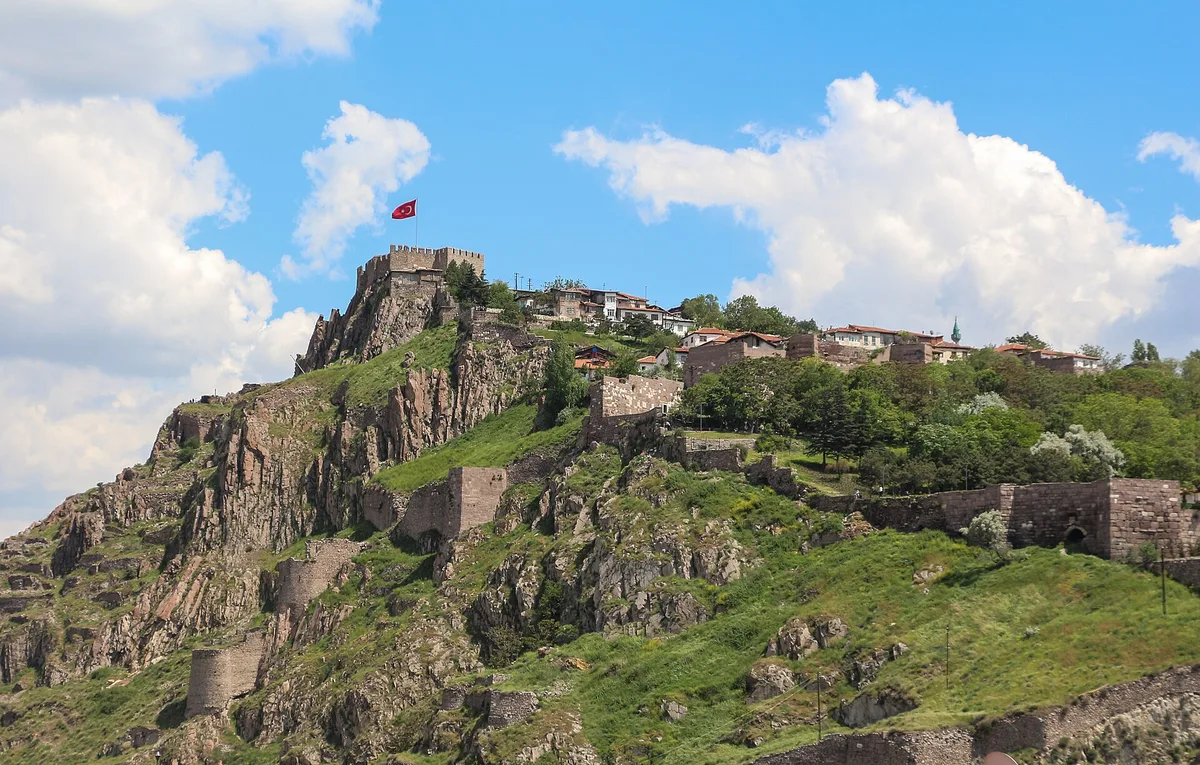
The climb starts before you notice it’s begun. From Ulus, the streets tilt upward, cobbles replace asphalt, and the modern city’s noise thins out until you’re walking between stone houses stacked one on top of the next, laundry strung between windows, cats sunning themselves on doorsteps. This is the Kale district, and above it, blunt and weathered, rises the double ring of walls that gives Ankara Castle its silhouette from almost anywhere in the city.
Why go
Ankara Castle isn’t a single monument you buy a ticket for and walk through in fifteen minutes (it’s a hilltop citadel that’s still a living neighborhood, with the fortress walls wrapping around houses, tea gardens, and workshops that have occupied this ground for centuries. The site’s exact origins are debated, with construction and rebuilding attributed variously to Galatians, Romans, and Byzantines, and later reinforced under the Seljuks) the mismatched masonry in the outer walls, including reused column drums and carved blocks, tells that layered story better than any plaque could.
What draws almost 23,000 reviewers a year isn’t a single artifact but the experience of standing on the inner citadel walls at golden hour, watching the whole basin of Ankara (the domes of old mosques, the sprawl of apartment blocks, the haze toward the horizon) spread out in every direction.
Getting there
The castle sits above Ulus, Ankara’s old commercial core, in the Altındağ district. The most straightforward approach is to reach Ulus Square first (Ankara’s Ankaray light rail line stops at Ulus, and several city bus routes converge there too) then walk uphill through the Atpazarı area, following signs and the rising walls themselves. It’s roughly a 15–20 minute walk from Ulus Square, mostly uphill on cobblestone streets, so it’s not stroller- or wheelchair-friendly in most stretches.
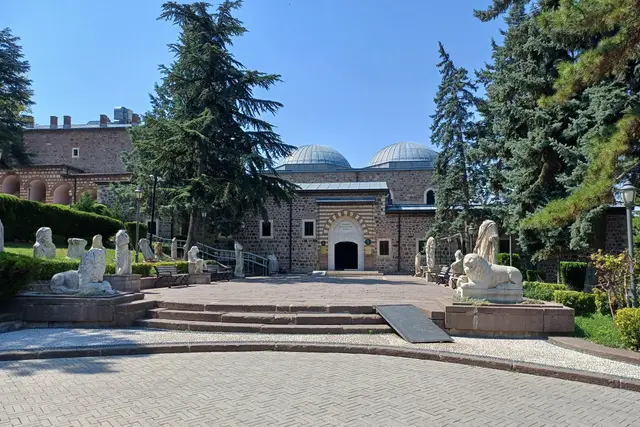
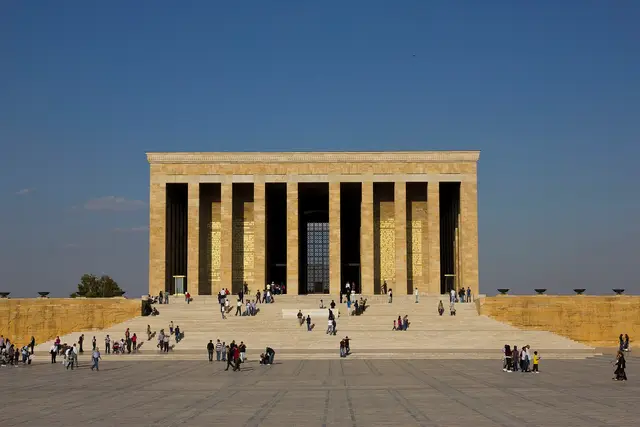
Taxis can drop you closer to the upper gate if you’d rather skip the climb. The nearby Anıtkabir and the Museum of Anatolian Civilizations, both major Ankara sights, are close enough to combine into the same day out.

What to see and do
Once inside the walls, the site splits loosely into the outer fortifications, built lower down the hill, and the inner citadel (İç Kale) at the summit, where the oldest and best-preserved towers stand. Walk the perimeter path along the inner walls for the money shot: 360-degree views over Ankara, with Atakule tower visible to the southwest on clear days. Inside the walls, the Kale neighborhood itself is worth slow wandering, restored Ottoman-era houses, some converted into small cafés and carpet or antique shops, line narrow lanes named after old guild trades.
Look for the Şark Kulesi (Eastern Tower) and Ak Kale (White Fortress) sections, the most-photographed stretches of stonework. Give yourself 1.5 to 2 hours minimum; longer if you stop for tea at one of the rooftop cafés built into the old houses, several of which face directly toward the citadel’s silhouette at sunset.
When to go
Late afternoon, roughly two hours before sunset, is the classic time: the light rakes across the stone and the haze over the city softens into gold. Because this is one of Ankara’s most-visited landmarks, weekend afternoons bring the heaviest foot traffic on the narrow lanes and viewing platforms, if you’d rather have the walls closer to yourself, aim for a weekday morning instead, when the neighborhood is still waking up and the tea houses are just opening. Spring and autumn keep the climb comfortable; summer afternoons on exposed stone can be genuinely hot with little shade.
How to visit like a local
Locals treat the Kale as a neighborhood to pass through and linger in, not a monument to tick off a list, so slow down, and don’t just beeline for the top viewpoint. Wear real shoes; the cobblestones are uneven and slick when wet. Most cafés and small shops inside the walls take cards now, but it’s worth carrying some cash in Turkish lira for the smaller stalls and tea vendors who don’t.
There’s no formal ticket booth for the walls and streets themselves, so there’s no queue to plan around, the crowding happens at the popular photo points along the inner ramparts, not at an entrance gate, so simply walking a little further around the wall than everyone else usually buys you an empty stretch of view. The most common mistake visitors make is trying to drive up; the streets are narrow, partly pedestrian, and parking is scarce, so walking from Ulus or taking a taxi to the base is far less stressful than navigating a car through the old town.
Frequently asked questions
How do I get to Ankara Castle from the city center?
Take the Ankaray light rail or a city bus to Ulus Square, then walk uphill about 15–20 minutes through the Atpazarı area following the walls; a taxi can also drop you near the upper gate.
Is there an entrance fee for Ankara Castle?
Walking the walls and exploring the Kale neighborhood's streets is free; some individual tower viewpoints or small museum stops nearby may charge a modest fee, so it's worth confirming current prices on arrival.
How long should I plan to spend there?
Most visitors spend 1.5 to 2 hours exploring the walls and old town lanes, longer if you stop for tea at one of the rooftop cafés with a view of the citadel.
When is the best time to visit to avoid crowds?
Weekday mornings are noticeably calmer than weekend afternoons, when the popular viewpoints along the inner walls get busiest; late afternoon on a weekday combines good light with fewer crowds.
What else can I combine with a visit to the castle?
Anıtkabir (Atatürk's mausoleum) and the Museum of Anatolian Civilizations are both within easy reach of Ulus and pair naturally with a castle visit in the same day.
Plan your trip to Ankara
Turkey eSIM & staying connected →
Some links above are affiliate links — if you book through them, Wander Atlas earns a small commission at no extra cost to you. It's how we keep every guide free.