Why this museum matters
You don’t come here for a quick photo. You come because this domed former bazaar holds the finds that define what “Anatolian” even means, nine thousand years of it, arranged room by room from the Stone Age through Rome.
Archaeologists and historians rank it among the finest collections of its kind anywhere. Unlike a lot of national museums, it doesn’t feel padded with filler. Nearly everything on the shelves earns its case.
Walking in: the building itself
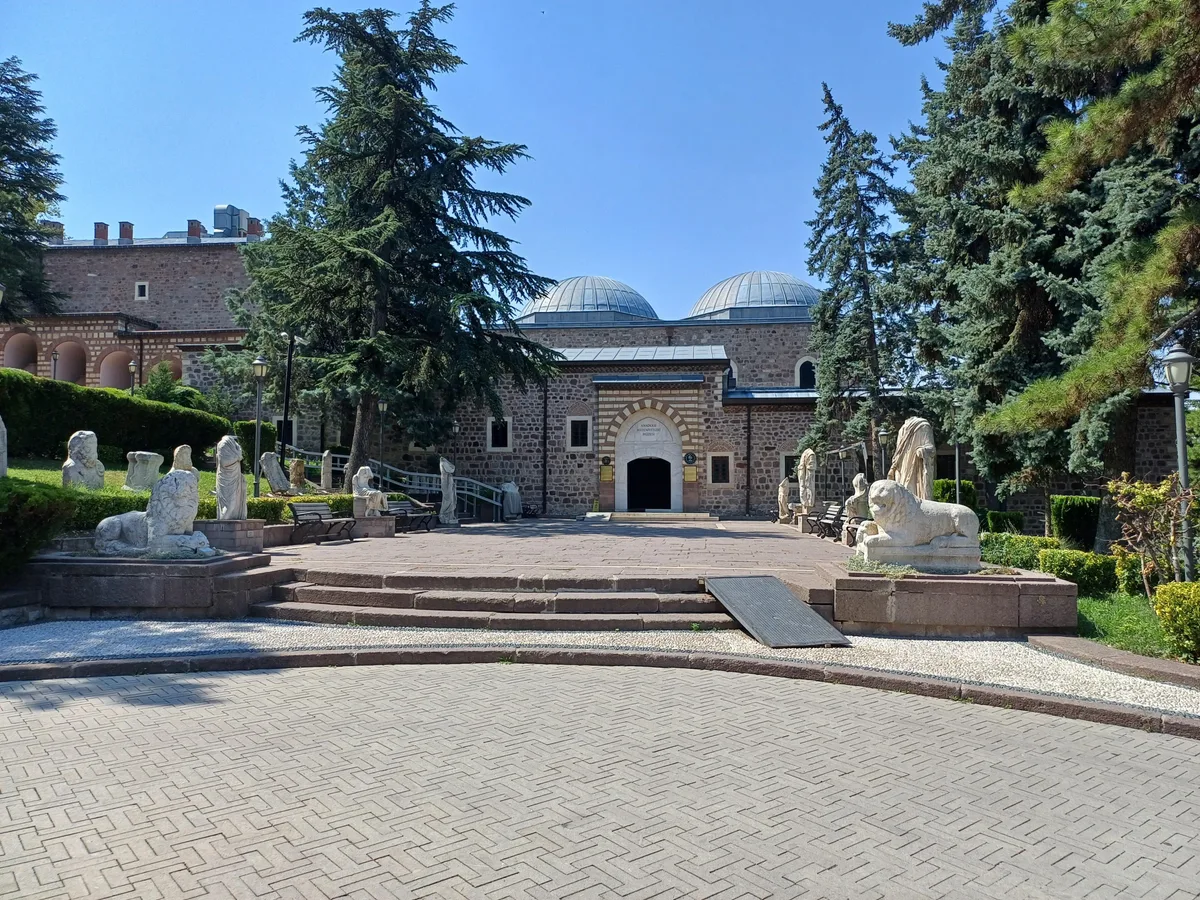
The museum occupies the Mahmut Paşa Bedesteni, a covered bazaar built in the 1460s under Mehmed the Conqueror, plus an adjoining caravanserai. Thick stone walls, brick domes overhead, a hush that feels older than the artifacts themselves.
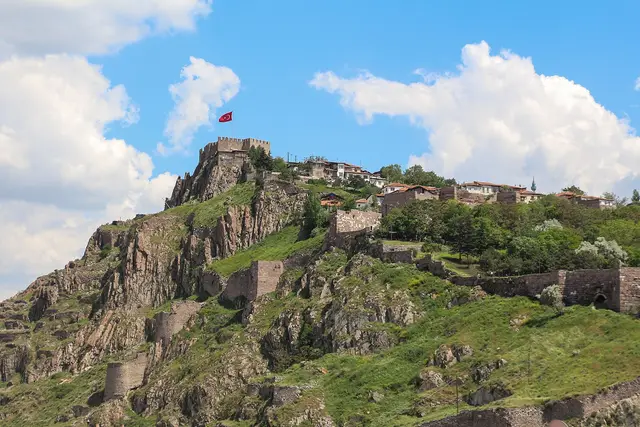
You enter near Ankara Castle (Ankara Kalesi), on a cobbled street in the Ulus district. The citadel walls are close enough to fold into the same visit, most people climb up before or after.
What you’ll actually see
Start at the Paleolithic and Neolithic rooms, where finds from Çatalhöyük (wall paintings, a bull-horned shrine reconstruction, some of the earliest known human settlement art) anchor the ground floor. From there the story moves chronologically.
Highlights to watch for:
- Hittite stone reliefs and orthostats, including scenes from Hittite mythology carved in dark basalt
- Bronze Age gold jewelry and ceremonial vessels from Alacahöyük’s royal tombs
- Phrygian wooden furniture and bronze fibulae, some of the best-preserved of their era
- A central courtyard where larger stone monuments sit under open sky
- Roman and Urartian sections rounding out the top floor
The layout is a rough circle around the domed hall, so it’s hard to get lost. Budget two hours minimum; three if you read the labels closely.
When to go
The museum runs daily from 8:30am to 9pm, with a short closure between 6:45 and 7pm as they reset for the evening hours. Plan around that gap rather than arriving right at 6:45.
Weekends stay crowded nearly the entire day, with the heaviest crush between noon and 6pm. Tour groups arrive in waves once the castle above fills up.
Weekday evenings are your best window. After 7pm the tour buses are gone, the courtyard empties out, and you can actually stand in front of the Çatalhöyük reliefs without shuffling forward on cue.
Getting there
The museum sits in Ulus/Altındağ, Ankara’s old city core, at Gözcü Sokak No:2 inside the Kale (castle) neighborhood. It’s a steep but short walk uphill from Ulus Meydanı, the main square, roughly 10–15 minutes on foot.
By public transport, take the Ankaray or M1/M2 metro line to Ulus station, then walk up toward the citadel. The cobbled streets get narrow, so wear shoes with grip. Taxis and ride-hailing apps can drop you closer to the entrance if the hill isn’t appealing.
How to visit like a local
This museum is firmly on the tourist circuit. It’s not a hidden find, so plan around the crowds rather than expecting to dodge them entirely.
- Best time: weekday evenings, 7–9pm, are consistently the quietest window measured here. Weekends never really thin out, even early morning.
- Tickets: buy in advance online if the option is available, or arrive right at 8:30am on a weekday to beat the first tour groups.
- Pace yourself: the domed main hall is where everyone clusters first. Skip ahead to the side galleries and loop back once the crowd thins.
- Combine it: pair your visit with a walk up to Ankara Castle immediately after. The entrance is a two-minute walk and the views over old Ankara are worth the climb.
- Etiquette: photography is generally allowed without flash; keep voices low near the reliefs, as the stone rooms carry sound.
- Common mistake: tourists often treat this as a 45-minute stop between the castle and lunch. Locals and repeat visitors know the Hittite and Phrygian rooms alone reward a slow half hour each.
Frequently asked questions
How long should I spend at the Museum of Anatolian Civilizations?
Plan on two to three hours to see the collection properly, longer if you want to read the didactic labels in each room.
When is the quietest time to visit?
Weekday evenings between 7pm and 9pm are the calmest measured window. Weekends stay busy essentially all day, with the worst crowds between noon and 6pm.
How do I get to the museum from central Ankara?
Take the metro to Ulus station and walk uphill about 10–15 minutes toward Ankara Castle, or take a taxi directly to Gözcü Sokak in the Kale district.
What are the opening hours?
The museum is open daily from 8:30am to 6:45pm and again from 7pm to 9pm, with a short break in between. Confirm hours on the official site before visiting, as museum schedules can shift for holidays.
What else is nearby worth combining with this visit?
Ankara Castle (Ankara Kalesi) is a two-minute walk from the entrance and pairs naturally with the museum, along with the old shops and cafes inside the citadel walls.
Plan your trip to Ankara
Some links above are affiliate links — if you book through them, Wander Atlas earns a small commission at no extra cost to you. It's how we keep every guide free.