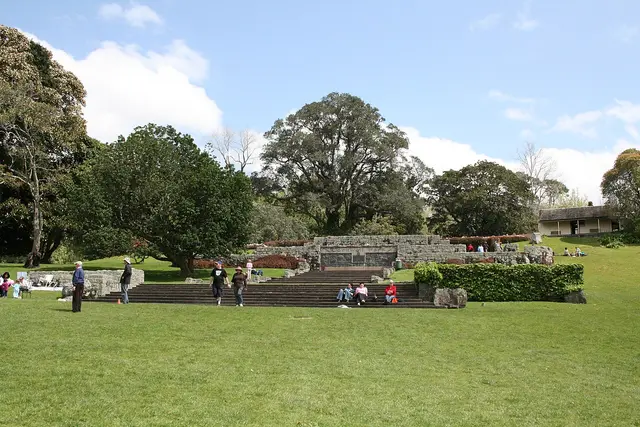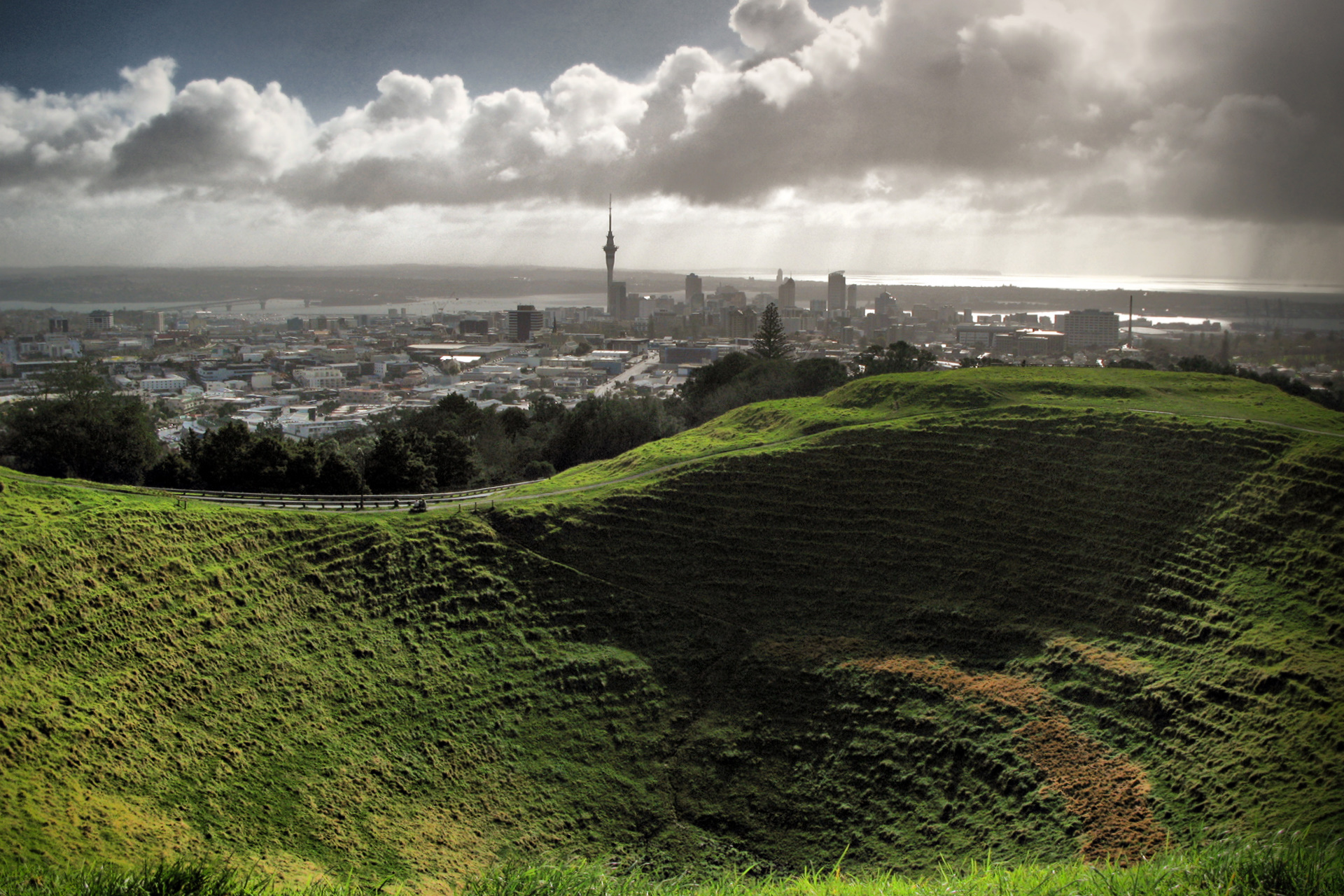
Halfway up the path, the suburb drops away below you. Villa roofs, Mount Eden Road and the city grid fall behind, and the slope turns into stepped earth terraces under the grass. Those terraces are the remains of a Māori pā. Up top, the ground falls into a bowl so steep and even that it looks pressed out with a giant spoon.
A crater you look into, never walk into
Maungawhau is the highest natural point on the Auckland isthmus. It rises to roughly 196 metres, and you climb it on foot from a residential street. It formed in an eruption around 28,000 years ago. The name means “mountain of the whau tree”.
The summit crater is the thing people come for. It’s about 50 metres deep, a smooth grassy cone known as Te Ipu-a-Mataaho, the bowl of Mataaho. Mataaho is the guardian of the secrets hidden in the earth. The crater is tapu, or sacred, so you look down into it from the rim and stay out of it.
A boardwalk now runs along part of the rim. It was built to keep feet off the fragile slopes and the archaeology underneath them.
The view from the summit
The top gives you a full circle of the city. From the summit area you can pick out:
- The Sky Tower and the central business district to the north
- The Waitematā Harbour and the low, even shape of Rangitoto Island beyond it
- The Manukau Harbour, glinting on the southwest side
- Maungakiekie / One Tree Hill and other volcanic cones scattered across the suburbs
- Eden Park stadium, close by to the west
Seeing both harbours from one spot shows you how narrow the isthmus is. Auckland is squeezed between two seas, and from here that stops being a map fact and becomes something you can see.
Getting up Maungawhau
The listed address is 250 Mount Eden Road, on the mountain’s eastern side. Several paths start from the streets around the base. The climb is short but steep in places, and fit walkers usually reach the top in 15–25 minutes.
The road to the summit is closed to private vehicles. The Tūpuna Maunga Authority, which co-governs Auckland’s volcanic cones, removed cars to protect the site. Park in the surrounding streets or come by bus. Mount Eden Road carries regular buses from the city centre, and the ride takes about 15 minutes.
Eden Garden sits on the eastern flank, and Mount Eden Village is at the foot of the mountain. That makes a walk up easy to combine with a coffee stop or a wander through the garden.

Timing your climb around the gates
Hours here run by the clock, and the clock changes. At the moment the summit opens at 7am and closes at 8:30pm every day. Those are this week’s times, though, not a permanent schedule. Auckland’s maunga change their hours through the year, so check the Tūpuna Maunga Authority website for the current month before you plan an early or late visit.
Sunset is the most popular slot, and the view across the Manukau at golden hour makes it clear why. If you want that view, start climbing well before closing so you aren’t rushed off the rim. Early mornings are usually calmer because the visitor groups and school trips haven’t arrived yet.
Wind is the other thing to plan for. The summit is exposed on every side, so a light layer helps even on a warm day in the city.
Walking the maunga with respect
Maungawhau is a wāhi tapu, a sacred place, as well as a lookout. Every Aucklander who walks here regularly knows a few unwritten rules:
- Stay on the formed paths and boardwalk. The terraces and storage pits are archaeological features, and shortcuts across them cause erosion.
- Never enter the crater. Climbing, sliding or rolling down into it is disrespectful, and the slopes are fragile.
- Don’t build anything or take anything. Stacking stones or writing words in rocks on the crater floor is a long-running problem the authority asks visitors to avoid.
- Bring water and take your rubbish home. Don’t count on bins or a kiosk at the top.
- Leave the drone at home unless you have checked the current rules with the authority.
It’s a very popular site, so on fine weekends you’ll share the rim with plenty of others. The best way to get breathing space is to come early, or walk on a weekday.
Reading the old pā on the slopes
Once you know what to look for, the hillside reads like a document. The flat, stepped ledges cut into the slopes are terraces where houses and defences once stood. The shallow rectangular hollows are rua, storage pits that would have held kūmara (sweet potato).
These features make Maungawhau one of the clearest surviving examples of a fortified volcanic pā in the city. Walk up slowly and you’ll pass several layers of them. Interpretive panels along the way explain the site’s significance to mana whenua, the iwi with ancestral ties to the mountain.
Nearby, once you’re back down
The mountain makes an easy half-day with the streets around it.
- Mount Eden Village: cafés, a bookshop and small shops along Mount Eden Road, a short walk from the base.
- Eden Garden: a garden planted into an old quarry on the eastern slopes, good if you want shade after the exposed summit.
- Maungakiekie / One Tree Hill: the larger volcanic park you’ll have seen from the top, a short drive south.
- Eden Park: the national rugby stadium, a pleasant walk west, through villa streets.
Allow one to two hours for the climb, the rim walk and lingering at the view. Add more if you’re pairing it with the garden or lunch in the village.
Frequently asked questions
Can I drive to the top of Maungawhau / Mount Eden?
No. Private vehicles are no longer allowed on the summit road. Park in the surrounding streets or take a bus along Mount Eden Road from the city centre, then walk up. Most people reach the top in 15–25 minutes.
What are the opening hours?
Right now the summit is open from 7am to 8:30pm every day. Auckland's maunga change their hours through the year, so check the Tūpuna Maunga Authority website for the current month before you go.
Can I walk into the crater?
No. The crater, Te Ipu-a-Mataaho, is tapu (sacred) and its slopes are fragile. View it from the rim and the boardwalk, and stay on the formed paths.
How long should I spend at Mount Eden?
Allow one to two hours for the climb, the walk around the crater rim and time at the view. Allow longer if you add Eden Garden or a stop in Mount Eden Village.
When is the best time to go?
Sunset is the most popular time for the light over the Manukau Harbour, so start climbing well before the gate closes. Early mornings are usually calmer. Bring a layer whenever you go, because the summit is exposed to the wind.
Plan your trip to Auckland
New Zealand eSIM & staying connected →
Some links above are affiliate links — if you book through them, Wander Atlas earns a small commission at no extra cost to you. It's how we keep every guide free.