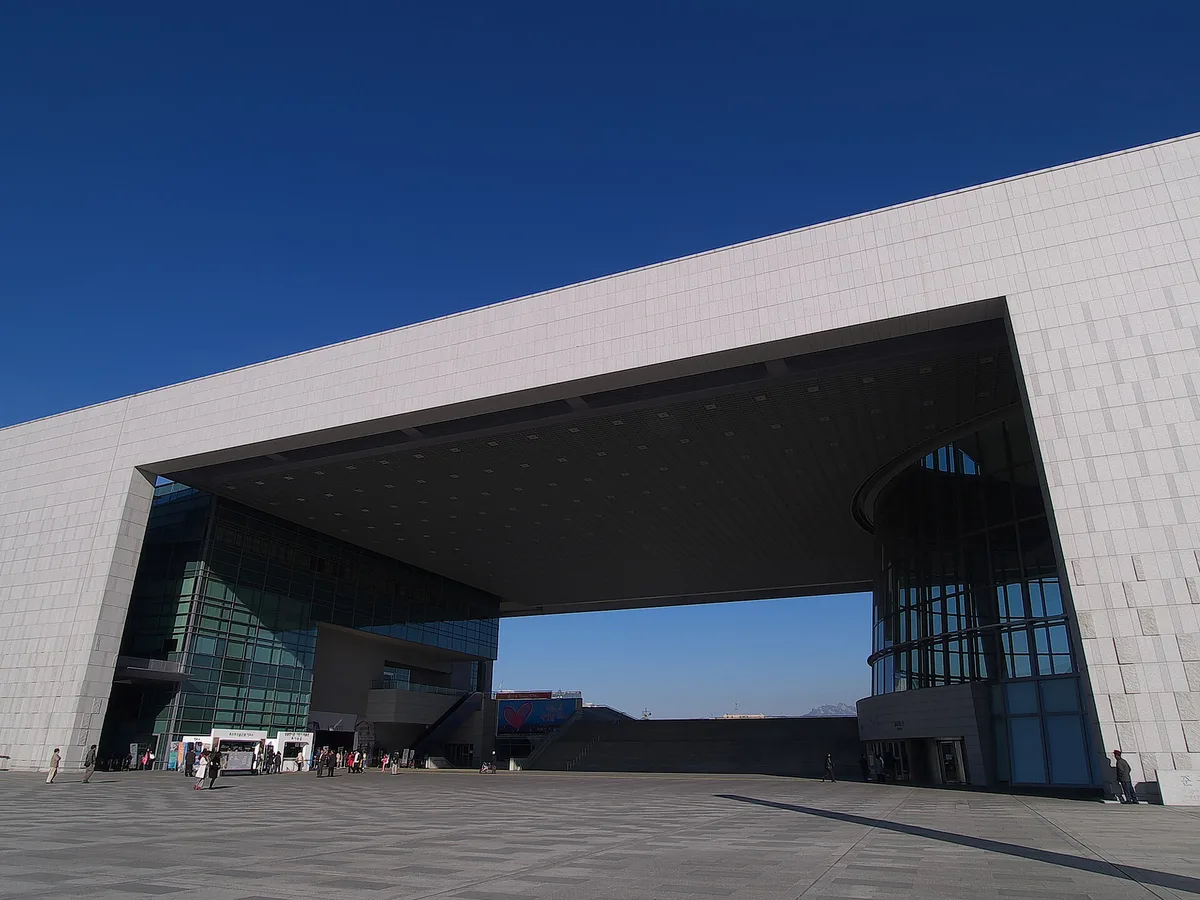
A Seoul landmark
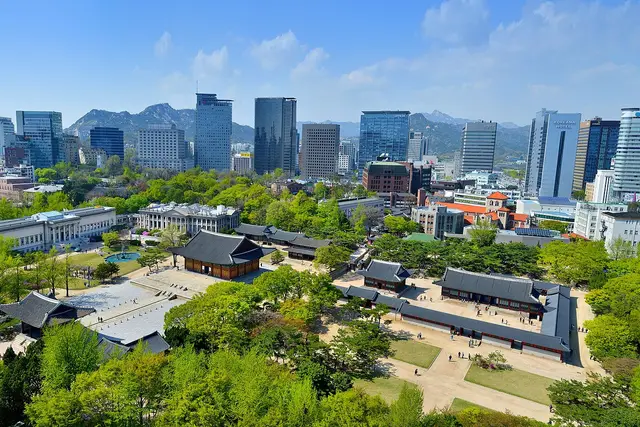
The National Museum of Korea sits in Yongsan District, central Seoul.
You approach it through Yongsan Family Park, past a long reflecting pool that mirrors the building’s low, fortress-like silhouette. The structure was completed in 2005, deliberately oversized, meant to signal that Korea’s cultural heritage deserves a home this grand.
Getting there
Take Seoul Subway Line 4 or the Gyeongui-Jungang Line to Ichon Station, Exit 2. From there it’s a short, signposted walk through the park.
- Line 4: Ichon Station, Exit 2
- Gyeongui-Jungang Line: same station, same exit
- Driving isn’t recommended, parking fills fast, and public transit drops you almost at the door
What’s inside
The permanent galleries span prehistoric pottery through Joseon-dynasty court life, military history, and Buddhist art. The ten-story stone pagoda from Gyeongcheonsa Temple dominates the atrium, you see it through the glass before you’ve even bought a ticket, which you don’t need for the permanent collection.
Give yourself at least two to three hours. The Gilt-bronze Pensive Bodhisattva, displayed in its own darkened room, draws quiet crowds who linger longer than anywhere else in the building. Special exhibitions, which do charge admission, rotate through a separate wing and often feature loans from other national collections.
When to go
Hours vary by day, so check before you plan around them:
- Monday, Tuesday, Thursday, Friday, Sunday: 9:30am–5:30pm
- Wednesday and Saturday: 9:30am–9:00pm
The extended evening hours on Wednesday and Saturday are your best move if you want space to actually look at things. Weekday visits between 10am and 6pm tend to be quieter than weekends.
Weekends are a different story. Between noon and 6pm on Saturday and Sunday, the main halls fill with families and school groups, and the pagoda atrium can feel more like a train platform. If you’re set on a weekend trip, aim for the later evening hours on Saturday, when crowds tend to thin out.
How to visit like a local
The museum is unmistakably one of Seoul’s most-visited attractions, so treat it accordingly rather than expecting solitude.
- Time it right: weekday mornings through mid-afternoon (10am–6pm) are calmest; weekend afternoons (noon–6pm) are the peak to avoid.
- Use the Wednesday or Saturday late hours: staying past 6pm thins the crowd dramatically while the galleries remain fully lit and open.
- Pay by card: like almost all Seoul institutions, the museum is essentially cashless, T-money transit cards and standard credit cards work everywhere, including the café and gift shop.
- Skip the special-exhibition line if you’re short on time: the permanent collection is free and covers the highlights; save paid special exhibitions for a return visit if the queue is long.
- Eat at the museum’s on-site restaurant or the park’s outdoor cafés rather than rushing out, re-entry on the same day is generally allowed, so a break in Yongsan Family Park doesn’t cost you your visit.
- The common mistake: tourists cluster around the pagoda and the Bodhisattva room, then skip the upper-floor donation galleries and the outdoor Sculpture Garden. Both are far less crowded and just as rewarding.
Bring headphones if you want the audio guide app rather than renting a device, and wear layers. The galleries run cool even in summer. Photography without flash is generally permitted in the permanent halls, though special exhibitions sometimes restrict it, so check the signage room by room.
Frequently asked questions
Is the National Museum of Korea actually in Boryeong?
No — it's in Yongsan District, Seoul, near Ichon Station. Boryeong is a separate coastal city over two hours away.
How do I get to the National Museum of Korea?
Take Seoul Subway Line 4 or the Gyeongui-Jungang Line to Ichon Station, Exit 2, then walk through Yongsan Family Park to the entrance.
What are the opening hours?
9:30am–5:30pm Monday, Tuesday, Thursday, Friday and Sunday; 9:30am–9:00pm on Wednesday and Saturday for extended evening visits.
When is the quietest time to visit?
Weekdays between 10am and 6pm are calmest. On weekends, the 8pm–9pm window (Wed/Sat late hours) is the quiet exception; avoid noon–6pm on weekends, the busiest stretch.
How long should I plan to spend there?
Budget two to three hours for the permanent collection alone; add more time if a special exhibition interests you, since those require separate paid tickets.
Plan your trip to Seoul
South Korea eSIM & staying connected →
Some links above are affiliate links — if you book through them, Wander Atlas earns a small commission at no extra cost to you. It's how we keep every guide free.
Related guides
This spot is Day 2 of our Seoul 5-day itinerary