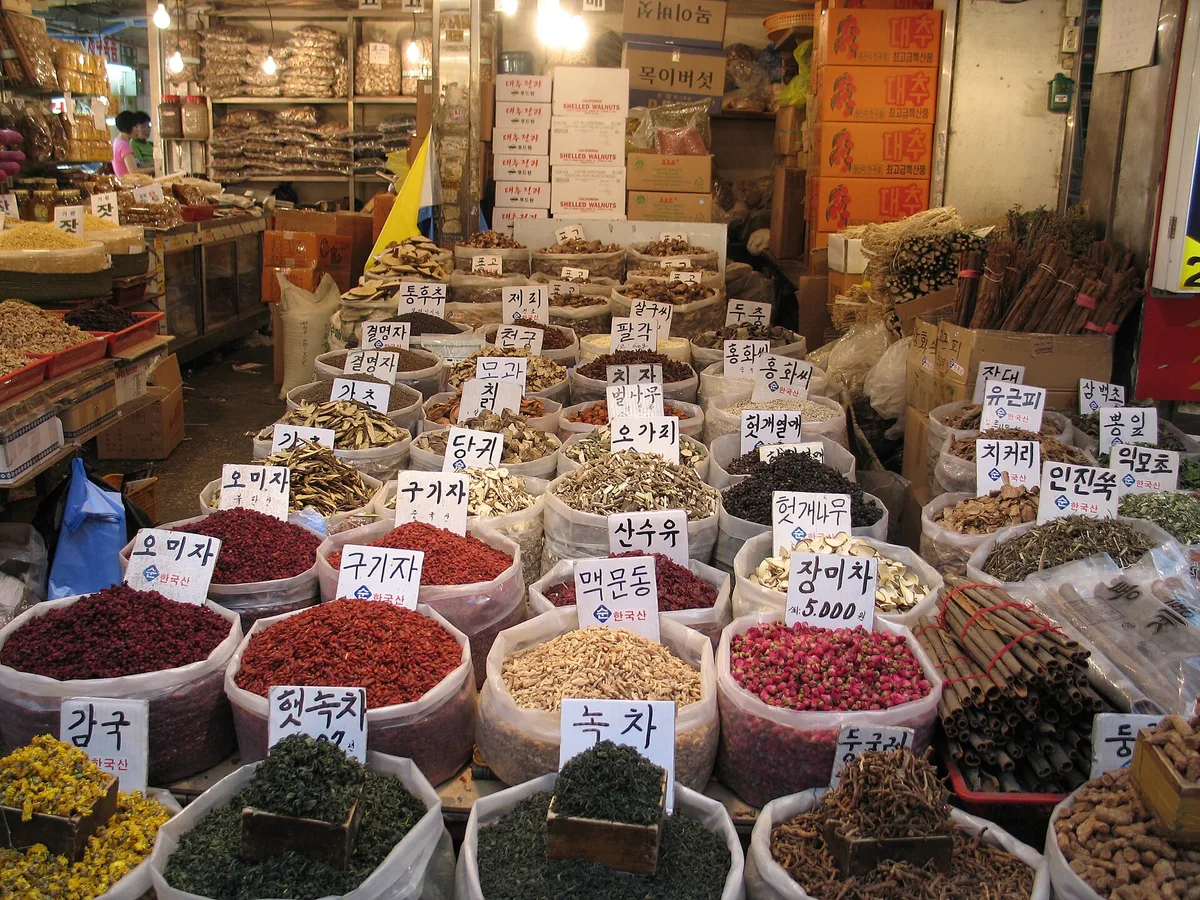
Why Gyeongdong Market is worth the trip
Step under the market’s corrugated roof and the air changes first, dry, faintly sweet, threaded with the smell of roasted chestnuts and dried mushrooms. This is Korea’s largest traditional herbal medicine market, and it smells like it. Sacks of cinnamon bark, ginseng roots, and dried jujubes are stacked shoulder-high along narrow aisles that have barely changed in decades.
It’s a working market first, tourist stop second. Vendors weigh out herbs on hanging brass scales, wrap them in brown paper, and shout prices in rapid-fire Korean over the hum of ventilation fans.
Getting there
Gyeongdong Market sits in Dongdaemun District, on the eastern edge of central Seoul. If you’re coming in from Ilsan or Goyang, plan for a 40–60 minute subway ride. The nearest stop is Jegi-dong Station on Seoul Subway Line 1, with exits leading almost directly into the market’s covered lanes.
From Seoul Station, it’s a straightforward ride with one possible transfer depending on the line. Taxis work too, but traffic around the market on a Saturday can eat up any time you’d save.
What to see and eat
The herbal medicine section is the market’s beating heart. Walk past stalls selling deer antler, red ginseng, and mystery roots you’ll need to ask about. Beyond herbs, the market spreads into produce, dried seafood, and a lively food alley.
Things to look for:
- Ginseng and red ginseng products, sliced, whole, or bottled as extract
- Roasted grains and nuts sold by the scoop, great for snacking on the walk
- Dried anchovies and seaweed stacked in open crates
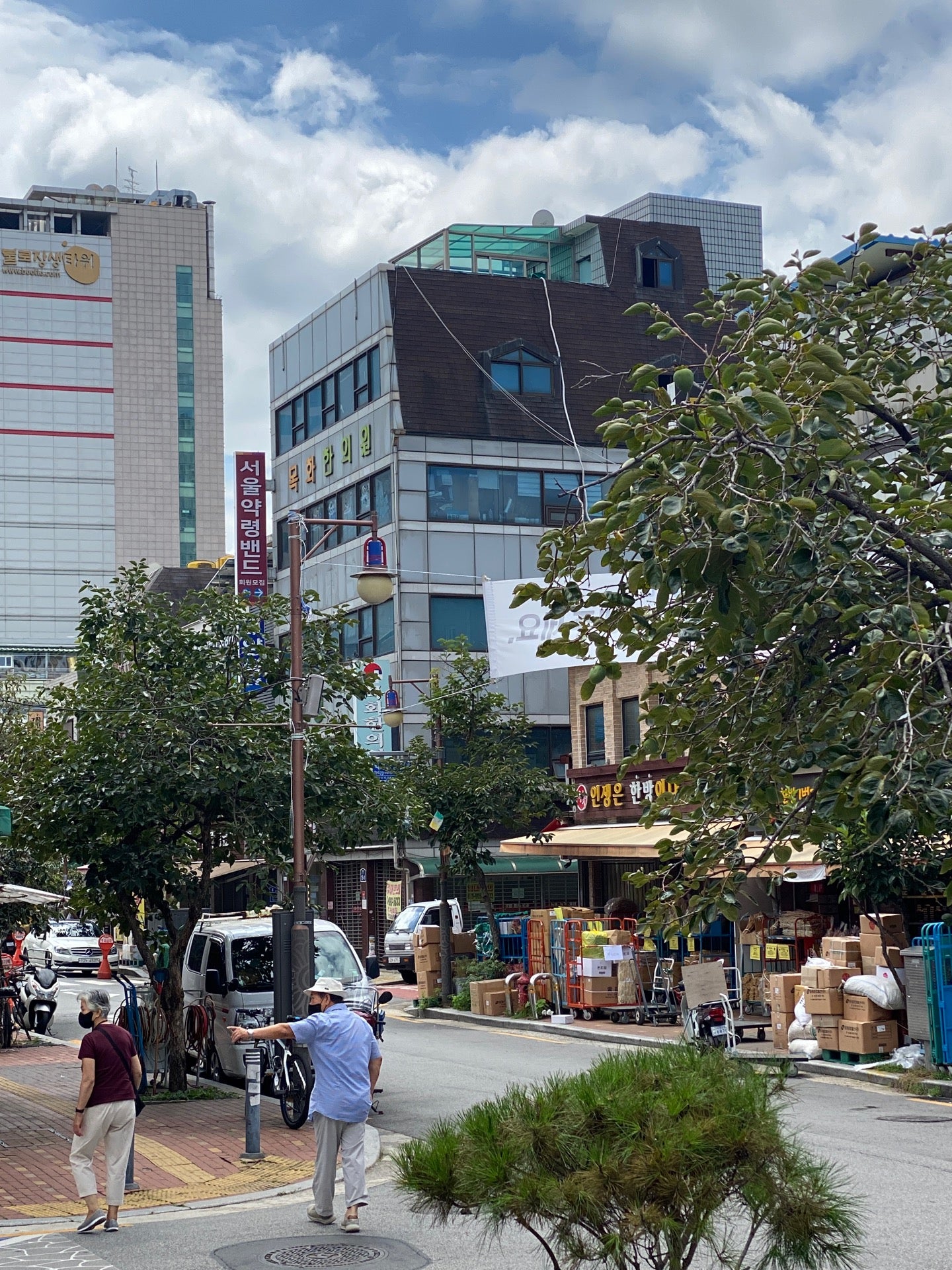
- Street food stalls offering hot snacks near the market’s entrances
Don’t expect polished signage or English menus everywhere. Half the fun is pointing at what smells good and asking the price with your fingers if the language barrier gets in the way.
When to go
The market keeps consistent hours every day, 9am to 6pm, with no weekly closing day listed. That said, timing your visit within those hours matters more than which day you pick.
Weekday mornings through afternoons stay relatively even in foot traffic, making any weekday a safe bet. On weekends, arrive right at opening, between 9am and 10am, to see stalls setting up without fighting crowds.
Avoid Saturday or Sunday between 11am and 5pm if you can. That’s when the aisles fill shoulder to shoulder with locals doing their weekly shopping and visitors snapping photos.
How to visit like a local
Gyeongdong Market is well and truly on the map now, so don’t expect a quiet secret. Expect a crowd, and plan around it instead. The smartest move is going right at opening on a weekend, or really any time on a weekday, since foot traffic there stays steady rather than spiking.
Cash still rules in the herb stalls and food alley, though larger shops increasingly take cards, carry some won just in case. Prices are often marked but treated as a starting point; polite haggling on bulk herb purchases is normal, especially if you’re buying more than a small bag.
Don’t rush the produce and herb sections just to find the food stalls. Locals shop here for specific ailments and household staples, so vendors expect real questions. Ask what a root or bark is used for and most will happily explain, even through gestures.
The market’s biggest tourist mistake is treating it purely as a photo backdrop. Buy something small, try a snack, and treat the vendors as the actual point of the visit. That’s what keeps this place running the way it has for generations.
Frequently asked questions
Is Gyeongdong Market actually in Goyang?
No — its address is in Dongdaemun District, Seoul. If you're based in Goyang or Ilsan, budget 40–60 minutes for the subway ride in.
How do I get to Gyeongdong Market by subway?
Take Seoul Subway Line 1 to Jegi-dong Station; exits lead close to the market's covered lanes.
When is the quietest time to visit?
Weekend mornings between 9am and 10am, right at opening, are calmest. Weekdays stay fairly even throughout the day, 9am to 6pm.
What's the best time to avoid crowds?
Skip Saturday and Sunday between 11am and 5pm — that's the busiest window, when local shoppers and visitors fill the aisles.
How long should I spend at the market?
One to two hours is enough to wander the herb and produce sections, browse the food alley, and grab a snack or noodle bowl.
Plan your trip to Seoul
South Korea eSIM & staying connected →
Some links above are affiliate links — if you book through them, Wander Atlas earns a small commission at no extra cost to you. It's how we keep every guide free.
Related guides
This spot is Day 4 of our Seoul 5-day itinerary