A week of open front doors
Buenos Aires keeps its finest rooms behind heavy doors. Much of the city’s grand architecture belongs to private clubs, government bodies and institutions, and on an ordinary day you see only the façade.
Semana del Patrimonio, Heritage Week, changes that for seven days. From November 2 to 8, 2026, historic clubs, palaces and institutional buildings across the city open their interiors to the public at no charge. You get to see staircases, ceilings and halls that most porteños never see from the inside either.
Dates, tickets and how the week runs
The 2026 edition runs from Monday, November 2 to Sunday, November 8. That gives you five working days and one full weekend, and the experience differs between the two.
On weekdays, many institutional buildings are still in daily use, and visits fit around that. The weekend usually draws families and local sightseers, so the city feels more like it is on an outing.
Access to the interiors is free. The organiser publishes the list of participating buildings and any registration or ticketing arrangements, and the conditions can vary from one building to the next. Some heritage visits in Buenos Aires work on a walk-up basis, while others cap numbers for guided groups.
Where the venues cluster
There is no single venue. The week happens wherever the participating buildings are, but Buenos Aires’ heritage stock is concentrated in a few neighbourhoods you can cover on foot.
- Monserrat and Avenida de Mayo: the civic spine between Plaza de Mayo and the Congress, lined with Belle Époque and Art Nouveau buildings such as Palacio Barolo.
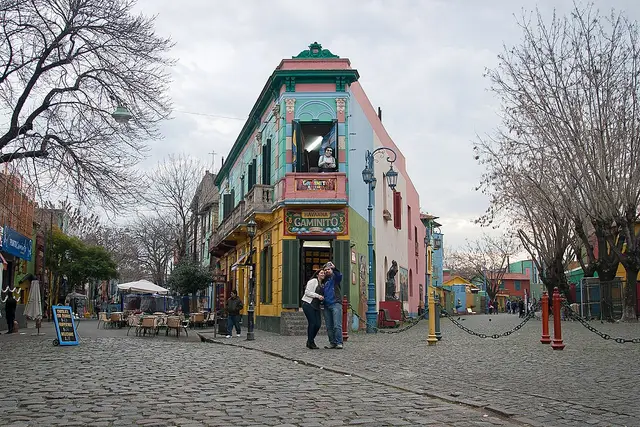
- San Telmo: the oldest residential quarter, with cobbled streets, colonial-era houses and former mansions.
- Retiro: around Plaza San Martín, home to aristocratic palaces from the early twentieth century, including Palacio San Martín.
- Recoleta: the city’s grandest residential district, built in the French style.
Not every building in these areas takes part in a given edition. The organiser’s programme is the list that counts.
Moving between buildings by Subte
The Subte, Buenos Aires’ metro, links most of the heritage districts. You pay with a rechargeable SUBE card, which also works on city buses.
- Line A runs directly beneath Avenida de Mayo. Its stations, including Perú, Piedras and Lima, let you work along the avenue building by building.
- Line C connects Retiro with Avenida de Mayo and Constitución, passing near San Telmo.
- Line E starts at Bolívar beside Plaza de Mayo and heads south-west.
- Line D starts at Catedral, also on Plaza de Mayo, and runs north-west towards Recoleta.
Plaza de Mayo is where Lines A, D and E meet, which makes it a natural base. Between San Telmo and Monserrat, walking is usually quicker than any train.
Jacaranda season on the street outside
Early November is late spring in Buenos Aires, and the jacarandas are in flower. The city planted these trees widely along its avenues and in its plazas, and in this season the canopies turn violet. Fallen blossom gathers on the pavements.
That gives Heritage Week a second layer. The queue outside a palace often stands under a purple tree, and the walk between two buildings is part of the outing. Plaza San Martín in Retiro and the avenues of Recoleta and Palermo have some of the densest plantings.
Days are generally warm and long at this time of year. Showers are not unusual, though. A light layer and something for rain cover the range.
Standing in line for a palace
Queueing works the Buenos Aires way: an orderly line on the pavement, often longer than it first looks.
- Greet the staff. A simple “buenas” or “buen día” at the door is normal courtesy here and opens conversations.
- Carry your passport or ID. Government and institutional buildings in the city commonly ask visitors for identification at security.
- Expect Spanish. Guided visits in public buildings are usually led in Spanish. Visitors who don’t speak it often carry a short written history of the building on their phone.
- Pack light. Security at official buildings often means bag checks, and a small bag gets through faster.
- Photography varies by room. Some rooms permit it and others don’t, and attendants enforce this.
Locals usually pick two or three buildings for a day rather than chasing a long list. The lines at the best-known palaces tend to build through the afternoon and on the weekend. Visitors who get the most out of the week usually start with the building they most want to see, then fill in with smaller ones nearby.
Building a day around it
Heritage Week pairs easily with the rest of central Buenos Aires. Plaza de Mayo puts the Casa Rosada, the Metropolitan Cathedral and the Cabildo within one square. Café Tortoni, the city’s oldest café, stands on Avenida de Mayo for a mid-route stop.
If your Sunday falls on November 8, San Telmo’s Sunday street fair runs along Calle Defensa, a short walk south of Plaza de Mayo. In Recoleta, the Recoleta Cemetery and the Basílica del Pilar sit next to each other, so you can finish a day of interiors among some of the city’s most elaborate funerary architecture.
A focused visitor can see a good handful of interiors in two full days. The whole week is there for anyone who wants to go slowly, one neighbourhood at a time.
Frequently asked questions
When is Semana del Patrimonio de Buenos Aires in 2026?
It runs from Monday, November 2 to Sunday, November 8, 2026, so the week includes five weekdays and a full weekend.
Do I need tickets for Heritage Week?
Access to the participating interiors is free. Entry arrangements can differ between buildings: some take walk-ups and some cap numbers for guided groups. The organiser publishes the programme and any registration details.
Where does Heritage Week take place?
It happens across the whole city, not at one venue. Heritage buildings cluster in Monserrat and along Avenida de Mayo, in San Telmo, Retiro and Recoleta. The organiser's programme lists which buildings take part.
How do I get between the buildings?
The Subte covers most of the heritage districts. Line A runs under Avenida de Mayo, and Lines A, D and E all meet at Plaza de Mayo. You pay with a SUBE card. Around San Telmo and Monserrat, walking is often quicker.
How many days should I set aside?
Two full days lets you see a good selection of interiors in two neighbourhoods. Most visitors pick two or three buildings per day, because queues at the best-known palaces can be long.
Plan your trip to Buenos Aires
Argentina eSIM & staying connected →
Some links above are affiliate links — if you book through them, Wander Atlas earns a small commission at no extra cost to you. It's how we keep every guide free.