A bridge that becomes the stage
The show happens over Gwangalli Bay. Gwangan Bridge, the double-deck suspension bridge locals call Diamond Bridge, spans the water in front of the beach. On festival night it is part of the show: shells burst above its towers and its deck, all mirrored in the bay.
The 2026 edition is held on November 7. The festival dates back to 2005, when Busan hosted the APEC summit. It has since grown into one of the largest fireworks displays in Korea and pulls crowds that fill the whole crescent of sand and the streets behind it.
Free sand or a paid seat
You have two ways to watch.
- Free general viewing: the open beach and promenade along Gwangalli, first come, first served.
- Paid seating: separate fenced areas with assigned spots. These are sold apart from the free zones, and ticket details come from the organiser, not from anyone on the beach.
Beyond the official zones, the cafés, restaurants and hotels facing the bridge along Gwangallihaebyeon-ro often sell window-seat packages for the night. Some viewers skip the beach and head for higher or quieter ground:
- Igidae Coastal Walk: cliffside paths to the south with a side-on view of the bridge.
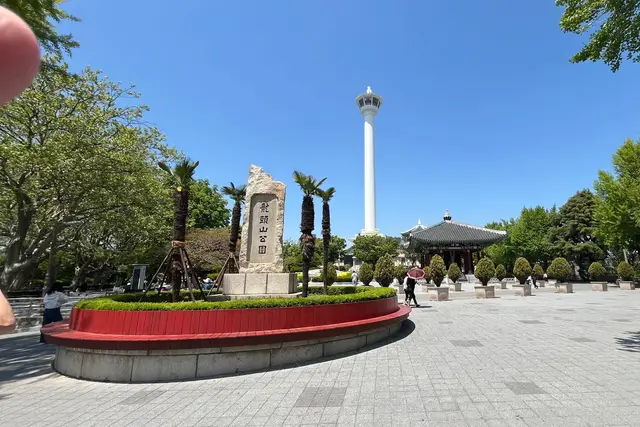
- Hwangnyeongsan: a hill in Suyeong and Nam districts that looks down over the bay.
- Haeundae and Dongbaekseom: the far end of the bridge, much farther from the bursts.
Getting to Gwangalli
Take the subway. Busan Metro Line 2 stops at Gwangan Station and Geumnyeonsan Station, both within walking distance of the beach. Roads around Suyeong-gu are closed or gridlocked on festival night, so taxis and buses barely move. Parking near the beach is close to impossible.
After the finale the trains are packed. Many people walk one or two stops along Line 2, to Suyeong or Namcheon, and board there. Others stay on for dinner in Millak or Gwangan and let the crowd clear.
Claiming sand on Gwangalli
Regulars treat the night like a day out. Free-zone spots go hours before the first shell, so groups usually stake out sand by early afternoon and take turns going for food. What they carry:
- Picnic mats and folding cushions. Korean crowds sit packed tightly, with mat edges touching.
- Blankets and layers. Early November by the sea gets cold after dark, and the wind comes straight off the bay.
- Food from the convenience stores along the beachfront, or fried chicken delivered to the beach. Couriers and diners arrange a meeting point by phone.
- A charged phone. Mobile networks often struggle in a crowd this dense, so groups agree on a landmark to meet at rather than relying on calls.
Police and volunteer marshals direct foot traffic through one-way routes around the subway exits. People follow those lanes without arguing. Rubbish goes home in your own bag or into the bins along the promenade, and leaving the beach clean is the local norm.
Fireworks timing, paid seat sales and any change to the programme come from the festival organiser, Busan Metropolitan City’s festival committee, on its official site. That site is the source for this year’s start time; nothing in this guide sets one.
Frequently asked questions
When and where is the Busan Fireworks Festival in 2026?
It takes place on November 7, 2026, at Gwangalli Beach in Suyeong-gu, Busan, with the show set around Gwangan Bridge.
Is the Busan Fireworks Festival free?
General viewing on the beach is free. There are also separate paid seating areas, sold through the organiser, and no price is given here.
How do I get to Gwangalli Beach for the fireworks?
Take Busan Metro Line 2 to Gwangan Station or Geumnyeonsan Station and walk to the beach. Roads around the bay close or jam, so driving and taxis are slow.
Where else can I watch apart from the beach?
Popular alternatives are the Igidae Coastal Walk, Hwangnyeongsan hill, and the Haeundae and Dongbaekseom side of the bridge, along with beachfront cafés and hotels that sell window seats.
What should I bring?
Attendees usually bring picnic mats, blankets and warm layers for the cold sea wind, plus snacks and a charged phone. They also agree on a meeting point, because mobile signal often weakens in the crowd.
Plan your trip to Busan
South Korea eSIM & staying connected →
Some links above are affiliate links — if you book through them, Wander Atlas earns a small commission at no extra cost to you. It's how we keep every guide free.