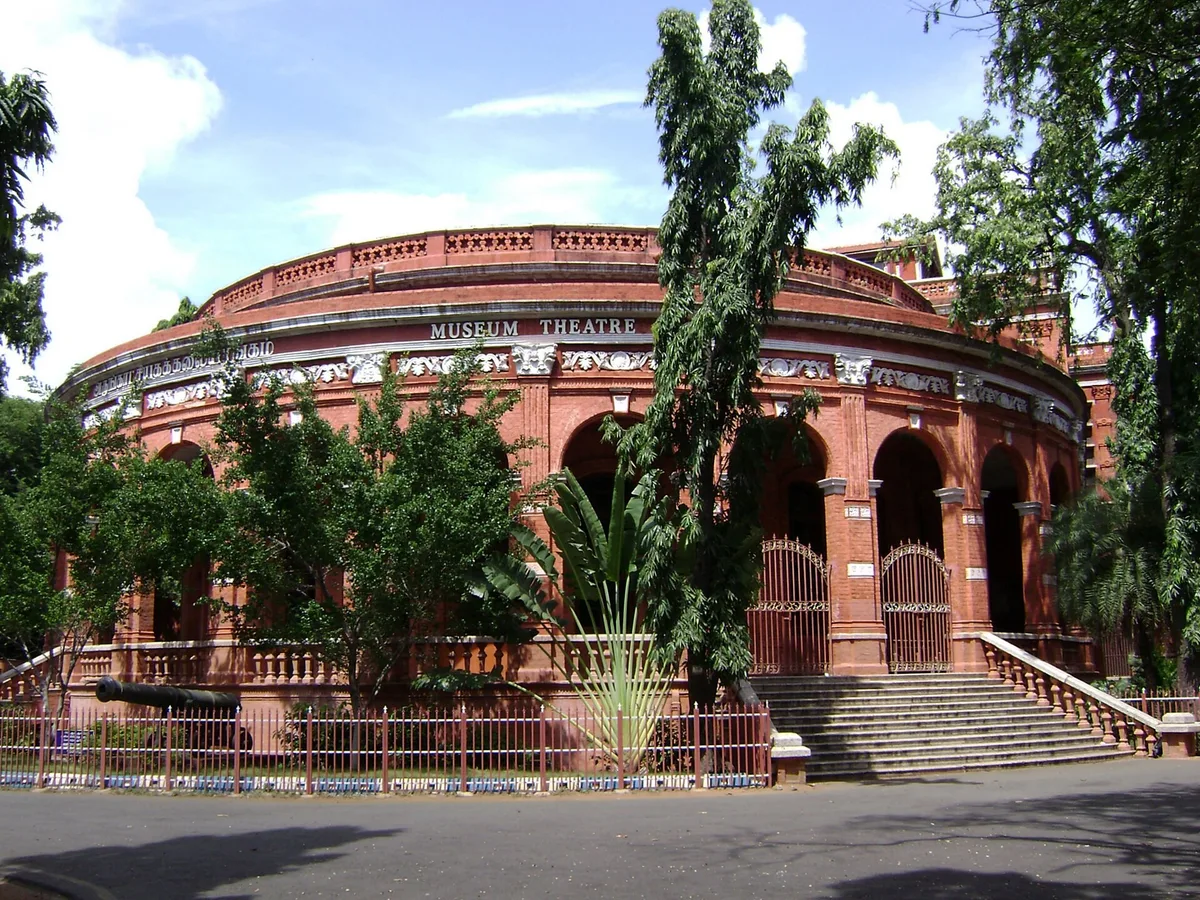
Why go
You come here for the bronzes. The Government Museum’s Chola-era bronze gallery is one of the finest collections of South Indian metal casting anywhere, and the Nataraja figures alone are worth the trip.
Beyond the bronzes, the complex sprawls across red-and-yellow colonial buildings dating to the 1850s, connected by covered walkways and shaded courtyards. Inside, the collections lurch from Amaravati limestone reliefs to stuffed tigers to Egyptian mummies, a genuinely odd mix that rewards slow wandering rather than a checklist visit.
Getting there
The museum sits on Pantheon Road in Egmore, an easy walk from Egmore Railway Station, about 1.5km, or a short auto-rickshaw ride. Egmore is also a stop on the Chennai Metro’s Green Line, putting you within a 10–15 minute walk or quick share-auto hop of the gates.
If you’re coming from the Marina Beach side of town, autos and app-based cabs are cheap and simple; just confirm the fare or use the meter before you set off.
What to see and skip
Don’t try to see everything. The museum has multiple standalone galleries and most visitors flag after the third or fourth.
Prioritize:
- The Bronze Gallery, Chola, Pallava and Vijayanagara-era bronzes, including several Nataraja and Ardhanarishvara castings
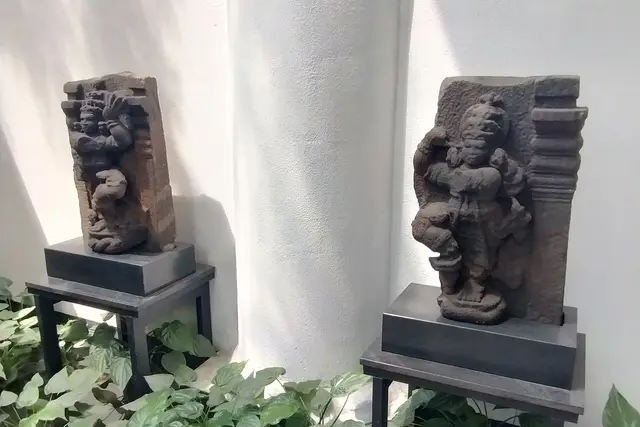
- The Sculpture Gallery, Amaravati marble reliefs and early Buddhist stonework
- The National Art Gallery building next door, Mughal miniatures and Tanjore paintings, housed in a striking Indo-Saracenic red building with a tiled dome
- The anthropology section, Tamil Nadu’s tribal artifacts and archaeological finds, less crowded and often overlooked
The children’s section and natural history galleries are worth a pass if you’ve got kids in tow, but skip them if you’re short on time.
When to go
The museum is closed every Friday, so don’t plan around it, this trips up a lot of first-time visitors who assume it runs daily.
On the days it’s open, foot traffic builds steadily and weekends get genuinely crowded between 11am and 5pm, with school groups and families filling the sculpture and bronze halls. The quietest stretch, weekday or weekend, is the last hour before closing, 5pm to 6pm, galleries empty out and you can actually stand in front of the Nataraja bronzes without a crowd.
If you can only come on a weekend, arrive right at 10:30am opening or hold off until after 5pm.
How to visit like a local
Given how popular this museum is, the smartest move is timing, not avoidance. This isn’t an under-the-radar spot, so plan to work around the crowds rather than expect to dodge them entirely.
- Go late. The 5–6pm window before closing is measurably calmer than the 11am–5pm weekend crush.
- Buy tickets at the counter, not online. There’s no reliable official booking portal, and the queue moves fast outside peak hours.
- Carry cash in small denominations for the entrance fee and for the separate camera fee if you want to photograph inside; card payment isn’t consistently available.
- Wear the museum down to size. Locals who visit regularly tend to pick two or three galleries per trip rather than attempting the whole complex in one go. The bronze and sculpture halls alone can take over an hour if you read the labels.
- Guides loiter near the entrance offering tours, agree a price upfront if you want one, or skip it and use the gallery placards, which are reasonably detailed in English.
- The complex is spread across several buildings with courtyards between them, so wear shoes you don’t mind walking in outdoors between galleries even though each hall itself is indoor and air-conditioned.
Confirm current entry fees and any camera charges at the gate, since these do shift over time and aren’t worth guessing at in advance.
Frequently asked questions
What are the opening hours?
10:30am–6:30pm every day except Friday, when the museum is closed entirely.
When is the quietest time to visit?
Between 5pm and 6pm, on both weekdays and weekends, right before closing. Weekends from 11am to 5pm are the busiest and worth avoiding if you can.
How long should I spend there?
Two to three hours covers the highlights — the Bronze Gallery, Sculpture Gallery, and National Art Gallery next door. Serious museum-goers can easily spend half a day across all the buildings.
How do I get there by public transport?
Take the Chennai Metro Green Line to Egmore station, then walk 10–15 minutes to Pantheon Road, or catch a short auto-rickshaw from Egmore Railway Station, about 1.5km away.
Is it worth visiting if I'm only in Chennai briefly?
Yes — the bronze gallery alone is considered one of the best collections of Chola-era bronzes anywhere, and it pairs easily with a stop at nearby Egmore's colonial-era railway station architecture.
Plan your trip to Chennai
Some links above are affiliate links — if you book through them, Wander Atlas earns a small commission at no extra cost to you. It's how we keep every guide free.
Related guides
 attraction
 Thiru Vi Ka Park: Chennai Travel Guide (4.5★)
 attraction
 Arulmigu Marundeeswarar Temple: Chennai Travel Guide (4.8★)
 hidden gem
 Snow Kingdom: Chennai Travel Guide (4.7★)
 attraction