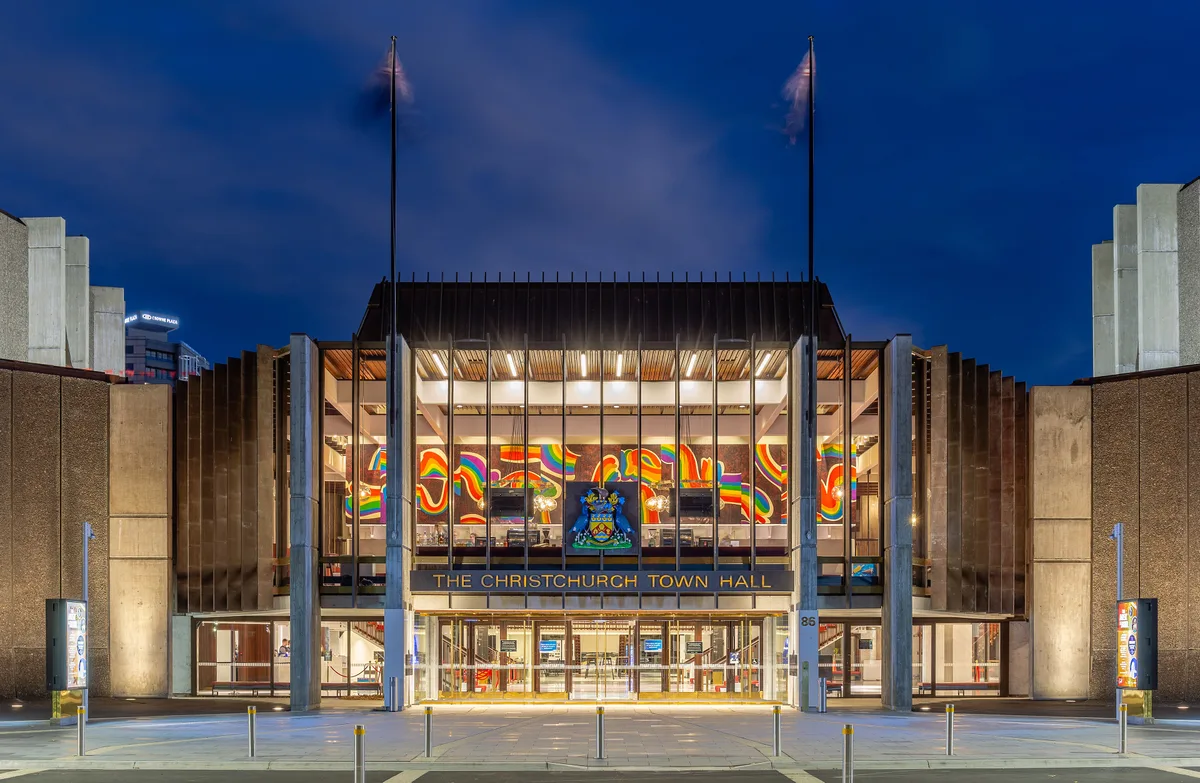
A league World Cup in a union city
Christchurch is famous for rugby union. Its home crowd has spent decades in red and black for the Crusaders and Canterbury, so this tournament asks a union city to fill its seats for the 13-a-side game.
The Rugby League World Cup 2026 is co-hosted by Australia, New Zealand and Papua New Guinea. Its knockout stage runs from November 7 to 15, 2026. Over those nine days the field shrinks to the sides that decide the title. Christchurch’s Te Kaha stadium is among the tournament’s host venues.
Te Kaha and the east frame
Te Kaha sits on the eastern edge of the rebuilt central city. Its name is Māori for strength. The stadium fills the block framed by Hereford, Madras, Tuam and Barbadoes streets, and it gives Christchurch back a major covered arena.
The old ground at Lancaster Park was wrecked in the 2011 earthquakes. For years afterwards, big fixtures went to the temporary stadium in Addington. That makes an international tournament in the city centre feel like a homecoming for many Cantabrians, as well as a sporting event.
The surrounding streets show the post-quake rebuild clearly:
- Transitional (Cardboard) Cathedral stands on Latimer Square, a block north of the stadium, with its A-frame of cardboard tubes.
- Cathedral Square and the damaged ChristChurch Cathedral are about ten minutes’ walk west.
- Riverside Market, on the Ōtākaro Avon River by Oxford Terrace, is where many fans eat before a game.
Getting to Christchurch and the ground
Christchurch Airport lies about 12 kilometres northwest of the centre. The drive into town takes roughly 20 minutes by taxi, shuttle or rideshare. International visitors usually connect through Auckland, Sydney or Melbourne.
On matchday the central city works in your favour. Most hotels near Victoria Street, the Avon River and Cathedral Square are within a 10 to 20 minute walk of Te Kaha. Metro buses from the suburbs end at the Bus Interchange on Lichfield Street, a few blocks away.
Visitors staying out in Riccarton or near Hagley Park usually take the bus or a taxi in. Parking in the inner city is limited on big event days. Most locals simply walk.
Matchday habits around Te Kaha
New Zealand crowds are relaxed, and a few local norms help you blend in.
- Paying: cards and contactless payment are standard at bars, food stalls and shops across New Zealand. Cash is accepted far less often than in many countries.
- Tipping: it isn’t expected. Wages already cover service, and rounding up is a kind gesture rather than an obligation.
- The haka: when the Kiwis play, the team performs a haka before kick-off. The home crowd watches quietly and saves the noise for the end, so talking over it comes across as rude.
- Anthems: people stand, and many locals sing God Defend New Zealand in te reo Māori first, then in English.
- Pre-game drinks: fans usually meet at bars along the Terraces on Oxford Terrace or at Riverside Market, then walk east in groups.
The tournament organiser publishes fixtures, kick-off times and ticket links on the official Rugby League World Cup 2026 site. That is also where the stadium’s bag and entry rules are set out.
Spring weather on the Canterbury Plains
November is late spring in Christchurch. Days are long, and daylight usually lasts well into the evening. Conditions can change quickly, though. A warm, dry nor’wester can blow in across the plains, and a cool southerly can follow a few hours later.
Locals tend to carry a light layer even on bright days. For the walk home after a night game, they bring a warmer jacket. Te Kaha’s roof keeps the stands dry, but the streets outside have no cover.
Making a few days of it
Most fans who travel for knockout football stay several nights, and Christchurch has plenty to fill the gaps between games.
- Christchurch Botanic Gardens and Hagley Park, by the Canterbury Museum on Rolleston Avenue, are good for a slow morning.
- Punting on the Avon starts from the Antigua Boatsheds and from near the Worcester Street bridge.
- Christchurch Gondola, in the Heathcote Valley, looks over the city and across Lyttelton Harbour.
- Akaroa, on Banks Peninsula, is about 90 minutes’ drive away and makes a popular day trip with its French-settler history and harbour.
For fans following the tournament across the Tasman or north to Papua New Guinea, Christchurch Airport’s domestic and trans-Tasman links make it a workable base.
Frequently asked questions
When is the Rugby League World Cup 2026 men's knockout stage?
The knockout stage runs from November 7 to 15, 2026. The tournament is co-hosted by Australia, New Zealand and Papua New Guinea, and Christchurch's Te Kaha stadium is among the host venues.
Where is Te Kaha stadium in Christchurch?
Te Kaha is on the eastern side of the central city, in the block bounded by Hereford, Madras, Tuam and Barbadoes streets. Latimer Square and the Transitional (Cardboard) Cathedral are a block north, and Cathedral Square is about ten minutes' walk west.
Where are tickets and fixtures published?
The tournament organiser publishes fixtures, kick-off times and ticket links on the official Rugby League World Cup 2026 site, along with the stadium's entry rules.
How do fans usually get to Te Kaha on matchday?
Most walk from central city hotels, which takes 10 to 20 minutes. Metro buses end at the Bus Interchange on Lichfield Street, a few blocks away. Inner-city parking is limited on event days.
What is the weather like in Christchurch in November?
November is late spring, with long evenings but changeable conditions. A warm nor'west wind can give way to a cool southerly within hours, so locals usually carry an extra layer for the walk home after a night match.
Plan your trip to Christchurch
New Zealand eSIM & staying connected →
Some links above are affiliate links — if you book through them, Wander Atlas earns a small commission at no extra cost to you. It's how we keep every guide free.
Related guides
 event
All Whites v India (International Friendly): Dates, Tickets & Venue (Christchurch)
 event
BLACKCAPS v India Test Match: Dates, Tickets & Venue (Christchurch)
 event
Coca-Cola Christmas in the Park (Christchurch): Dates, Tickets & Venue (Christchurch)
 event