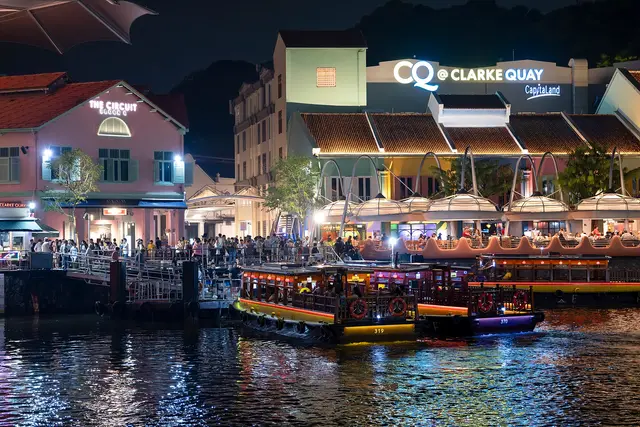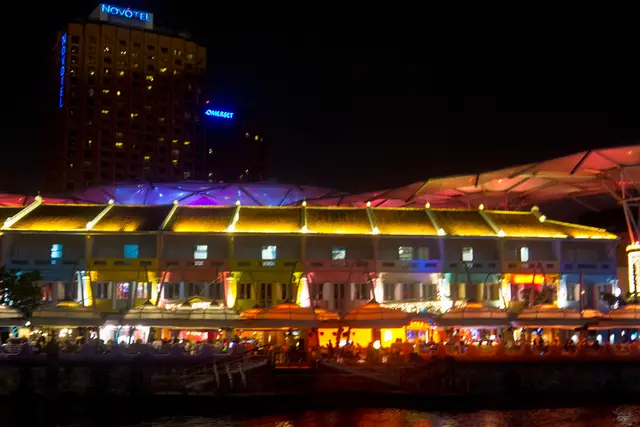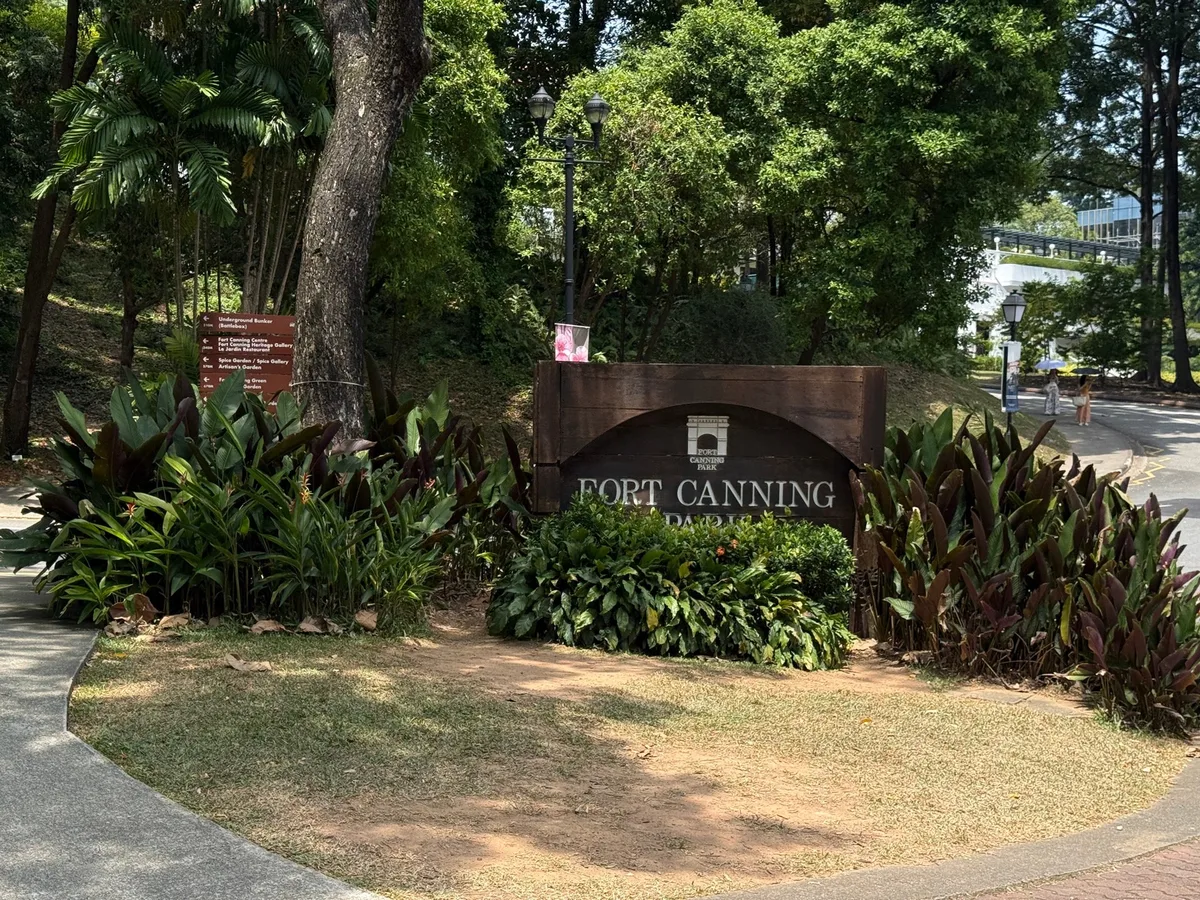
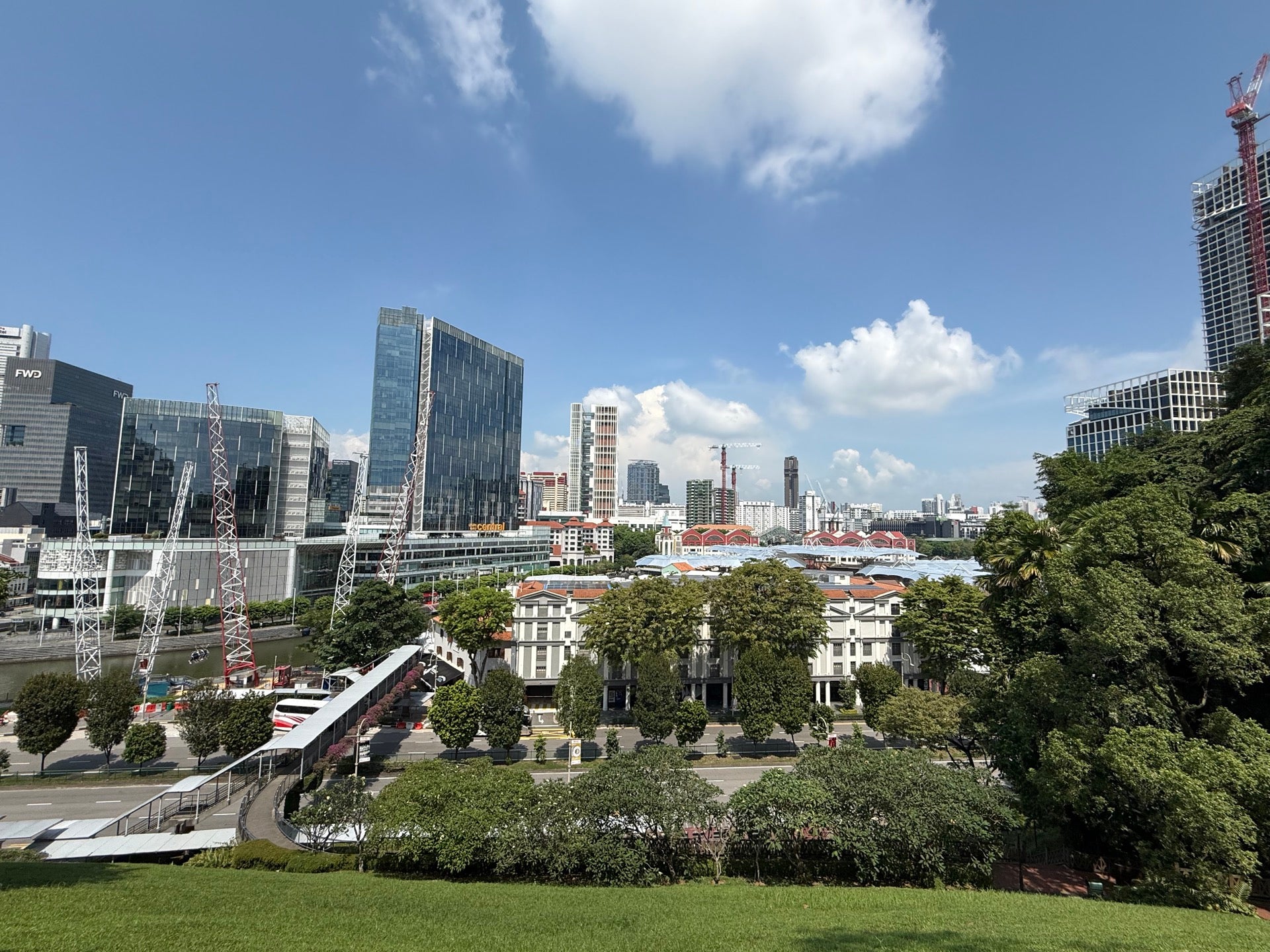
Fort Canning Park sits on a low hill right above Clarke Quay, and you feel the change the moment you leave the riverside bars behind. The traffic noise drops away, the air cools under rain trees, and gravel paths replace pavement. It’s one of the few spots in this part of Singapore where colonial history, ancient royal legend, and pure green space overlap on a single hillside.
Because it’s a public park with no gates, Fort Canning is open 24 hours every day. That makes it flexible, but it also means there’s no ticket booth, no single “entrance,” and no staff to point you around. You choose your own route up, and that’s part of the appeal.
The hill that was a palace, then a fort
Long before the British arrived, this hill was known as Bukit Larangan, “Forbidden Hill,” believed to be the site of a 14th-century royal palace. Later, Stamford Raffles built a bungalow here, and the British eventually constructed a fort, which gives the park its current name.
You can still see traces of this layered past. Look for the old Fort Gate, remnants of the fort wall, and the Keramat, a sacred site linked to Malay royalty. A replica of a 14th-century stone artifact, the Singapore Stone, is also on display near the park.
Walking the grounds without a map
Most visitors enter from River Valley Road, Hill Street near the National Museum, or the stairs and lift near Fort Canning MRT. Each route brings you up through different terrain, so don’t worry about picking the “correct” path.
Give yourself a comfortable stretch of time to see the main clusters of sights at an easy pace. Add extra time if you want to sit in the shade or explore the smaller garden pockets tucked off the main paths.
Key things worth seeking out as you wander:
- The ASEAN Sculpture Garden, with works from artists across the region
- The old Christian cemetery gravestones set into a colonnade wall
- Fort Canning Green, the open lawn used for events
- The Battle Box, an underground WWII command bunker (separate paid entry, check current hours before visiting)
The Spice Garden, a quiet detour
One of the least crowded corners is the Spice Garden, a recreation of Raffles’ original 19th-century botanical experiment plot. Nutmeg, clove, and cinnamon trees grow along shaded paths with small identification signs.
It’s a five-minute detour off the main route but feels much further from the city. Even on a busy weekend, this pocket tends to stay noticeably calmer than the open lawns near the entrances.
Fort Canning Green, when the hill becomes a stage
Fort Canning Green is the park’s signature open lawn, and it’s where the venue earns its “hosts concerts and plays” reputation. Over the years it’s staged everything from outdoor cinema screenings to major music festivals and theatre productions.
If there’s an event on, expect fenced-off sections, ticket checks, and a very different atmosphere from the quiet historical paths nearby. Check what’s scheduled before you go if you’re hoping for a peaceful stroll rather than a crowd.
How to visit like a local
Fort Canning is extremely popular, so timing your visit matters more than finding a secret entrance. Weekend crowds build steadily through the day, so an early morning or post-sunset visit is your best bet for empty paths.
- Wear proper shoes: the paths are hilly gravel and stone steps, not flat pavement
- Bring water; shaded stretches are limited on the open lawn sections
- Avoid midday in the dry season, when the exposed lawn areas get intensely hot
- If visiting for an event, arrive early since seating on the Green fills up fast
There’s no admission fee and no single “correct” entrance, so locals treat it as a cut-through as much as a destination, a shortcut from the Singapore River up toward Orchard Road on foot. Because it’s open 24 hours, some residents use the lower paths for early runs before the heat sets in, but the upper historical areas are really made for daylight visits when you can actually see the signage and carvings.
Tourists’ most common mistake is treating it as a quick 15-minute photo stop. The park rewards a slower pace: the layered history only clicks into place if you actually read the plaques near the Fort Gate and Keramat rather than walking straight past them toward the skyline views.
Getting there and what’s nearby
Fort Canning MRT station (Downtown Line) sits almost directly beneath the park, with a lift and stairs leading up into the grounds. It’s also within easy walking distance of Clarke Quay itself, making it simple to combine a riverside dinner with an evening walk up the hill.
The National Museum of Singapore and the Peranakan Museum are both a short walk downhill, so many visitors pair a morning at the park with an afternoon indoors. Clarke Quay’s restaurants and riverboat rides are close enough for a natural end to the day once you’ve come back down.
Plan your trip to Clarke Quay
Singapore eSIM & staying connected →
Some links above are affiliate links — if you book through them, Wander Atlas earns a small commission at no extra cost to you. It's how we keep every guide free.