A low row of shophouses under the towers
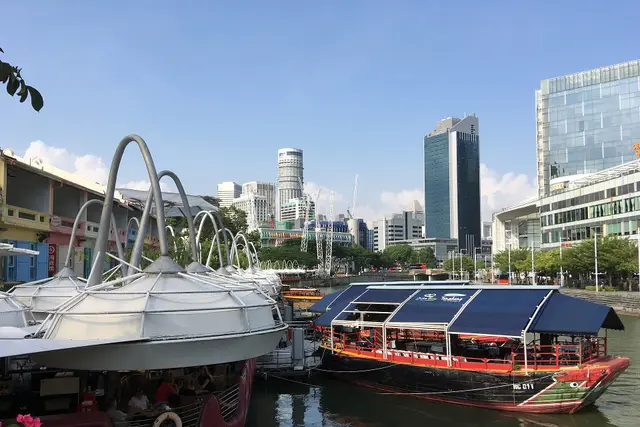
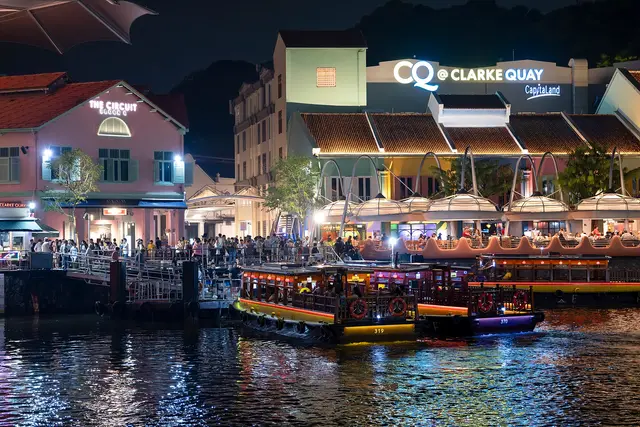
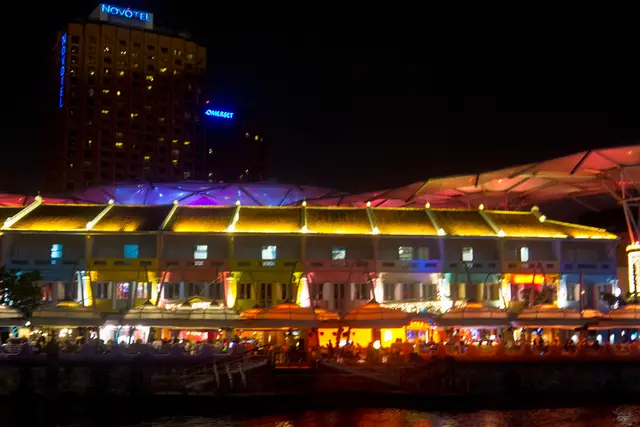
Stand on the riverside promenade and look up. Behind the two- and three-storey shophouses rise the glass towers of Raffles Place, so close they seem to lean over the tiled roofs. Boat Quay sits in the gap between old Singapore and the financial district. In daylight the shuttered shopfronts face the water. After dark, rows of outdoor tables spill across the paving.
The shophouses have been restored in a jumble of pastel colours. At ground level almost every unit is now a bar, pub or restaurant, and the upper floors have louvred windows. On the other side of the promenade the river is walled in stone. Bumboats run past, carrying tourists instead of cargo.
Why the river bends here
This stretch was once the busiest part of the port. Through the 1800s, lighters called tongkangs and twakows ferried goods between ships anchored offshore and the warehouses that lined this bank. Chinese traders thought the curve of the river here looked like the belly of a carp. They took that as a sign of prosperity, and the south bank filled up with their godowns and shophouses.
Shipping moved to modern container ports in the 1980s, and the river cleanup left the quay empty. The government then conserved the buildings instead of pulling them down. What you walk past today is that conservation at work: the original rooflines and shopfronts, with dining in place of trade.
Getting to Boat Quay
The simplest way in is Raffles Place MRT, served by the East-West and North-South lines. Follow the signs for Boat Quay or UOB Plaza, and in a couple of minutes you’re on the river. The official address is Bonham Street, one of the narrow lanes running behind the waterfront row.
From Clarke Quay MRT on the North East Line, walk downstream along the river and under or across Elgin Bridge. It takes about ten minutes, with the river beside you the whole way. You can also take a river cruise, which stops at a jetty along the quay.

Dealing with the touts and the seafood tanks
Boat Quay is among the most visited stretches of the river, and the restaurants compete hard for your table. Staff stand at the edge of the promenade holding menus and try to wave you in. A polite “no thanks” and a steady walk is normal here and nobody takes offence. Make up your own mind before you sit down.
Seafood is where visitors most often get caught out. Chilli crab, lobster and fish from the live tanks are usually sold by weight or at market price, so the bill depends on the animal you pick.
- Before anything is cooked, ask what the price per unit of weight is.
- Ask for your crab to be weighed where you can see it.
- Expect a service charge and GST on the bill. Tipping on top isn’t customary.
- Cards and mobile payment are widely accepted.
If the menu won’t give you a straight answer, walk a few doors along. There are plenty of other restaurants on the row.
Choosing your hour
The promenade never closes, so pick the version of the quay you want. Early mornings belong to runners and office workers crossing to Raffles Place. It’s calmest from 7am to 9am on weekdays, and on weekends it stays quiet from 7am to 2pm. That’s when you can photograph the shophouse facades without people in the shot.
Try not to arrive on a weekend between 6pm and 11pm unless the crowd is the point. That’s when tables are full, touts are at their busiest and the promenade gets hard to walk. On a weeknight evening you still see the towers lit up behind the shophouses, and finding a riverside seat is much easier.
Walking on toward the river mouth
Boat Quay makes a good starting point for a walk. Head downstream toward Cavenagh Bridge and look out for the People of the River bronze sculptures. One of them, First Generation, shows boys leaping into the water. Behind UOB Plaza are sculptures by Salvador Dalí and Fernando Botero.
Across Cavenagh Bridge you reach the Asian Civilisations Museum and the Fullerton Hotel, with Merlion Park just beyond. Upstream, Elgin Bridge takes you to Clarke Quay’s warehouses and nightlife. Give the quay about an hour for a stroll and a drink, or a full evening if you’re staying for dinner.
Frequently asked questions
When is the quietest time to visit Boat Quay?
It's quietest from 7am to 9am on weekdays and from 7am to 2pm on weekends. Weekend evenings from 6pm to 11pm are the busiest, so avoid those hours if you want space on the promenade.
What is the nearest MRT station to Boat Quay?
Raffles Place MRT, on the East-West and North-South lines, is a couple of minutes' walk away. Follow the signs for Boat Quay. Clarke Quay MRT on the North East Line is about ten minutes upstream along the river.
Is Boat Quay open at night?
Yes. Boat Quay is a public riverside promenade and is open 24 hours a day, every day. Individual bars and restaurants keep their own hours, so check with each venue.
How do I avoid overpaying for seafood at Boat Quay?
Live seafood such as chilli crab is often sold by weight or at market price. Before anything is cooked, ask for the price per unit of weight and watch it being weighed. Expect a service charge and GST on the bill.
What is near Boat Quay?
Downstream are Cavenagh Bridge, the People of the River sculptures, the Asian Civilisations Museum, the Fullerton Hotel and Merlion Park. Upstream, across Elgin Bridge, is Clarke Quay.
Plan your trip to Clarke Quay
Some links above are affiliate links — if you book through them, Wander Atlas earns a small commission at no extra cost to you. It's how we keep every guide free.