Why go
Daegu National Museum tells the story of the Yeongnam region, the old name for the area around Daegu and North Gyeongsang, through objects rather than text panels alone. You walk past Bronze Age daggers, Silla-era gold ornaments, and Buddhist stone pagodas that once stood in open fields for a thousand years.
It’s not a flashy, crowd-magnet museum like some in Seoul. It’s quieter, more contemplative, and genuinely educational if you give it time.
What’s inside
The permanent collection is split across galleries covering prehistoric to Joseon-era Korea, with a strong regional focus on Daegu and Gyeongsang. Look for:
- Reconstructed dome-shaped pit houses, built to show how early Yeongnam communities actually lived
- A courtyard of stone pagodas and Buddhist relics, some centuries old, displayed outdoors
- Textile and folk-life exhibits highlighting Daegu’s historic role as a silk and hanbok-weaving center
- Rotating special exhibitions, often tied to archaeological finds from nearby sites
Give yourself enough time to move through the main halls at an unhurried pace, and longer still if you linger in the outdoor pagoda garden.
Getting there
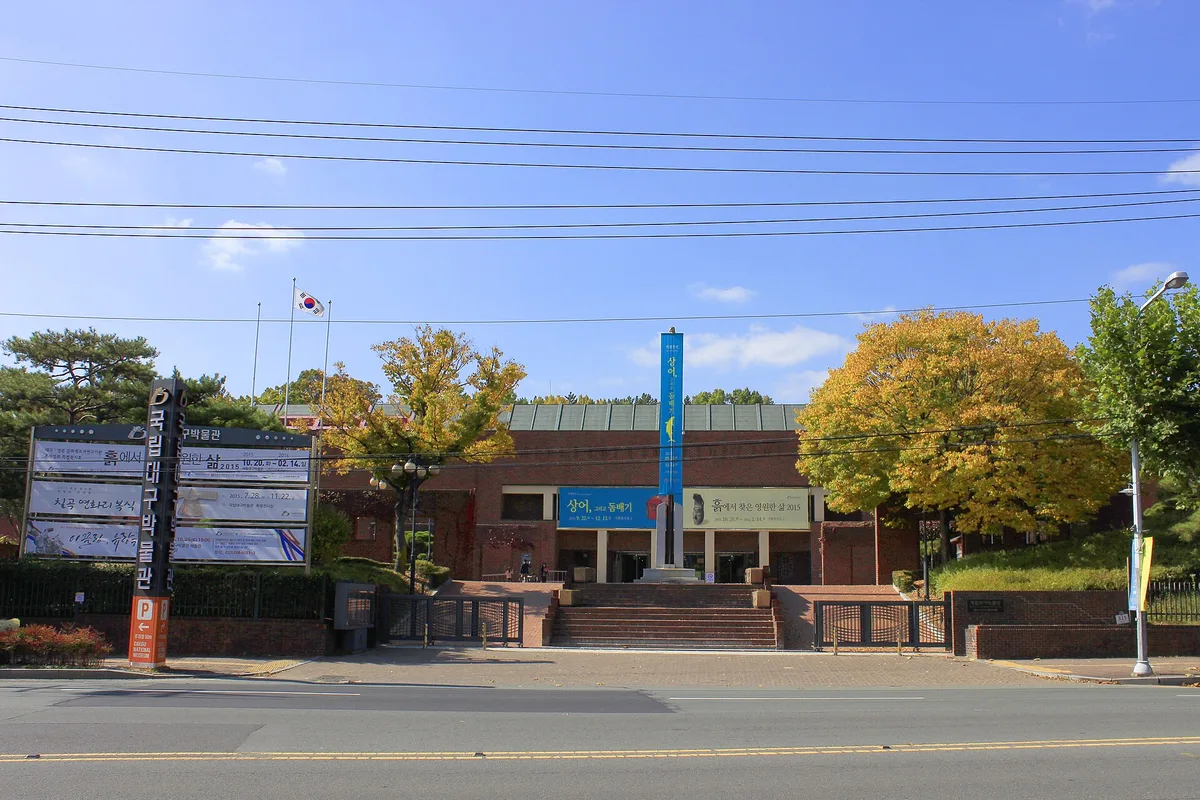
The museum sits at 321 Cheongho-ro in Suseong District, on the eastern side of Daegu. It’s a bit removed from the subway network, so most visitors combine a taxi or bus with a short walk.
Buses serving the museum stop directly outside the grounds. Check current routes before you go, since bus numbers shift over time. A taxi from downtown Daegu is also an option; ask your driver for an estimated time, since it will vary with traffic.
When to go
The museum is closed Mondays, so don’t plan a visit around the start of the week. Tuesday through Saturday it runs 9am to 6pm; Sundays it opens an hour earlier, at 8am, and closes at the same 6pm.
Weekend crowds build steadily and stay heavy from 10am until closing. If you’re visiting on a Saturday or Sunday, the calmest window is right at opening, between 8am and 9am, before families and tour groups arrive.
Weekdays are generally easier throughout, since the museum is well-known locally but doesn’t draw the tourist crush of Seoul’s national museums.
How to visit like a local
Arrive early. On weekends, the 8–9am slot is measurably quieter than any other hour, and you’ll have the dome-house replicas and pagoda courtyard largely to yourself before the 10am rush.
- Admission to the permanent galleries is typically free, though special exhibitions sometimes carry a small fee, confirm current pricing at the entrance.
- Payment for the café or gift shop is mostly card-based; cash isn’t essential but doesn’t hurt to have a little on hand.
- No advance booking is generally needed for regular admission, just walk in during opening hours.
- Wear shoes you don’t mind taking off if you visit the traditional house reconstructions, some of which involve stepping onto raised floors.
- The biggest mistake visitors make is rushing the outdoor pagoda garden. Slow down here. The stonework spans different centuries and is easy to miss if you just skim past.
Combine your visit with nearby Suseong Lake, a short ride away, for a walk around the water afterward. Locals often treat the museum as a quiet cultural stop before an evening at the lake’s restaurants and cafés.
Getting the most from your visit
Start with the prehistoric and Bronze Age galleries first, they set context for everything that follows. Save the outdoor stone pagoda courtyard for last, ideally in decent daylight, since natural light changes how the carved reliefs read.
If you’re traveling with kids, the dome-house reconstructions tend to be the most memorable exhibit. They’re walk-through scale models rather than glass-case displays. English-language signage is present throughout, though not as extensive as at Korea’s largest national museums, so a little pre-reading on Silla and Gaya history helps deepen the visit.
Frequently asked questions
What are the opening hours for Daegu National Museum?
Tuesday to Saturday it's open 9am–6pm, Sunday 8am–6pm, and it's closed Mondays.
Is there an entrance fee?
Permanent exhibits are typically free to enter, though special exhibitions may have a small charge — confirm current pricing on arrival.
When is the quietest time to visit?
On weekends, arrive between 8am and 9am. Crowds build steadily after that and stay heavy from 10am to closing.
How do I get to the museum without a car?
It's not directly on the subway line, so most visitors take a bus that stops near the grounds or a taxi from downtown Daegu, about 15–20 minutes from areas like Dongseongno.
How long should I plan for a visit?
Around 90 minutes covers the main galleries; allow up to two hours if you want to explore the outdoor stone pagoda garden and dome-house reconstructions thoroughly.
Plan your trip to Daegu
South Korea eSIM & staying connected →
Some links above are affiliate links — if you book through them, Wander Atlas earns a small commission at no extra cost to you. It's how we keep every guide free.