Why Donghwasa is worth the trip
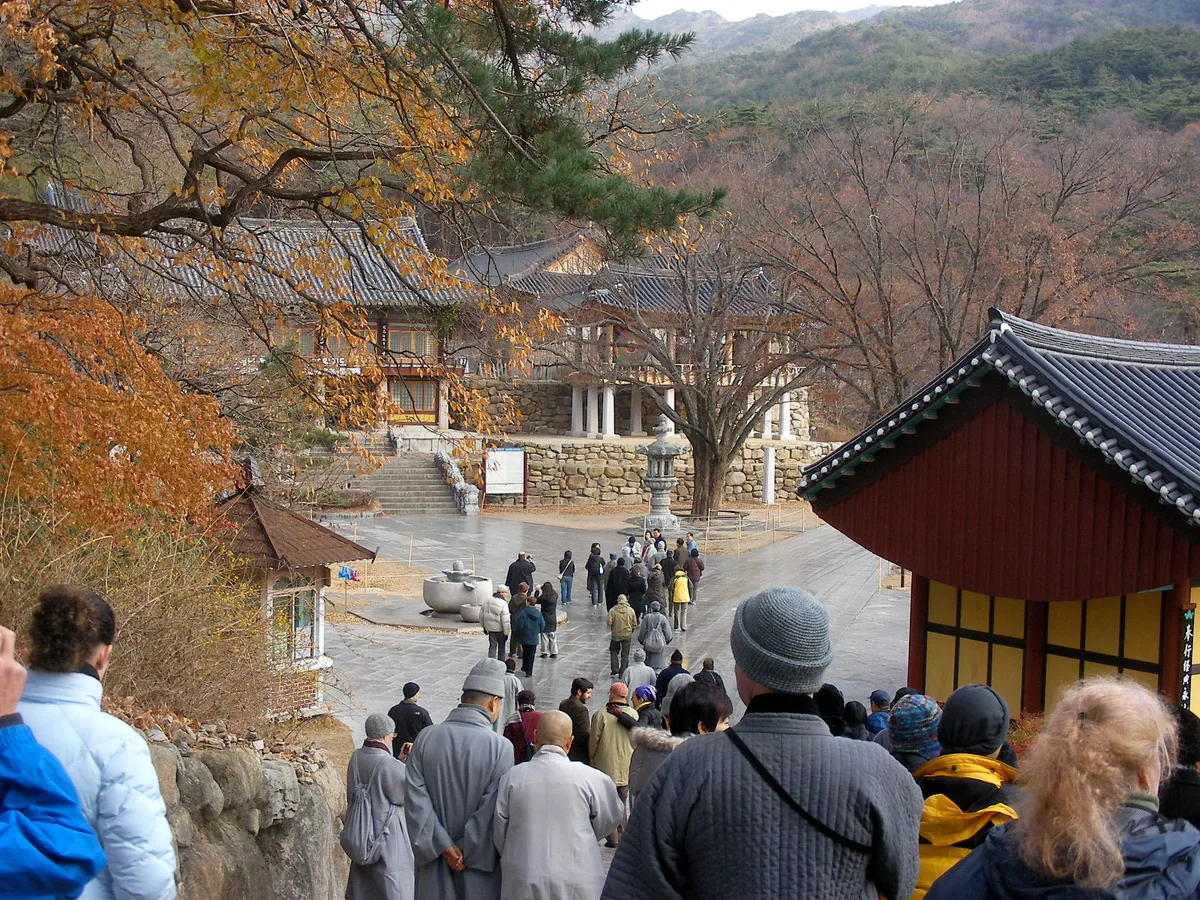
Donghwasa sits tucked into the pine-covered folds of Palgongsan, Daegu’s mountain backdrop, and the drive up already feels like a decompression chamber from the city below. Founded in the 5th century and rebuilt many times since, it’s one of the oldest continuously active temples in the region. What you notice first is the scale. This isn’t a single hall but a sprawling complex of courtyards, gates, and shrines climbing the hillside.
Getting there
Donghwasa is in Dong-gu, on Daegu’s northern fringe, about a 40-minute drive from downtown. From Ayanggyo Station (Metro Line 1), city bus routes run directly to the temple entrance. Check current numbers at the station, as Daegu occasionally reshuffles bus routes serving Palgongsan.
Driving is easiest if you’re staying centrally, and there’s paid parking near the entrance. Taxis from downtown Daegu take roughly 30–40 minutes depending on traffic.
What you’ll see inside
The path in leads past a stream and through Bongseoru Pavilion before opening onto the main courtyard, anchored by Daeungjeon Hall. Look for:
- Daeungjeon Hall, the main worship hall, with intricate dancheong (traditional multicolored) roof paintings
- Tongil Daebulsang, a large seated stone Buddha, built as a monument to Korean reunification, visible from well below the temple
- Yaksayeoraebul statue, a smaller but revered stone Buddha near the older temple grounds
- Palgongsan cable car, a short walk from the temple, offering mountain views if you want to extend the visit
The contrast between the weathered, centuries-old stonework and the newer reconstructed halls gives the whole complex a layered feel. You’re walking through several eras of Korean Buddhism at once, not a single frozen moment.

When to go
Donghwasa is open 24 hours daily, which locals mostly use for early sunrise visits or evening walks rather than round-the-clock access. Weekends between 9am and 6pm are consistently the busiest window, especially in spring cherry blossom season and autumn foliage season, when tour buses arrive in numbers.
If your schedule allows it, a weekday morning is the sweet spot, light traffic on the mountain road, fewer tour groups, and softer morning light on the stone Buddha. Autumn (October–November) is particularly striking here, with the maples around the temple grounds turning color against the grey stonework.
How to visit like a local
Donghwasa is a well-known stop on the Daegu temple circuit, not a hidden find, so the way to enjoy it calmly is timing, not secrecy.
- Avoid weekend afternoons, Saturday and Sunday afternoons are when the complex is busiest; a weekday visit or early weekend morning avoids the crush.
- Dress modestly, shoulders and knees covered, as this is an active place of worship, not just a sightseeing stop.
- Keep your voice low near the halls, and remove shoes if a sign or attendant indicates it for a particular building.
- Bring small cash for candle or incense offerings, though most visitors simply observe rather than participate.
- Combine it with the cable car, most locals treat Donghwasa and the Palgongsan ropeway as a single half-day outing rather than separate trips.
- Skip the main gate photo queue by walking a little further into the second courtyard, where the crowds thin out noticeably.
Nearby to extend your visit
Palgongsan Provincial Park stretches well beyond the temple, with hiking trails leading toward Gatbawi, another rock-carved Buddha statue perched near a mountain summit, popular with hikers seeking good fortune before exams. If you have a full day, pairing Donghwasa’s low-elevation temple grounds with a hike toward Gatbawi gives a good sense of why Palgongsan matters so much to Daegu’s identity, both religious and geographic.
Frequently asked questions
How do I get to Donghwasa from downtown Daegu?
Take Metro Line 1 to Ayanggyo Station, then transfer to a city bus heading to Palgongsan/Donghwasa (confirm the current route number at the station). By car or taxi, it's roughly a 30–40 minute drive from central Daegu.
What is the entrance fee for Donghwasa?
Admission fees can change, so check current pricing locally before you go; parking near the entrance is paid separately.
When is Donghwasa least crowded?
Weekends from 9am to 6pm are the busiest stretch, especially during cherry blossom and autumn foliage seasons. A weekday morning is your best bet for a quieter visit.
How long should I plan to spend at Donghwasa?
Most visitors spend two to three hours exploring the temple halls and the giant stone Buddha, longer if you add the Palgongsan cable car or a hike toward Gatbawi.
Is Donghwasa open at night?
The grounds are technically open 24 hours daily, though most visitors come during daylight hours to see the halls and statues clearly.
Plan your trip to Daegu
South Korea eSIM & staying connected →
Some links above are affiliate links — if you book through them, Wander Atlas earns a small commission at no extra cost to you. It's how we keep every guide free.