Seomun Market: Daegu Travel Guide (4.2★)

When to visit South Korea: month-by-month weather, crowds and holidays →
✓ Facts verified via Google Places · Sep 22, 2026
At a glance
Opening hours
- Monday: 9:00 AM – 6:00 PM
- Tuesday: 9:00 AM – 6:00 PM
- Wednesday: 9:00 AM – 6:00 PM
- Thursday: 9:00 AM – 6:00 PM
- Friday: 9:00 AM – 6:00 PM
- Saturday: 9:00 AM – 6:00 PM
- Sunday: 9:00 AM – 6:00 PM
Live foot-traffic data via BestTime.app
How this guide is made
Produced with AI assistance and reviewed against live data sources. Facts such as hours, ratings, and location come from Google Places; images are licensed or public domain. Details can change — please verify before visiting. Editorial policy
Seomun Market doesn’t announce itself with a single gate or a photogenic archway. It spreads across several linked buildings and open lanes in Jung-gu, Daegu, and the scale only becomes clear once you’re inside a row of stalls and realize the row keeps going for another hundred meters.
This is one of Korea’s three largest traditional markets, and it has operated in some form on this site since the Joseon dynasty, when Daegu was a hub for the silk and textile trade. That history still shows: whole sections are devoted to fabric, bedding, and hanbok material, sold by vendors who’ve clearly done this for decades.
Finding your way through the sections
Seomun isn’t one building, it’s a cluster of numbered market halls (dongsan) connected by covered alleys and cross streets. Each hall tends to specialize.
- Textiles and silk: bolts of fabric, bedding sets, hanbok fabric
- Clothing and accessories: everyday wear, socks, bags
- Household goods: kitchenware, tools, plastics
- Dried goods and produce: anchovies, seaweed, grains, nuts
Ground-floor stalls open onto narrow aisles just wide enough for two people to pass with shopping carts. There’s no single information desk, so orient yourself by hall number rather than trying to memorize a layout.
The night market food alley
The part most visitors come for is the Seomun Market Night Market, a dedicated street of food stalls that sets up after the daytime shops start winding down. It’s a separate rhythm from the covered market and runs on a seasonal schedule, so it’s worth checking locally whether it’s operating on the date you’re going, since it doesn’t run every night of the year.
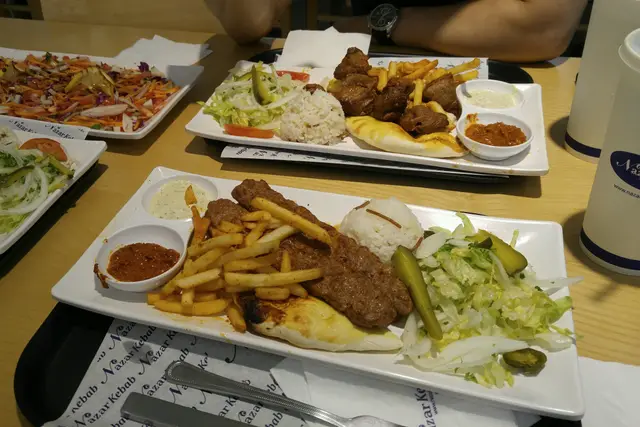
Stalls here sell skewered meats, hotteok (sweet filled pancakes), mayak gimbap (small seaweed rice rolls), tteokbokki, and grilled seafood, mostly eaten standing at plastic tables or walking. Expect handwritten signs, propane burners lined up in a row, and a queue that snakes rather than forms a straight line.

Reading the daytime clock
The covered market itself keeps steady daily hours, 9am to 6pm every day of the week, so there’s no early-morning or late-night daytime slot to chase.
Crowd patterns here are unusually flat on weekdays and quiet weekend mornings, both running calm through the full 9am–6pm window. The exception is weekends between 11am and 5pm, when the aisles genuinely fill and moving a shopping bag through the textile halls gets slow.
If you’re set on a relaxed browse of the fabric and goods sections, aim for a weekday, or a weekend visit before 11am or after 5pm.
Bargaining and the vendor rhythm at Yangnyeongsi-adjacent stalls
Seomun sits close to Yangnyeongsi, Daegu’s historic herbal medicine market, and the two areas blur together at the edges, so don’t be surprised if a lane of fabric stalls suddenly turns into one selling dried ginseng and medicinal roots.
Prices in the textile and goods sections are often negotiable for bulk purchases, less so for single small items or food. Vendors expect cash to move quickly and are used to tourists browsing without buying, so a polite no thanks and a nod is completely normal and won’t offend anyone.
Getting there and moving around
Seomun Market is at 45 Keunjang-ro 26-gil, Jung-gu, an easy walk from Daegu’s old downtown core. It’s most commonly reached by city bus or taxi from central Daegu; Daegu Station and the Seomun Market area are connected by several bus routes that stop right at the market’s edges.
Once inside, phone signal and GPS pins are unreliable between the covered halls, so it helps to note a visible landmark, a hall number, or a specific stall you passed, rather than relying on maps mid-visit.
Not getting lost in the crowd
Seomun Market is very popular with both tourists and shoppers from across the region, so this isn’t a quiet local secret. Treat the crowding as part of the experience rather than something to dodge entirely.
- Enter from a side lane instead of the main entrance to skip the thickest foot traffic
- Keep bags zipped and in front in the narrowest food-stall alleys
- Eat street food standing at the stall rather than trying to find a seat during peak hours
- If you want photos of the empty-ish aisles, weekday mornings right after opening are your best shot
Bring small cash for the food stalls, since many of the smaller vendors don’t take cards, and expect the busiest crush of the week to land on Saturday and Sunday afternoons.
Frequently asked questions
What are the opening hours for Seomun Market?
The covered market runs 9am to 6pm every day of the week, with no variation by day. The separate night market food alley operates on its own seasonal schedule, so check locally whether it's running on your date.
When is the quietest time to visit Seomun Market?
Weekdays and weekend mornings are calm throughout the full 9am–6pm window. The one time to avoid is weekend afternoons between 11am and 5pm, when the aisles get genuinely crowded.
How do I get to Seomun Market in Daegu?
It's at 45 Keunjang-ro 26-gil in Jung-gu, an easy bus or taxi ride from central Daegu and Daegu Station. Several city bus routes stop directly at the market's edges.
How much time should I plan for a visit?
Two to three hours covers the daytime textile and goods halls plus a walk through the night market food alley if it's open. First-time visitors often spend longer just navigating the connected halls.
Is Seomun Market near any other attractions?
Yes, it sits right beside Yangnyeongsi, Daegu's historic herbal medicine market, and the two blend together at the edges, so a single visit can easily cover both.
Plan your trip to Daegu
Some links above are affiliate links — if you book through them, Wander Atlas earns a small commission at no extra cost to you. It's how we keep every guide free.