Philippine Eagle Center: Davao Travel Guide
At a glance
Opening hours
- Monday: 8:00 AM – 4:30 PM
- Tuesday: 8:00 AM – 4:30 PM
- Wednesday: 8:00 AM – 4:30 PM
- Thursday: 8:00 AM – 4:30 PM
- Friday: 8:00 AM – 4:30 PM
- Saturday: 8:00 AM – 4:30 PM
- Sunday: 8:00 AM – 4:30 PM
How this guide is made
Produced with AI assistance and reviewed against live data sources. Facts such as hours, ratings, and location come from Google Places; images are licensed or public domain. Details can change — please verify before visiting. Editorial policy
Why go
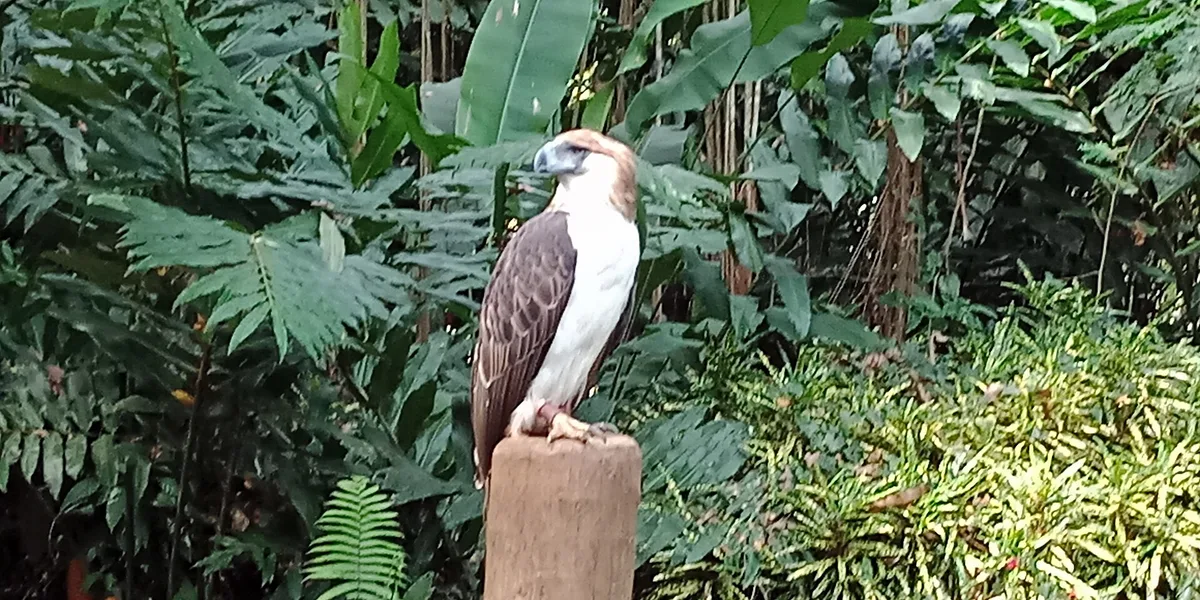
You hear it before you see it, a rasping, almost prehistoric call echoing through the trees as you walk the gravel path. Then, through the wire mesh of a towering forest-canopy enclosure, you spot it: a Philippine eagle, one of the largest and rarest raptors on Earth, perched motionless with that shaggy crest catching the light. This isn’t a zoo in the conventional sense.
The Philippine Eagle Center is a working conservation and breeding facility tucked into the foothills of Mt. Apo, and the birds you see here (some rescued after gunshot wounds, others bred in captivity) are part of a decades-long effort to keep the species from vanishing entirely. Fewer than a few hundred breeding pairs are believed to survive in the wild, which makes standing a few meters from one of these birds feel less like sightseeing and more like witnessing something genuinely precarious.
Getting there
The center sits in Purok 5, Malagos-Baguio District, roughly 45 minutes to an hour by road from downtown Davao City, depending on traffic through Calinan. Most visitors arrange a habal-habal (motorbike taxi), a Grab car, or a hired van, since public jeepneys to Malagos run infrequently and the last stretch involves a climb into cooler, higher-elevation terrain. Many travelers pair the trip with the nearby Malagos Garden Resort, the Malagos Chocolate farm, or the Crocodile Park, all of which sit within a similar radius, making a rented van or habal-habal for the half-day the most efficient option.
The road climbs steadily out of the city, and by the time you arrive the air is noticeably cooler and thick with the smell of wet leaves and forest undergrowth.

What to see
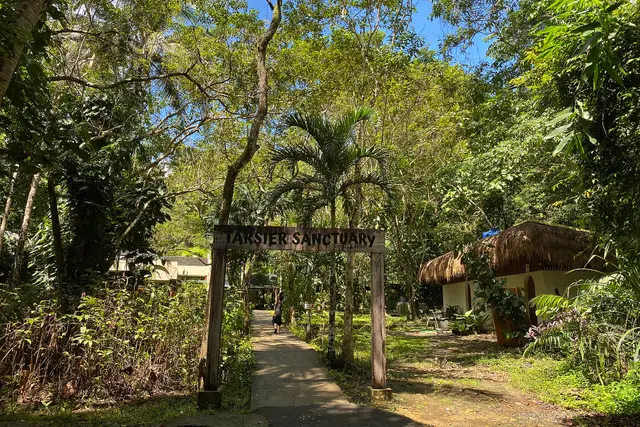
The center is arranged as a shaded, forest-like walking trail rather than a paved zoo circuit. Expect uneven ground, roots, and dappled light rather than open concrete paths. Along the route, mesh-domed enclosures house not just Philippine eagles but other native raptors, including the Brahminy kite and various owl species, alongside informational panels explaining each bird’s rescue story. The eagles themselves are the obvious draw: watch for the enormous wingspan when one stretches, the piercing pale-blue eyes, and the crest of feathers that fans out when a bird is alert.
A small breeding facility and viewing area sits deeper into the grounds, and staff or posted signage explain the captive-breeding program that has, since the center’s founding, produced multiple eagle chicks. Give yourself 1.5 to 2 hours to walk the full loop at an unhurried pace, more if you like reading every placard.
When to go
Check the center’s opening hours before you head out, so there’s flexibility in planning around it. Mornings are the better window, the eagles tend to be more active and vocal before the midday heat settles in, and the forest canopy keeps things shaded but still humid. Weekdays are noticeably calmer than weekends, when local families and school groups tend to visit in larger numbers. If you’re coming from downtown, aim to arrive shortly after opening; you’ll beat both the heat and the bulk of the day’s visitors.
How to visit like a local
Wear closed shoes (the trail is dirt and gravel, occasionally muddy after rain, and definitely not sandal-friendly. Bring cash in small bills; entrance fees and any souvenir or snack purchases at the small on-site stalls are typically cash-only, and there’s no reliable card payment out here. Move slowly and quietly near the enclosures) sudden noise or flash photography tends to stress the birds, and long-time visitors know that patience is rewarded with more natural behavior, like an eagle spreading its wings or calling out.
The most common mistake first-timers make is treating it like a quick zoo stop between other Davao sights; rushing through in twenty minutes means missing the informational context that makes this place matter; slow down and read the rescue stories posted at each enclosure. It’s well-known enough that Filipino tour groups and school trips are a regular sight, but it’s far enough from the city center that it never feels overrun the way a downtown attraction might, a genuinely quiet, forested morning is still very much on offer if you time it right.
Frequently asked questions
How do I get to the Philippine Eagle Center from Davao City?
It's about 45–60 minutes by road from downtown Davao, in Malagos-Baguio District near Calinan. Most visitors go by Grab car, habal-habal, or a hired van, since jeepney service to Malagos is infrequent.
What are the opening hours?
The center is open every day, including weekends, from 8:00 AM to 4:30 PM, with no weekly closing day.
How long should I plan to spend there?
Plan for 1.5 to 2 hours to walk the full forest trail and read the enclosure information panels at an unhurried pace.
When is the best time to visit to avoid crowds?
Weekday mornings shortly after the 8:00 AM opening are calmest — weekends bring more local families and school groups, and the birds are generally more active before midday heat sets in.
What else can I combine this trip with?
The Malagos Garden Resort, Malagos Chocolate farm, and Davao Crocodile Park are all in the same general area and make a natural half-day itinerary alongside the Eagle Center.
Plan your trip to Davao
Some links above are affiliate links — if you book through them, Wander Atlas earns a small commission at no extra cost to you. It's how we keep every guide free.