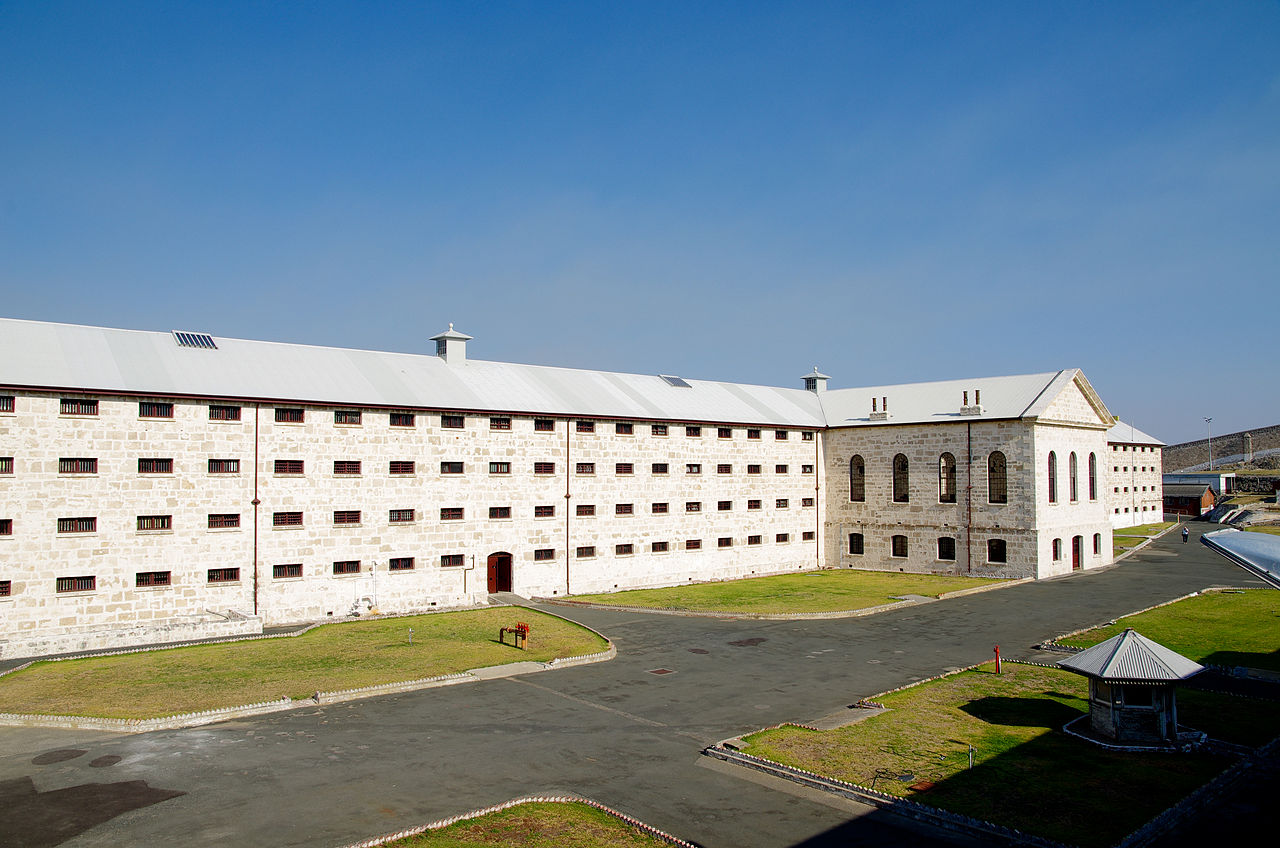
A jail built from the hill it stands on
Look up from Fremantle’s streets and you’ll see a long pale wall. Convicts shipped from Britain built the prison in the 1850s. They used limestone quarried on the site, so the building is made of the ground underneath it. It stayed a working maximum-security jail until 1991, which is recent enough that the cells still feel lived in.
In 2010 it was World Heritage listed as one of the Australian Convict Sites. You walk in through the gatehouse on The Terrace, then cross an open parade ground to the Main Cell Block. It’s a four-storey building with a stack of iron walkways inside. It’s among the longest cell blocks in the Southern Hemisphere.
Picking a tour
Tours are the main way to see the prison, and each one covers a different part of it. The editorial summary mentions interactive exhibits on convict life and a café. Most people come for the guided routes, though:
- Doing Time: the core tour. It covers the cell block, the solitary cells and the gallows, where the state carried out its hangings.
- Great Escapes: the breakouts. The best known is the 1876 Fenian escape, when six Irish prisoners got out to the American whaling ship Catalpa.
- Tunnels: you go down a shaft into the flooded tunnels below the prison, wearing a harness and hard hat, and part of the route is by boat. Age and fitness rules apply, so check them when you book.
- Torchlight: an after-dark walk by torchlight that leans into the prison’s grimmer stories.
Look at the cells as you pass. They get bigger as you move through the decades of prison reform. Some walls still carry prisoners’ own paintings, left there when the jail closed.
When the crowds come
The measured foot-traffic is clear on this. Weekends are busiest between 11am and 4pm, when families and day-trippers from Perth fill the popular tour slots. Try not to turn up in that window without a booking, or you may wait a long time for a place.
Weekdays are quiet from 9am to 6pm. Weekends are calmer from 9am to 6pm too, outside that 11am to 4pm peak. Opening hours and tour times change with the season, so check the official site before you go.
Booking a slot and staying with your guide
Book a time slot online before you come, particularly for Tunnels and Torchlight. Those groups are small and sell out first. Get to the gatehouse a little early to check in, because the groups leave on schedule and don’t wait.
Once the tour starts, you stay with your guide. Many parts of the prison are only open with a guide, so wandering off isn’t an option. Current prices for tours and combination tickets are listed on the official website and at the gatehouse. Card payment is normal in Australia and is the easy way to pay here.
Wear shoes with grip for Tunnels, since the ladders and walkways can be wet. Plan on 60 to 90 minutes for each tour. Many visitors book two tours on the same day and have lunch at the café between them.
Getting up the hill
From Perth, take the Fremantle line to its last stop at Fremantle Station. From there it’s roughly a 15-minute walk south-east through the town centre, with a steady climb at the end up to The Terrace. The free Fremantle CAT bus also runs a loop through town, and it helps if you don’t want to walk the hill.
If you’re driving, there’s parking near the prison. Parking fees are shown on the signs there.
Walking back down into Fremantle
When you come out of the gate, the rest of Fremantle is downhill. It’s easy to walk the town in one afternoon:
- Fremantle Markets: just down the slope on South Terrace. It’s a Victorian-era market hall with produce stalls and food vendors.
- South Terrace’s café strip: Fremantle’s long run of outdoor tables, sometimes called the “Cappuccino Strip”. It’s a good place to sit after a morning in the cells.
- The Round House: at the far end of High Street. It’s the oldest surviving public building in Western Australia and an earlier jail.
- Fremantle Arts Centre: another limestone building put up by convict labour. It began as an asylum.
If you visit the prison and the Round House on the same day, you see Fremantle’s two jails, built decades apart, at opposite ends of town.
Frequently asked questions
How do I get to Fremantle Prison from Perth?
Take the Fremantle train line to Fremantle Station, the last stop. It's about a 15-minute walk to 1 The Terrace, uphill at the end. The free Fremantle CAT bus also loops through town.
When is the quietest time to visit Fremantle Prison?
Weekdays are quiet between 9am and 6pm. On weekends, avoid 11am to 4pm, which is the busiest window. The rest of the 9am to 6pm day is calmer.
How long should I spend at Fremantle Prison?
Each guided tour runs about 60 to 90 minutes. If you want to do two tours, say Doing Time and Tunnels, and have lunch at the café, allow half a day.
Is the Tunnels Tour suitable for everyone?
No. You climb down a shaft in a harness and go through flooded tunnels, partly by boat, so age and fitness rules apply. Check them on the official site when you book.
What else is near Fremantle Prison?
Fremantle Markets are just downhill on South Terrace, next to the café strip. The Round House and Fremantle Arts Centre are both walkable too.
Plan your trip to Fremantle
Some links above are affiliate links — if you book through them, Wander Atlas earns a small commission at no extra cost to you. It's how we keep every guide free.