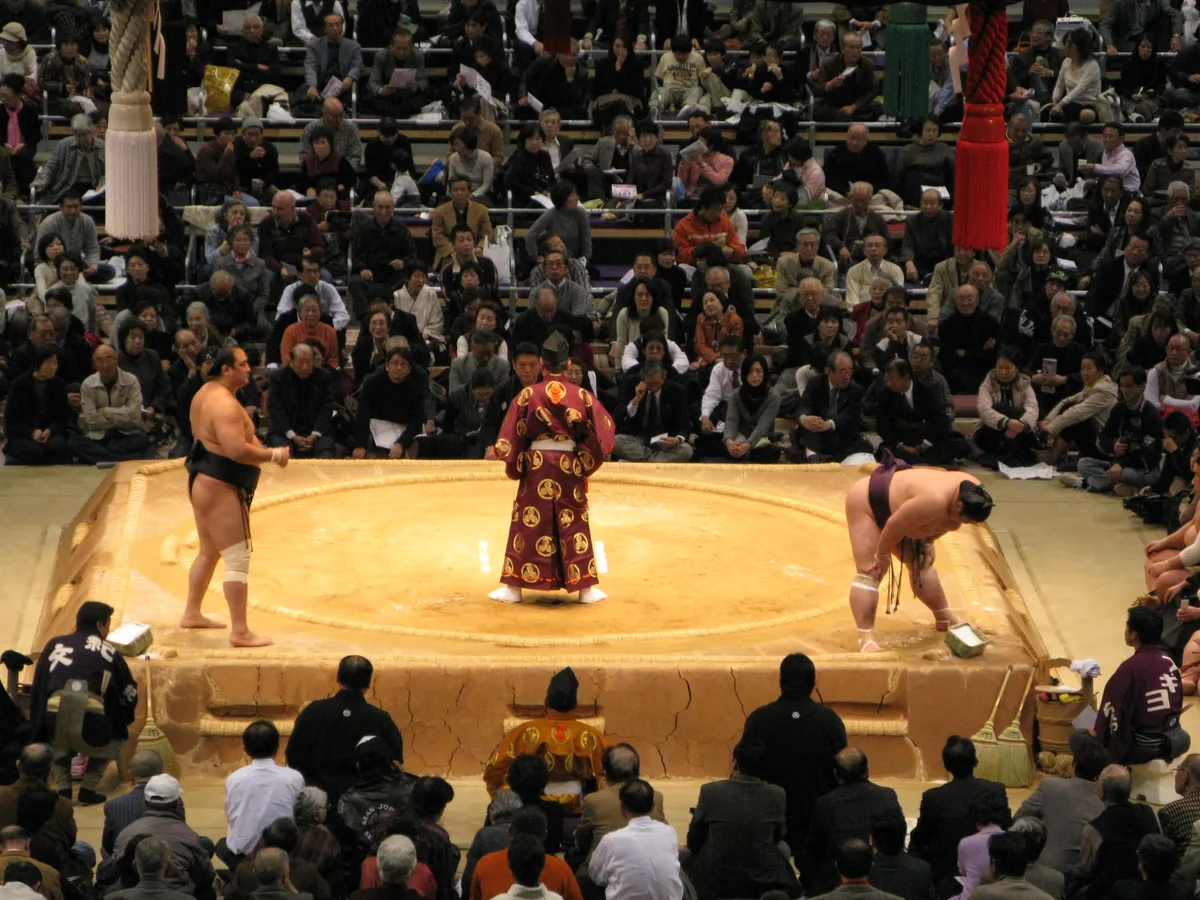
What the Kyushu Basho actually is
This is the last of Japan’s six annual Grand Sumo tournaments, closing out the year after Nagoya in July and Tokyo in September. Fifteen consecutive days, November 8 to 22, 2026, no rest days built in. It’s held at the Fukuoka Kokusai Center, a dedicated arena in the city’s Hakata Ward rather than a multi-purpose stadium.
Lower-ranked wrestlers bout in the late morning; the venue fills through the afternoon as rank climbs. By the time the top-division makuuchi wrestlers enter, mid-to-late afternoon, the hall is at its fullest and loudest. If you only have time for one stretch, this is it.
Getting tickets and picking a day
General tickets for the Kyushu Basho went on sale September 19. Seating runs from ringside box seats, sold in blocks of four and gone fastest, up through arena chairs at the back.
- Ringside boxes: closest to the dohyo, highest demand
- Box seats (masuseki): floor-level, seat 2-4, shared cushions
- Arena chairs: individual seats, upper level, easiest to book alone
Weekdays in the first week are the calmest entry point; the final days, especially the last Sunday (senshuraku), draw the tournament’s biggest crowds as the championship is decided. Confirm exact seating charts and prices on the Japan Sumo Association’s official ticket site, since allocations and sale channels shift tournament to tournament.
Fukuoka Kokusai Center: layout and access
The Kokusai Center sits a short walk from Hakata and Gion subway stations, both on Fukuoka’s compact two-line metro system. It’s a dedicated sumo and events hall, not a converted gym, so sightlines are built around the dohyo rather than retrofitted.
Doors open well before the first bouts and the building has coin lockers, a merchandise counter, and food stalls selling chanko nabe, the stew wrestlers themselves eat to bulk up. Expect the concourse to be tight during the top-division bouts; plan bag and coat storage before, not during, the afternoon rush.
Reading a day at the dohyo
Bouts are brief, often over in seconds, but the ritual around each one, the salt-throwing, the leg stamps, the staring, runs several minutes. Watching that build-up is half the show and explains why a match list can look sparse for how long an afternoon actually takes.
Buy a program (banzuke) if you want to follow rank and match-ups; wrestler names and rankings change each tournament, so don’t rely on last year’s. English-language signage is limited, so a translation app or the sumo association’s own English site helps more than a guidebook once you’re in your seat.
Confirm timing, gate times, and ticket availability on the official Japan Sumo Association site rather than secondary resellers, since bout schedules and seating maps are specific to each basho.
Frequently asked questions
When is the Kyushu Basho in 2026?
November 8-22, 2026, fifteen consecutive days with no rest day, at the Fukuoka Kokusai Center.
How do I get tickets?
General tickets were released September 19 through the Japan Sumo Association's official ticket channels; confirm current availability and seating there rather than through resellers.
Which day should I go?
Weekdays in the tournament's first week are the least crowded. The final days, especially the closing Sunday when the championship is decided, are the busiest.
How do I get to the Fukuoka Kokusai Center?
It's a short walk from both Hakata and Gion subway stations on Fukuoka's two-line metro network.
What time should I arrive?
Lower-ranked bouts run late morning; the hall fills through the afternoon and is fullest for the top-division makuuchi bouts in the late afternoon. Arrive early if you want to see the build-up rituals, not just the marquee matches.
Plan your trip to Fukuoka
Some links above are affiliate links — if you book through them, Wander Atlas earns a small commission at no extra cost to you. It's how we keep every guide free.