Chen Clan Ancestral Hall: Guangzhou Travel Guide
✓ Facts verified via Google Places · Sep 2, 2026
At a glance
How this guide is made
Produced with AI assistance and reviewed against live data sources. Facts such as hours, ratings, and location come from Google Places; images are licensed or public domain. Details can change — please verify before visiting. Editorial policy
You come up out of the metro stairwell already inside the experience, Chen Clan Academy Station’s own platform is decorated with reproductions of the hall’s woodcarving panels, a kind of warm-up act for what’s above ground. Walk out the exit and the complex sits back from the road behind a low wall and a pond, its grey brick facade suddenly much quieter than the traffic on Zhongshan Qi Road behind you.
Why this place, not another temple
Guangzhou has plenty of temples, but the Chen Clan Ancestral Hall isn’t really a temple in the worship sense. It was built in 1894 as a shuyuan, a combined ancestral shrine and academy, funded jointly by 72 branches of the Chen surname from across Guangdong so their sons would have a place to study, sit exams, and lodge while doing so.
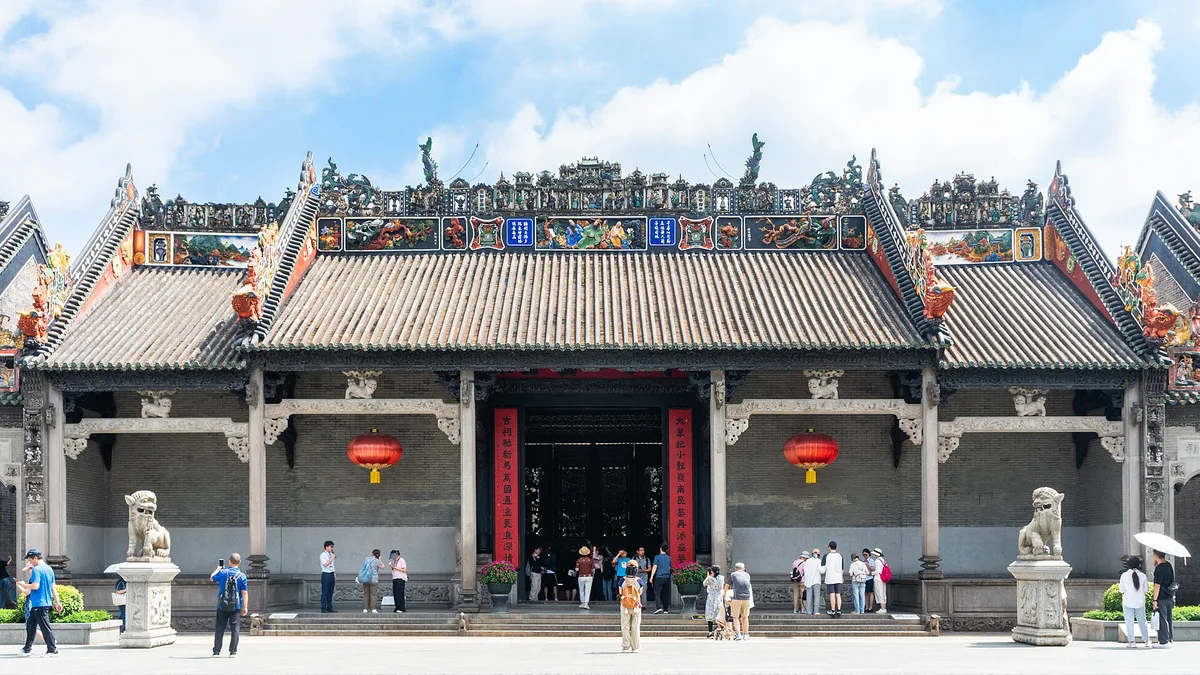
That collective, clan-pooled origin is why the decoration is so dense and so competitive-feeling: each family wanted its section to outdo the next. The result, nine halls and six courtyards linked by covered corridors, is now protected as a national cultural relic and run as the Guangdong Folk Art Museum, with rotating exhibits of ivory carving, embroidery, and shadow puppetry tucked into the side halls.
What actually stops you in your tracks
It’s the roof. Ridge after ridge is loaded with Shiwan ceramic figurines, opera scenes, dragons, phoenixes, whole crowded tableaux fired in the nearby Shiwan kilns and set up in continuous strips along the eaves. From the main courtyard you can tilt your head back and pick out individual characters mid-gesture, glazed in mustard yellow, cobalt, and a green that’s gone slightly matte with age.
At ground level the craftsmanship keeps going: wood-carved screens so deep-cut they read almost as sculpture, grey-brick relief panels of birds and blossoms let into the walls, and iron-cast balustrades that were unusually modern touches for the 1890s. Look for the lime-mortar mouldings above doorways too, a decorative technique specific to this region that most first-time visitors walk straight past.
Getting there and timing your visit
Take Metro Line 1 to Chen Clan Academy Station (陈家祠站) (the entrance is essentially at street level from the station exit, a couple of minutes’ walk. The full address is on Zhongshan Qi/Ba Road in Liwan District, and staff or ticket-counter signage will confirm current hours and admission on the day, since these can shift seasonally) worth a quick check before you go rather than assuming.
Plan on 90 minutes to two hours if you want to actually read the exhibit labels in the side halls rather than just photograph the roofline.
Beyond the hall itself
Liwan is one of Guangzhou’s older, lower-rise districts, and the streets around the hall are worth folding into the same outing. Enping Road and the surrounding lanes have old shopfronts and small eateries; Shangxiajiu pedestrian street with its arcaded qilou buildings is a short ride or a longer walk away if you want to keep the old-Guangzhou theme going. The hall’s own gift shop sells reproductions of the folk-art pieces on display, a better souvenir than most temple-adjacent stalls.
How to visit like a local
Go early on a weekday. This is a well-known stop on the Guangzhou circuit, popular with both domestic tour groups and school trips, so the courtyards fill up fast by mid-morning and stay busy through the afternoon, especially on weekends. Arriving close to opening buys you a window of relative calm before the group tours arrive, and the light in the main courtyard is better for photographing the roof carvings before the sun gets high and flat.
Buy your ticket at the counter or via the venue’s official channel rather than from touts near the entrance (there’s no need for a middleman here. Most locals treat this as a half-morning outing rather than an all-day museum crawl, then move on to lunch in one of the noodle or congee shops nearby rather than eating on-site. Etiquette is simple: keep voices down in the exhibit halls, don’t touch the carved screens or lattice work no matter how tempting the texture looks, and expect to remove hats for photos in front of the main hall if a docent asks) a small courtesy that keeps the sightlines clear for everyone else.
Frequently asked questions
How do I get to Chen Clan Ancestral Hall?
Take Guangzhou Metro Line 1 to Chen Clan Academy Station (陈家祠站); the exit leads almost directly to the entrance, a walk of just a couple of minutes on Zhongshan Qi/Ba Road in Liwan District.
How much time should I budget?
Plan for 1.5 to 2 hours to see the main halls, courtyards and roofline decoration, plus the folk-art exhibits in the side galleries if you want the full picture.
When is the best time to visit to avoid crowds?
Go on a weekday morning shortly after opening. It's a well-known stop for both tour groups and school trips, so courtyards get busy by mid-to-late morning and through weekend afternoons.
What's the entry fee and opening hours?
Admission is generally inexpensive for a national cultural relic site, but hours and prices can change seasonally — confirm the current schedule and fee at the ticket counter or official listing before you go.
What else is nearby?
Liwan District's older streets, including Enping Road and the Shangxiajiu pedestrian shopping street with its arcaded qilou buildings, are within easy reach for continuing an old-Guangzhou themed day out.
Plan your trip to Guangzhou
Some links above are affiliate links — if you book through them, Wander Atlas earns a small commission at no extra cost to you. It's how we keep every guide free.
Related guides


More Guangzhou guides: Huacheng Square 8.7 kmGuangdong Museum 9.0 km