
A whitewashed room at the top of Macau
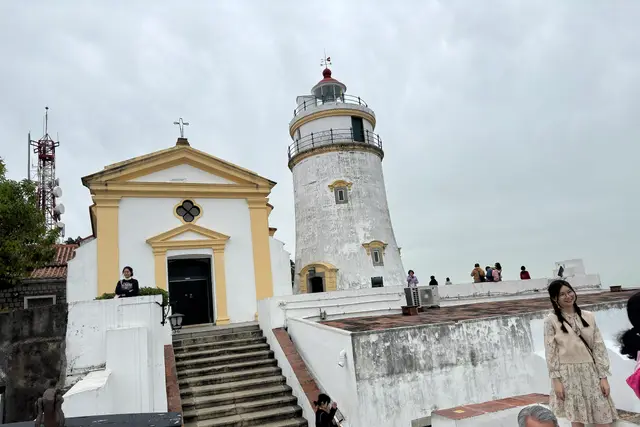
Guia Hill is the highest ground on the Macau peninsula. Near its summit sits a small chapel with thick white walls and a plain bell tower. Next to it stands a lighthouse, all inside the stone walls of a 17th-century fortress. From up here you can see the casino towers below and the bridges heading out over the Pearl River estuary.
Portuguese soldiers built the fortress between 1622 and 1638, and the chapel came with it. Since 2005 it has been part of the Historic Centre of Macao UNESCO World Heritage Site. Most visitors to Macau never come up the hill, so the chapel is usually a quiet stop compared with the crowds at the Ruins of St. Paul’s.
The frescoes under the plaster
Step through the low doorway and the room gets dim and cool. It’s one simple nave, and at first it looks bare. Then you notice the walls. During restoration work in the late 1990s, conservators found frescoes hidden under layers of later whitewash, and these painted panels are why the chapel matters.
The paintings blend Western and Chinese imagery in a way you rarely see elsewhere. Look for:
- Angels and Christian figures in a European style
- Chinese-style clouds and decorative motifs painted alongside them
- Biblical text in Latin, set into the plasterwork
These walls show early Macau’s mix of cultures as it really looked, not as a museum reconstruction. Take your time. The colours are faded, and your eyes need a minute to adjust to the low light.
Lighthouse, fortress walls and tunnels
The Guia Lighthouse stands right beside the chapel. It’s a white tower, first lit in 1865, and it was the first modern lighthouse on the China coast. Its interior is generally not open to the public. Near the lighthouse is the mast that once flew Macau’s typhoon warning signals.
Follow the fortress ramparts around the summit. You get views across the peninsula towards the Outer Harbour and over to Taipa. Below the fort, a network of military tunnels and air-raid shelters cuts into the hillside, and parts of it can be visited. Allow 45 minutes to an hour for the whole hilltop. Add more if you plan to walk down.

Getting up Guia Hill
The Guia Cable Car leaves from Flora Garden (Jardim da Flora) on Avenida de Sidónio Pais. It’s one of the shortest public cable car rides anywhere, with small open-sided cabins that run up the slope in a couple of minutes. From the top station it’s a short, signposted walk to the fortress gate.
If you’d rather walk, paths climb the hill from several sides. Many of them join the Guia Hill circuit, a shaded loop under the trees. It’s a steady uphill walk rather than a hard hike. The Tap Seac and Flora Garden areas make good starting points. Cable car times and fares are posted at the Flora Garden station, so check there before you plan the ride back down.
Inside the chapel: what to expect
The chapel is open every day from 10am to 5pm. That gives you a window from mid-morning until late afternoon, with no closing day. If you want time for the frescoes and the ramparts, aim to arrive before 4pm.
It’s still a consecrated space, so a few habits help:
- Keep your voice down. The room is small, and sound carries off the stone.
- Check the signs before you take photos. Photography of the frescoes is often restricted to protect the paint, and staff will point it out.
- Don’t touch the walls. The painted plaster is fragile and has already been restored once.
- Cover your shoulders if you’re coming straight from the beach or the gym. It’s a church first.
Entry details are posted at the fortress gate. The cable car and the tunnels have their own arrangements, which are shown on site.
Pairing it with the rest of the hill
The hilltop works best as part of a half-day. Many people start at Flora Garden, ride up, and spend an hour at the fortress. Then they walk down the circuit path towards the residential streets around Tap Seac Square, with its pastel colonial buildings.
Morning light suits the eastward views over the reclaimed land towards the Taipa bridges. On clear days the views reach furthest. On hazy days the frescoes are still the reason to make the climb.
Frequently asked questions
What are the opening hours of the Chapel of Our Lady of Guia?
It's open every day of the week, 10am to 5pm, with no weekly closing day. Get there by about 4pm if you want time for the frescoes and the fortress walls.
How do I get to Guia Fortress and the chapel?
Take the Guia Cable Car from Flora Garden (Jardim da Flora) on Avenida de Sidónio Pais. The ride takes a couple of minutes, and a short signposted walk from the top station brings you to the fortress. You can also walk up on the paths of the Guia Hill circuit.
How long should I spend there?
Plan on 45 minutes to an hour for the chapel, the lighthouse area and the ramparts. Allow longer if you visit the tunnels or walk down the hill instead of taking the cable car.
Can I take photos of the frescoes?
Photography inside the chapel is often restricted to protect the painted plaster. Follow the signs and any directions from staff, and never touch the walls.
Can I go inside Guia Lighthouse?
The lighthouse interior is generally not open to the public. You can see the 1865 tower up close from the fortress grounds next to the chapel.
Plan your trip to Guia
Macau eSIM & staying connected →
Some links above are affiliate links — if you book through them, Wander Atlas earns a small commission at no extra cost to you. It's how we keep every guide free.
Related guides
 attraction
 Guia Fortress and Lighthouse: Travel Guide (4.5★)
 hidden gem
 St. Lazarus' Church: St. Lazarus Quarter Travel Guide (4.3★)
 hidden gem
 Lou Kau Mansion: Macau Peninsula Travel Guide (4.1★)
 hidden gem