Why go
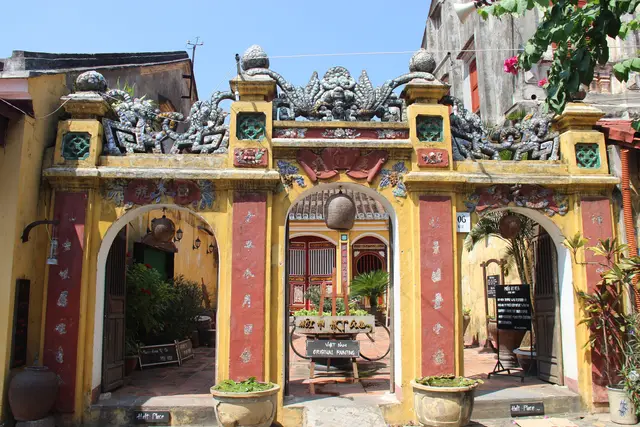
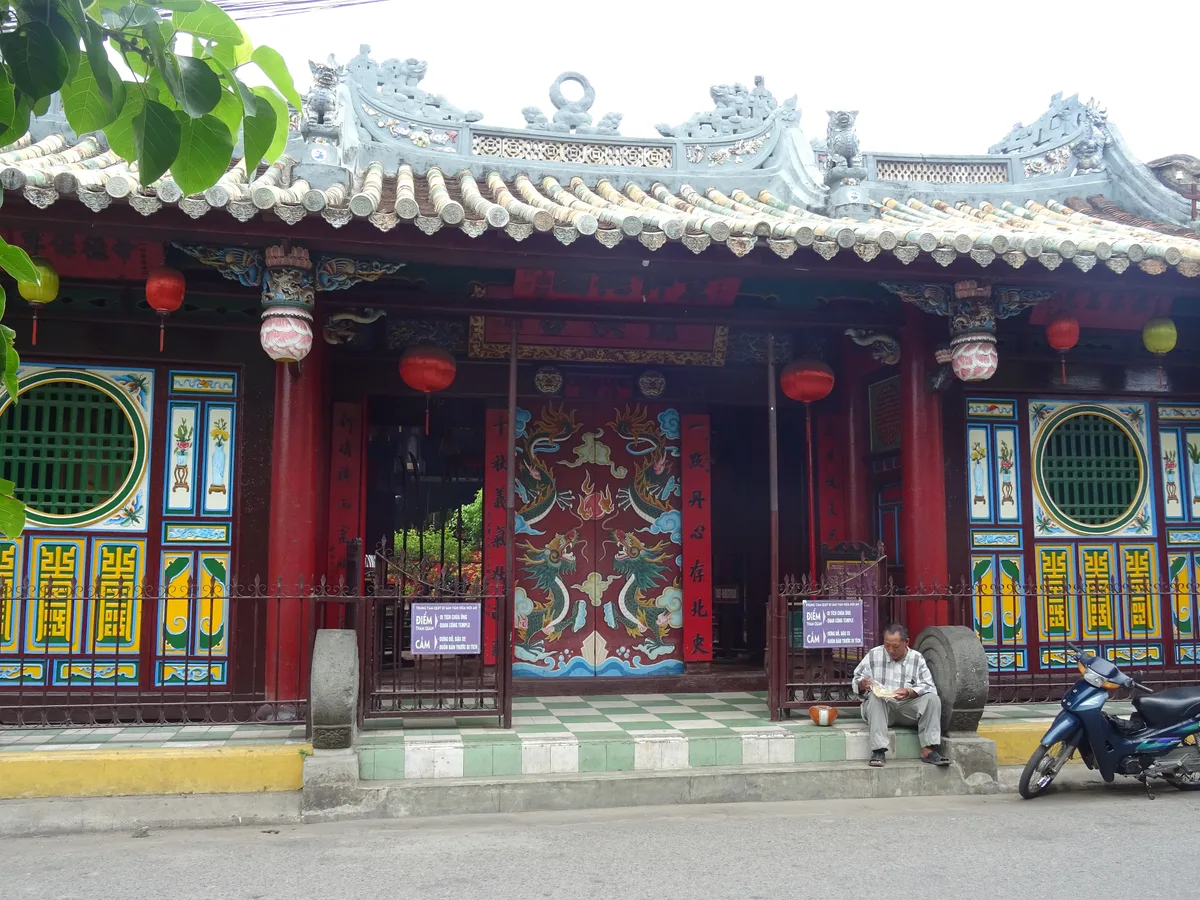
Tucked along Trần Phú Street, Quan Cong Temple is easy to walk past without noticing. That’s part of its appeal.
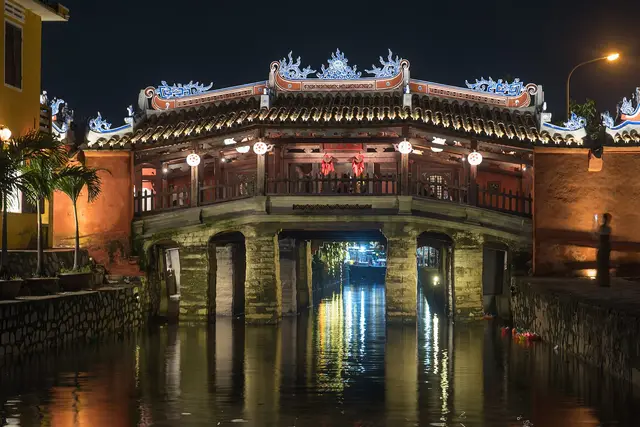
While tour groups cluster at the Japanese Covered Bridge a few blocks away, this 17th-century pagoda sits quiet, its red lacquered doors barely disturbed by foot traffic. Inside, the air is thick with the sweet, woody smell of incense smoke curling up from coiled bundles hanging from the ceiling.
The temple honors Quan Cong, a general from China’s Three Kingdoms period who became a folk symbol of loyalty and integrity. Merchants once prayed here for honest dealings, a fitting origin for a temple in a town built on centuries of trade.
What you’ll see inside
The centerpiece is a towering statue of Quan Cong himself, flanked by two guardian generals and his loyal horse, rendered in painted plaster and set behind a low altar.
Look up and the ceiling beams reveal faded gold-leaf carvings of dragons and phoenixes, worn soft by decades of humidity and smoke. The walls carry lacquered panels depicting scenes from Chinese legend, their colors muted to ochre and burgundy with age.
A small courtyard just past the entrance lets light spill onto the stone floor, breaking up the dim, incense-heavy interior. It’s a good spot to pause and let your eyes adjust before continuing in.
Getting there and what it costs
The temple sits at 24 Trần Phú, in the heart of Hoi An’s pedestrian Old Town, an easy 5-minute walk from the Japanese Covered Bridge.
If you’re staying outside the Old Town, cycling or walking in is simplest. Most of this area is closed to cars and heavy traffic during the day. There’s no separate entrance fee for the temple itself, though it sits within the Old Town’s protected heritage zone, where a general admission ticket sometimes covers a handful of sites. Rules shift from year to year, so confirm current ticketing at one of the tourist information booths near the Old Town entrances before you go.

When to go
Hours run 7:30am to 3:30pm most days, with Thursdays stretching to 5:30pm.
Morning is your best window. The light through the courtyard is softer, and the temple is nearly empty. Because it’s overlooked next to Hoi An’s bigger draws, you won’t fight crowds here even at midday, but arriving before 10am still gets you the most peaceful visit and the best photos of the altar without other visitors in frame.
How to visit like a local
Dress modestly, shoulders and knees covered, as this is an active place of worship, not a museum piece.
Remove your hat before entering and keep your voice low; locals still come here to burn incense and leave offerings. If you want to light incense yourself, small bundles are usually available near the entrance for a modest donation, follow the lead of whoever’s ahead of you if you’re unsure of the process.
Photography is generally fine but skip flash near the altar. There’s no ticket booth to navigate and no queue to plan around, so the main “trick” locals use is simply timing: come in the quiet morning hours rather than squeezing it into a rushed afternoon between other sights.
Pair the visit with a slow wander down Trần Phú itself, the temple works best as a five-minute stop woven into a longer walk past the merchant houses and shopfronts nearby, rather than a single destination trip.
Nearby to combine with your visit
Since it’s so close to Hoi An’s most photographed landmark, build your visit around a short loop:
- Japanese Covered Bridge, 5 minutes on foot
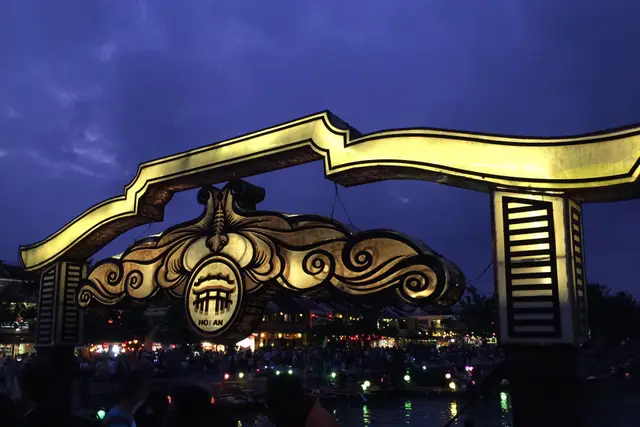
- Hoi An Old Town’s riverside walkway, for lantern-lit evenings, though the temple itself closes by mid-afternoon
- Central Market, a few minutes further along Trần Phú, for a livelier contrast after the temple’s hush
Because Quan Cong Temple closes in the afternoon, save the lantern-lit riverside stroll for evening and slot this visit into your morning Old Town route instead.
Frequently asked questions
How much time should I budget for Quan Cong Temple?
15 to 20 minutes is enough to see the main altar, the courtyard, and the carved details, unless you linger for photos.
What are the opening hours?
7:30am–3:30pm daily, except Thursdays when it stays open until 5:30pm. It's closed by mid-afternoon, so plan a morning visit.
Is there an entrance fee?
There's no standalone ticket for the temple, though Hoi An's Old Town heritage zone sometimes runs a general admission scheme covering several sites — check at a tourist information booth for the current setup.
When is the quietest time to visit?
Morning, ideally before 10am. The temple is under-the-radar compared to nearby sights, so it rarely feels crowded, but early hours still give you the calmest, best-lit experience.
What's nearby?
The Japanese Covered Bridge is about 5 minutes away on foot, and Hoi An's Central Market is a short walk further along Trần Phú Street.
Plan your trip to Hoi An
Some links above are affiliate links — if you book through them, Wander Atlas earns a small commission at no extra cost to you. It's how we keep every guide free.