Why go
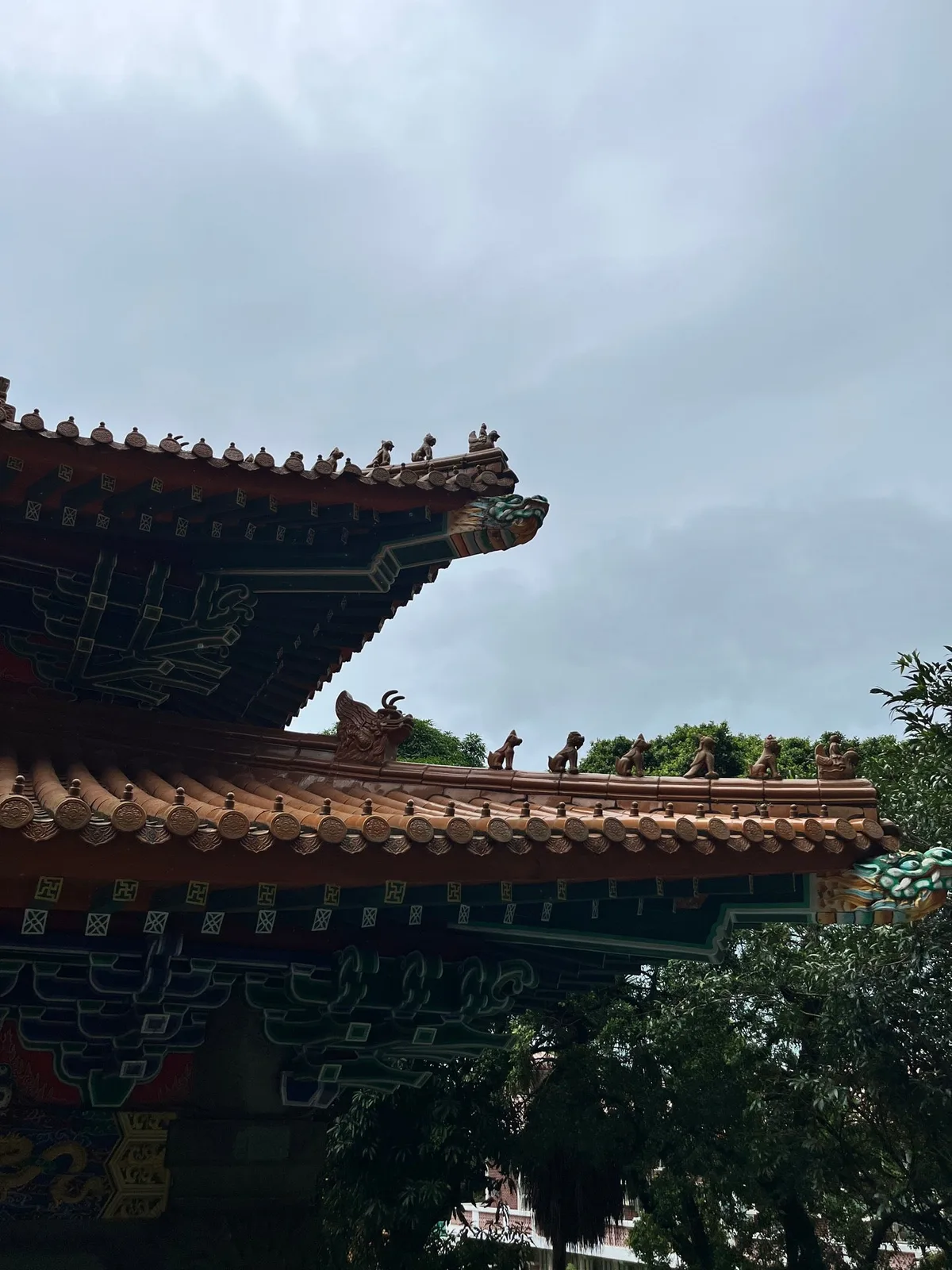
You come for one silhouette: a 34-metre bronze Buddha seated on a lotus throne, visible from the cable car long before you reach it. Po Lin Monastery sits beneath it on a high plateau on Lantau Island, incense smoke drifting between vermilion pillars and gold-tipped roofs.
It’s one of the most visited religious sites in Hong Kong, and it earns that status. The scale of the statue against Lantau’s green ridgelines is genuinely disarming, even if you’ve seen the photos a hundred times.
Getting there
The classic route is the Ngong Ping 360 cable car from Tung Chung MTR station (Tung Chung Line). The 25-minute ride swings over Lantau’s hills and the airport runway before dropping you at Ngong Ping Village.
From there it’s a short walk to the monastery and the base of the Buddha’s steps. If you’d rather skip the cable car queues, bus 23 runs from Tung Chung to Ngong Ping directly, and it’s often faster on busy days.
Either way, allow the better part of a morning or afternoon. Between the ride, the climb, and wandering the monastery grounds, three to four hours is realistic.
What to see and do
Climbing the 268 steps to the Buddha’s platform is the main event, and the view from the top stretches across Lantau to the South China Sea on a clear day. Inside the statue’s base is a small museum with relics and exhibits on Buddhist teaching.
Back at ground level, the monastery itself rewards slow wandering:
- The main hall, with three bronze Buddha statues representing the past, present, and future
- Incense-filled courtyards where locals come to pray, not just pose
- The vegetarian restaurant on site, serving set meals that draw as many visitors as the statue itself
- Ngong Ping Village, with tea shops and a small theatre on Buddhist stories
Wear shoes you can climb steps in, sandals are common but the ascent is steeper than it looks in photos.
When to go
Opening hours run 9am to 6pm every day of the week, so there’s no early-morning or evening slot to sneak in outside that window. The real variable is crowds, not hours.
Weekends between 10am and 4pm are the peak crush, when tour buses and cable car queues both hit their worst. Both weekdays and weekends stay comparatively calm across the full 9am–6pm window if you avoid that midday weekend surge.
Autumn and winter (October to February) bring cooler, clearer weather and better odds of an unobstructed view from the Buddha’s platform. Summer is humid, and typhoon season can shut the cable car entirely, so build in flexibility if you’re visiting July through September.
How to visit like a local
This is a working monastery, not a museum, and it’s worth treating it that way. Dress modestly, shoulders and knees covered, especially before entering the main hall.
Given how popular the site is, the smartest move is timing rather than seeking a quiet corner that doesn’t exist. Arrive right at the 9am opening or come after 4pm; the middle of the day, especially on weekends, is when tour groups peak.
Buy your cable car ticket online in advance rather than queuing at Tung Chung. It’s the single biggest time-saver here. Cash and Octopus card both work for the vegetarian restaurant and village stalls, though card acceptance is patchier at smaller vendors.
If you plan to eat at the monastery’s vegetarian restaurant, book the meal ticket alongside your cable car ticket rather than walking up and hoping for a table. Locals visiting for worship rather than sightseeing tend to come right at opening, light incense, and leave before the crowds build, a good model to follow even if you’re here for the view rather than the prayer.
Frequently asked questions
What are the opening hours for Po Lin Monastery?
It's open daily from 9:00 AM to 6:00 PM, with no variation across the week — plan your cable car timing around this window.
When is the quietest time to visit?
The site stays comparatively calm across its full 9am–6pm hours on both weekdays and weekends, as long as you avoid the 10am–4pm weekend peak when tour groups converge.
How do I get to Po Lin Monastery from central Hong Kong?
Take the MTR Tung Chung Line to Tung Chung station, then either the Ngong Ping 360 cable car (about 25 minutes) or bus 23, both ending near the monastery.
How long should I spend there?
Plan for three to four hours total, including the cable car ride, the climb to the Big Buddha, and time to explore the monastery grounds and Ngong Ping Village.
Is there anywhere to eat nearby?
Yes — the monastery runs an on-site vegetarian restaurant serving set meals, and Ngong Ping Village has tea shops and casual food stalls.
Plan your trip to Hong Kong
Some links above are affiliate links — if you book through them, Wander Atlas earns a small commission at no extra cost to you. It's how we keep every guide free.
Related guides

This spot is Day 2 of our Hong Kong 3-day itinerary
This spot is Day 3 of our Hong Kong 5-day itinerary