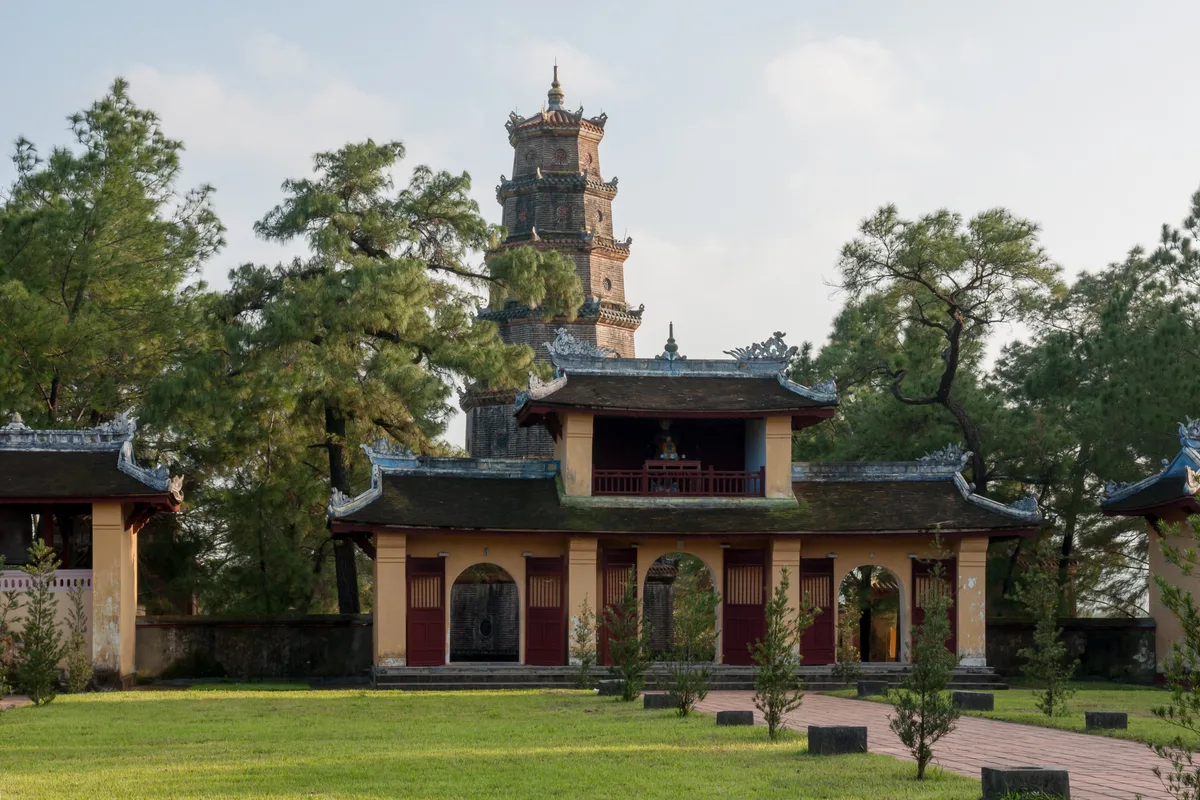
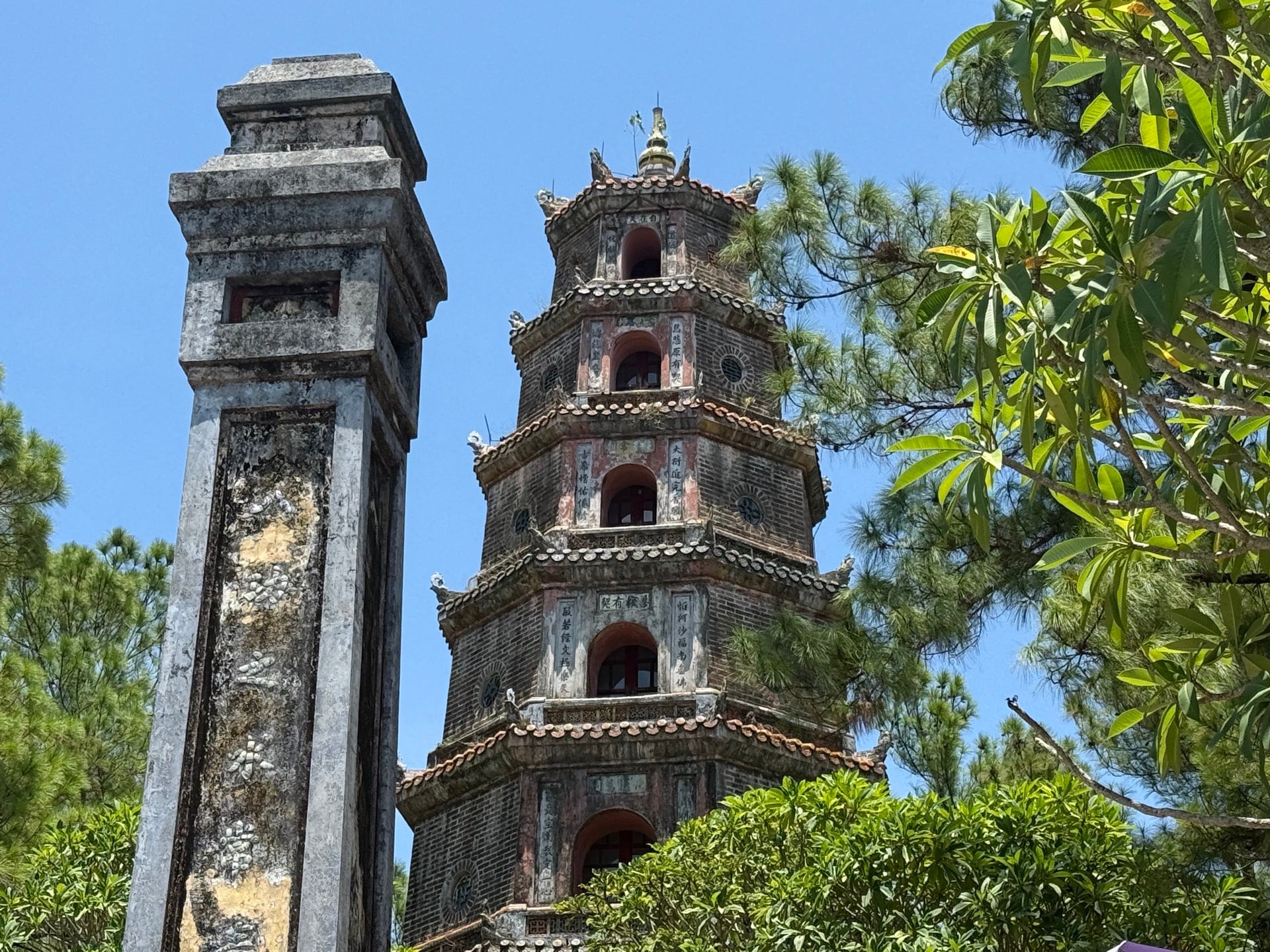
Seven tiled roofs stack above the treeline as you approach from the river road, each tier smaller than the one below it, the whole tower the color of old brick left in the sun. This is the Phuoc Duyen tower, and it’s what every photo of Hue’s skyline is quietly borrowing from. The pagoda behind it dates to 1601, making it one of the oldest religious structures in the city, and monks still live and study on the grounds today.
Getting to Kim Long
The pagoda sits in Kim Long ward, on the north bank of the Perfume River, roughly 4-5km upstream from Hue’s Imperial City. Most visitors arrive one of two ways: a short taxi or motorbike ride along Kim Long street, or a dragon boat from the docks near Trang Tien Bridge.
The boat trip takes about 30-40 minutes downstream and is the more atmospheric option, gliding past fishing rafts and riverside gardens before the tower comes into view. Many boat operators combine it with stops at the royal tombs further south, so ask before booking if you want the pagoda on its own or as part of a half-day river loop.
What’s actually on the grounds
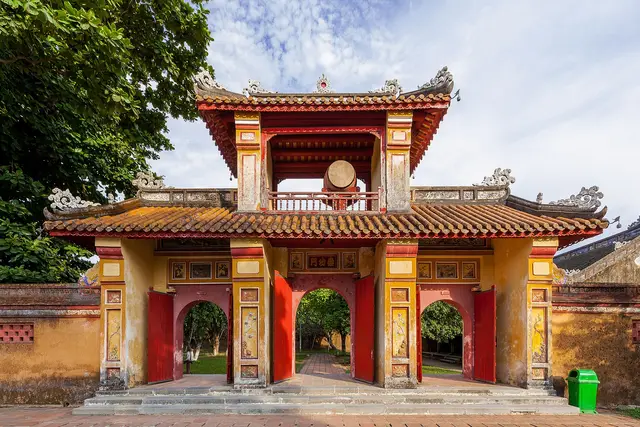
Past the tower, a triple gate opens onto a courtyard with a large stone stele set on the back of a marble turtle, a common Buddhist symbol of longevity. Beyond that sits the main sanctuary, still an active place of worship, with a laughing Buddha statue near the entrance and quieter halls further back.
Walk further into the grounds and you’ll find:
- The bell tower, housing a large bronze bell said to be audible for miles along the river
- Manicured pine and frangipani gardens that monks tend daily
- Monks’ living quarters, generally off-limits to visitors but visible from a respectful distance
- A small parking area at the back where the site’s most talked-about relic sits
The blue Austin behind the sanctuary
Walk around to the rear courtyard and you’ll come across a pale blue 1961 Austin car, kept under a simple shelter. This is the car that carried the monk Thich Quang Duc to Saigon in 1963, where he performed the self-immolation that became one of the defining images of the Vietnam War era protests against religious persecution.
It’s a jarring, quiet corner of the site: no crowds gather around it the way they do at the tower out front, and there’s little signage beyond a basic plaque. Take a few minutes here anyway. It’s the part of Thien Mu that turns the visit from scenic to genuinely historical.
Reading the grounds without a guide
Nobody hands you a map at the gate, so it helps to know the layout has a rough front-to-back logic: tower and triple gate first, main sanctuary in the middle, gardens and the Austin car furthest back. Signage is minimal and mostly in Vietnamese, so a guidebook or a quick read beforehand goes further here than at more heavily signposted sites.
Dress matters more than at many Hue attractions because the sanctuary is a working place of worship. Shoulders and knees should be covered; if you show up in shorts or a tank top, keep to the outer courtyard rather than trying to enter the main hall.
Avoiding the tour bus crush
Thien Mu is one of Hue’s most visited sights, and it shows between 10am and 5pm on weekends, when tour groups from the Imperial City and the tombs converge here in waves. Both weekdays and weekends are calmest from 7am to 9am, right at opening, before the coach parking lot fills.
Arriving early also means softer light on the tower for photos and a sanctuary that’s actually quiet enough to sit in for a few minutes. If you’re coming by boat rather than road, ask your operator about early departures; most standard river tours don’t leave the city docks until mid-morning, which puts you right in the busiest window.
Monks, incense and quiet courtesy
The monks here go about ordinary business, sweeping courtyards, tending the gardens, moving between study halls, while visitors pass through. Keep voices down near the sanctuary and living quarters, and ask before pointing a camera directly at a monk. Incense is offered inside the main hall; if you’d like to light some, watch how others do it rather than guessing, and place it in the burners provided rather than directly on altars.
There’s no ticket booth and no entrance fee at time of writing, though this is the kind of detail worth confirming with your hotel or driver before you go, as is always sensible with opening times at religious sites. A small donation box near the entrance is the customary way to contribute if you’d like to.
Nearby to combine with your visit
Thien Mu pairs naturally with a river-based itinerary. Boat tours from the city center often bundle it with the tomb of Minh Mang or Tu Duc further downstream, both worth the extra hour if you have a half day free.
Back on land, Kim Long ward itself has a handful of old garden houses and small local eateries along the main road, a quieter alternative to central Hue if you want lunch somewhere without a tour bus parked outside.
Frequently asked questions
What are the opening hours for Thien Mu Pagoda?
It's open daily from 7:00am to 5:30pm, with no variation by day of the week.
When is the quietest time to visit?
Both weekdays and weekends are calmest between 7am and 9am, right after opening. Weekends from 10am to 5pm draw the biggest tour bus crowds, so avoid that window if possible.
How do I get to Thien Mu Pagoda from central Hue?
It's about 4-5km from the Imperial City in Kim Long ward. Take a taxi or motorbike along Kim Long street (10-15 minutes), or a dragon boat from the docks near Trang Tien Bridge (30-40 minutes, more scenic).
How long should I spend there?
Most visitors need 45 minutes to an hour to see the tower, sanctuary, gardens, and the historic Austin car at the rear. Add travel time if arriving by river boat.
Is there an entrance fee?
There was no admission charge as of recent visits, only a donation box near the entrance, but confirm with your hotel or driver before going since this can change.
Plan your trip to Hue
Vietnam eSIM & staying connected →
Some links above are affiliate links — if you book through them, Wander Atlas earns a small commission at no extra cost to you. It's how we keep every guide free.