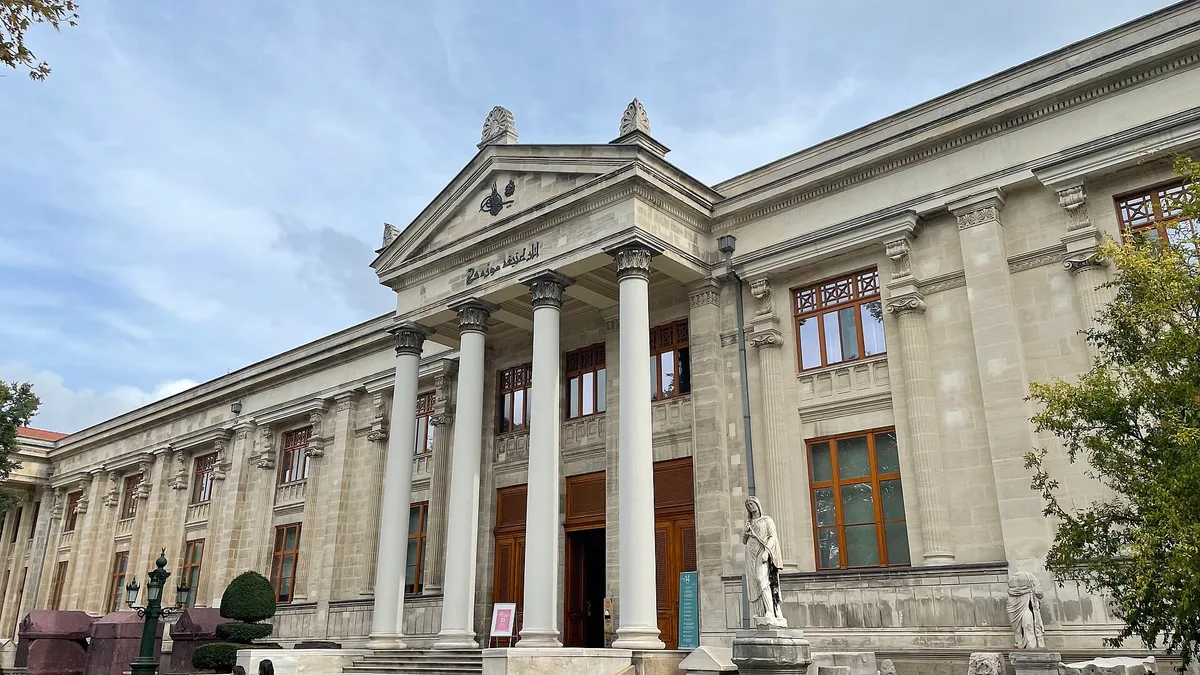
You come to the Istanbul Archaeological Museums expecting one building and find three, plus a garden scattered with column capitals and stone lions like a lapidary graveyard. The complex sits just below Topkapı Palace’s outer walls in Cankurtaran, and most visitors stumble onto it almost by accident, mid-way between the palace and Gülhane Park.
That accident is worth having. This is one of the world’s great archaeological collections, built on finds from across the Ottoman Empire’s former territories, and it rarely gets the crowds that swamp Topkapı or the Blue Mosque next door.
The gardens before the galleries
Start outside, not in. The forecourt and side gardens hold marble sarcophagi, column drums, and Byzantine capitals stacked in loose rows, some labeled, some just left where they landed decades ago.
It’s a good decompression zone before the main galleries, and a rare chance to touch worn stone without a barrier in front of it.
The main building’s showstopper
Inside the main building, everything leads toward one room: the Alexander Sarcophagus. Despite the name, it wasn’t Alexander’s, but its carved battle friezes are among the finest Hellenistic relief work anywhere, still holding traces of original paint if you look closely at the folds.
Give this hall real time. The surrounding rooms hold sarcophagi from Sidon, royal necropolis finds, and Roman-era statuary that most visitors rush past on their way back outside.
- Alexander Sarcophagus and the Sidon necropolis finds
- Ephesus and Aphrodisias statuary halls
- Istanbul Through the Ages exhibit on the ground floor
- Tiled Kiosk (Çinili Köşk), the Ottoman ceramics building
- Ancient Orient Museum, with Babylonian glazed-brick reliefs
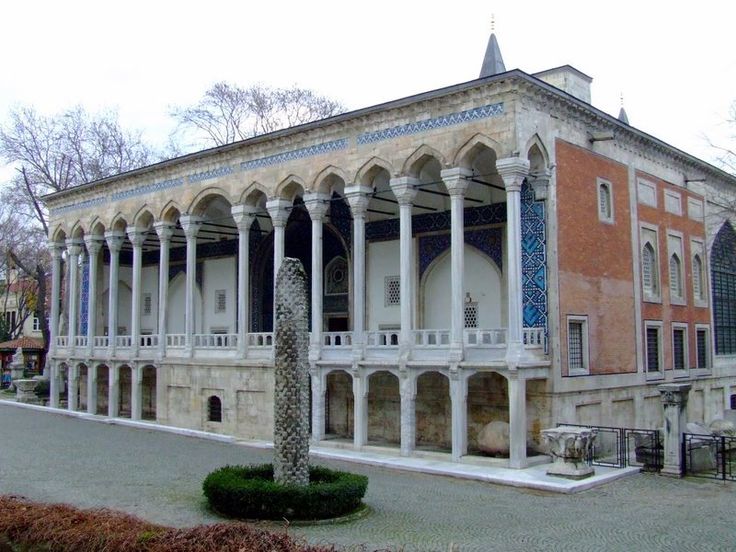
The Tiled Kiosk and the Ancient Orient wing
Across the courtyard, the Tiled Kiosk is the oldest structure on site, a 15th-century Ottoman pavilion faced in turquoise and cobalt tile panels. It now houses ceramics and tilework, and the building itself is as much the exhibit as anything inside it.
The Ancient Orient Museum, smaller and often quieter, holds Hittite treaties, Babylonian glazed-brick lions from the Ishtar Gate approach, and cuneiform tablets. Don’t skip it just because it’s the smallest of the three; it’s where the deepest history lives.
Pacing your visit
Plan for two to three hours if you want to see all three buildings properly, less if you’re only chasing the Alexander Sarcophagus. The complex connects easily to a half-day loop with Topkapı Palace and Gülhane Park.
Weekends tend to be busier, so a weekday visit or an early morning start gives you noticeably more breathing room in front of the big sarcophagi.
How to visit like a local
Buy tickets at the counter or through Turkey’s official e-Devlet or museum ticketing apps rather than from street vendors near Sultanahmet, who often upsell combined tours you don’t need. Cash and card are both accepted at the gate.
There’s no dress code here unlike the nearby mosques, so skip the scarf-and-cover-up routine you’d plan for Blue Mosque. Signage is in Turkish and English, but a lot of first-time visitors miss the Tiled Kiosk entirely because it’s across an open courtyard and looks like a separate attraction.
Cross over anyway. It’s included in the same ticket and it’s one of the highlights, not an add-on.
The museum stays open until 9pm every day, which is later than most Istanbul museums and worth using. An evening visit after the tour buses clear out from Topkapı gives you the sarcophagus hall almost to yourself, with softer light through the tall windows.
Frequently asked questions
How do I get to the Istanbul Archaeological Museums?
They're in Cankurtaran, Fatih, just inside the outer gardens below Topkapı Palace. The closest tram stop is Gülhane on the T1 line, about a 5-10 minute walk through Gülhane Park.
How much time should I plan for a visit?
Two to three hours covers the main building, the Tiled Kiosk, and the Ancient Orient Museum. If you're short on time, prioritize the main building's Alexander Sarcophagus hall.
When is the quietest time to visit?
The museum is calmer on weekdays and in the early morning or evening; weekends between 12pm and 6pm see the heaviest crowds, so avoid that window if you can.
Is it worth combining with Topkapı Palace?
Yes, they're a few minutes apart and pair naturally into a half-day loop with Gülhane Park. Many visitors do the palace first, then the museums as a quieter follow-up.
Do I need to buy tickets in advance?
It's not usually necessary given the museum's size relative to crowds, but buying through official channels like e-Devlet or the on-site counter avoids inflated prices from street sellers nearby.
Plan your trip to Istanbul
Turkey eSIM & staying connected →
Some links above are affiliate links — if you book through them, Wander Atlas earns a small commission at no extra cost to you. It's how we keep every guide free.
Related guides
 attraction
 Topkapi Palace Museum: Istanbul Travel Guide
 attraction
 Gülhane Park: Istanbul Travel Guide (4.7★)
 attraction
 Hagia Sophia Grand Mosque: Istanbul Travel Guide (4.8★)
 attraction
 Istanbul Museum of Modern Art: Travel Guide (4.4★)
This spot is Day 3 of our Istanbul 3-day itinerary