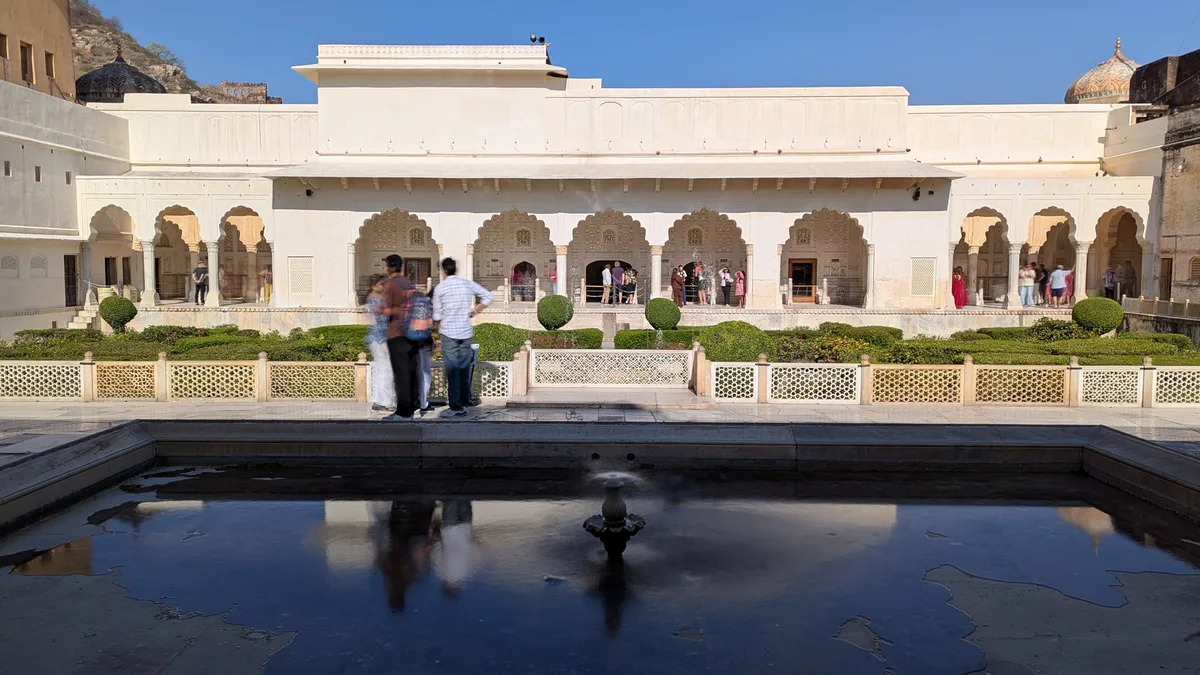
Why Sheesh Mahal stops people mid-step
You walk through a series of plain sandstone courtyards at Amber Fort, then step into a room lined entirely in glass. Every wall, every ceiling panel, every niche is inlaid with thousands of convex mirror fragments and coloured glass set into white plaster.
This is the Sheesh Mahal, or “Mirror Palace,” built in the 16th–17th century as part of the private apartments of the Kachhwaha Rajput rulers. It sits within the Jai Mandir complex, on the upper level of Amber Fort overlooking Maota Lake. Guides still demonstrate its old trick: light a single match in the darkened hall and the reflections multiply it into a field of stars.
Getting there
Amber Fort is about 11 km north of central Jaipur, a 25–40 minute drive or auto-rickshaw ride depending on traffic through Amer town.
Most visitors combine a taxi or shared jeep with the walk up the cobbled ramp to the fort’s main Suraj Pol gate. From there, Sheesh Mahal is a further 10–15 minute walk through the Diwan-i-Aam and private palace courtyards.
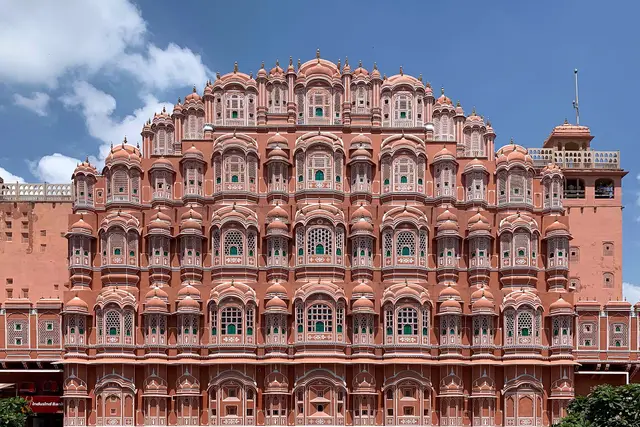
- Jaipur city buses run to Amer from outside Hawa Mahal
- Uber/Ola autos are the easiest door-to-door option
- Elephant or jeep rides up the fort ramp operate seasonally at an extra cost

What to see inside
Sheesh Mahal itself is one hall within a larger complex, so budget time to see it in context.
- Jai Mandir – the mirrored hall itself, with the famous “Magic Flower” carved marble panel nearby
- Sukh Niwas – the cooling chamber opposite, once fed by a rudimentary water-channel air-conditioning system
- Ganesh Pol – the ornate frescoed gateway you pass through to reach the private quarters
- Zenana courtyard – the women’s quarters surrounding a central garden
The mirror mosaic looks almost flat under flat daylight. Hold a phone torch or lighter near the wall and it flares into hundreds of tiny points of light. This is the effect the room was designed for, and worth the extra minute.
When to go
The fort opens at 8am and closes at 5:30pm daily, and the gap between those two ends is your best planning tool.
Early morning, before 9am, gives you soft light in the courtyards and a nearly empty Sheesh Mahal. Late afternoon, after 3:30pm, is the other quiet window, with the added bonus of golden light hitting the lake and surrounding hills.
Midday sees the heaviest tour-group traffic, when Sheesh Mahal’s narrow entrance can back up with a queue just to step inside. Winter months (October–March) bring the most comfortable temperatures for the uphill walk; summer afternoons in Rajasthan get brutally hot.
How to visit like a local
Amber Fort draws heavy crowds year-round, so timing and logistics matter more than any insider secret here.
- Book entry tickets online in advance through the official Rajasthan tourism site to skip the counter queue at the gate
- Hire a licensed guide or audio guide at the entrance, Sheesh Mahal has no on-site plaques, and its history is easy to miss without one
- Pay entry and guide fees by card or exact cash; small vendors and camera fees inside often expect cash only
- Don’t ride the elephants up if you’re uncomfortable with animal welfare concerns, jeeps run the same route
- Wear socks-friendly shoes for a couple of spots where you’ll be asked to remove footwear
The single biggest mistake visitors make is treating Amber Fort as a quick 45-minute stop. Between the ramparts, courtyards, and Sheesh Mahal itself, plan on two to three hours to see it without rushing through the mirrored hall itself.
Pair the visit with nearby Jaigarh Fort, connected by a walking passage, and Nahargarh Fort further along the ridge, for a full day exploring Jaipur’s fort trio.
Frequently asked questions
What are the opening hours for Sheesh Mahal at Amber Fort?
Amber Fort, including Sheesh Mahal, is open daily from 8:00 AM to 5:30 PM. There are no separate hours for the mirror palace itself since it's part of the main fort complex.
When is the quietest time to visit?
Arrive right at 8am opening or after 3:30pm. Midday, especially 11am–2pm, sees the heaviest tour-bus crowds and the longest queue to step inside the mirrored hall.
How do I get to Amber Fort from Jaipur city?
It's about 11 km north of central Jaipur, roughly a 25–40 minute ride by taxi, auto-rickshaw, or city bus from near Hawa Mahal.
How much time should I set aside?
Plan two to three hours for the full fort complex, including the walk to Sheesh Mahal through the Diwan-i-Aam and Ganesh Pol gateway.
Is Sheesh Mahal worth seeing beyond photos?
Yes — bring a phone torch or lighter and hold it near the mirrored wall. The tiny glass fragments flare into hundreds of points of light, the effect the room was originally designed to create with candlelight.
Plan your trip to Jaipur
Some links above are affiliate links — if you book through them, Wander Atlas earns a small commission at no extra cost to you. It's how we keep every guide free.