Why the City Palace still matters
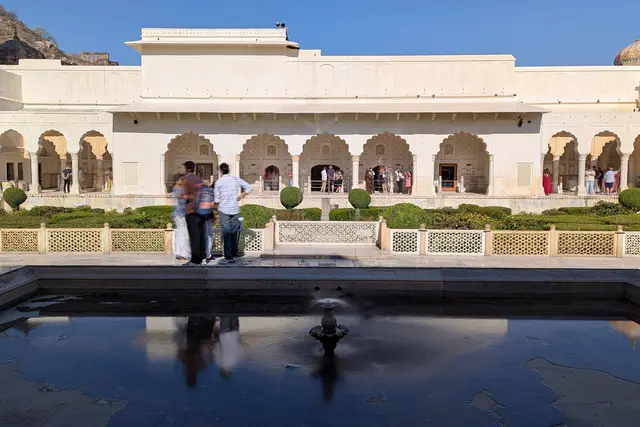
You step through Virendra Pol and the traffic noise of Jaipur just falls away. This isn’t a ruin behind glass. It’s a working palace complex, part museum, part royal residence, built from the 1720s onward by Maharaja Sawai Jai Singh II. The current royal family still occupies a private wing, which is why certain courtyards feel lived-in rather than roped-off.
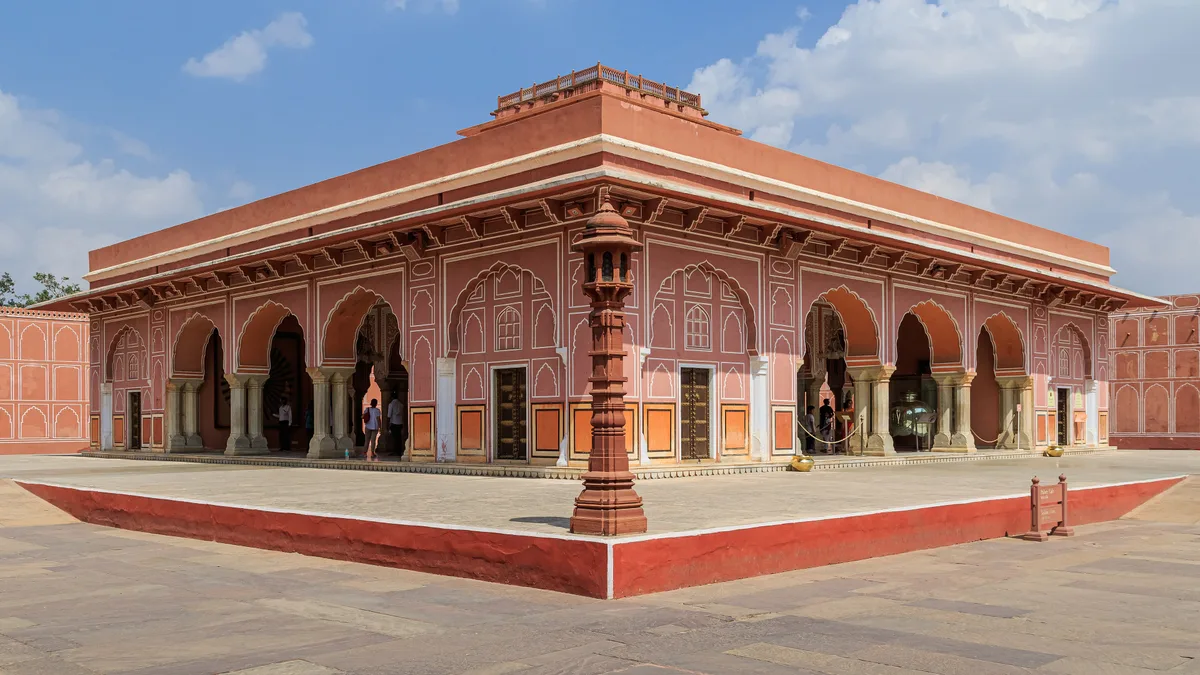
Pink sandstone gateways give way to marble-columned halls and courtyards painted in mustard yellow, coral pink, and peacock blue. Look up in Pritam Niwas Chowk and you’ll find four small doorways, each painted for a season, peacocks for autumn, roses for winter, lotuses for summer.
Getting there and getting in
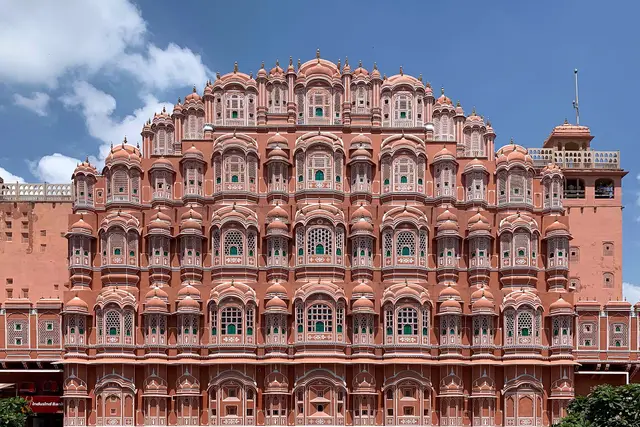
The palace sits inside the Pink City walls, on Gangori Bazaar Road, easy to reach on foot from Hawa Mahal or Jantar Mantar, both a five-minute walk away. Autorickshaws and taxis drop passengers at Atish Pol or Virendra Pol gate.
It’s open every day, 9:30am to 7:30pm, so there’s no day to avoid for closures. Ticket counters typically stop selling entry before the final closing time, so don’t roll up right at 7:30 expecting to get in.
There are usually tiered tickets: a standard palace-museum entry, and a pricier “royal grandeur” pass that unlocks extra wings like the Chandra Mahal’s upper floors. Prices and exact inclusions shift from year to year, so check the official rate board or website before you go rather than relying on an old figure.

What to see inside
Budget two to three hours to do the complex justice without rushing.
- Mubarak Mahal – the reception palace, now a costume and textile museum with royal garments dating back generations.
- Diwan-i-Khas – a marble-floored hall holding two enormous silver urns, reportedly among the largest silver objects in the world, once used to carry holy Ganges water.
- Peacock Gate & Pritam Niwas Chowk – the most photographed corner of the palace, especially in the soft late-afternoon light.
- Sileh Khana – an armory of swords, daggers, and firearms that belonged to Rajput and Mughal rulers.
- Chandra Mahal – the seven-storey residential palace, partly open only with the upgraded ticket.
Textiles, weapons, miniature paintings, astronomical instruments, the collection reflects centuries of Rajput court life, not just royal furniture.
When to go
This is a genuinely popular stop on the Jaipur circuit, and it shows in the courtyards by midday. Measured foot-traffic data points to 10am–11am on weekdays as the calmest stretch to walk through.
Weekends are a different story. Expect a real crush between noon and 6pm, when tour buses and family groups overlap. If a weekend visit is unavoidable, aim for the first hour after opening instead.
Winter mornings (November through February) are pleasant enough to linger in the open courtyards; by April the stone and marble radiate heat by late morning, so an early or golden-hour visit matters more.
How to visit like a local
Buy your ticket at the counter rather than from touts hovering near the gates. They’ll often push overpriced “guide” packages you don’t need.
- Hire an official guide or audio guide at the entrance if you want context; the printed signage inside is minimal.
- Dress modestly, shoulders and knees covered, since parts of the palace remain a functioning royal residence.
- Cameras are usually allowed for a separate fee; phones are typically free, but confirm at the counter since policies do shift.
- Skip the noon-to-6pm weekend crunch. A 9:30am arrival on a weekday gets you the courtyards without the elbow-to-elbow crowds.
- Pair the visit with Jantar Mantar and Hawa Mahal, both a short walk away, to make a full Pink City morning of it.
Most visitors treat the City Palace as a quick photo stop at the Peacock Gate and move on. Slow down instead. The armory and textile museum inside are where the depth of the collection actually lives.
Frequently asked questions
How long should I spend at the City Palace?
Plan on two to three hours for the standard museum route, longer if you add the Chandra Mahal upper floors with the royal grandeur ticket.
What is the quietest time to visit?
Weekdays between 10am and 11am see the least foot traffic. Avoid weekends from noon to 6pm, when crowds peak.
How do I get to the City Palace?
It's inside the Pink City walls on Gangori Bazaar Road, walkable from Hawa Mahal and Jantar Mantar, or reachable by autorickshaw or taxi to Virendra Pol gate.
Is the City Palace still a royal residence?
Yes, part of it remains the private residence of Jaipur's royal family, while the rest operates as a public museum.
What's nearby to combine with the visit?
Jantar Mantar observatory and Hawa Mahal are both a five-minute walk away, making a natural half-day Pink City loop.
Plan your trip to Jaipur
Some links above are affiliate links — if you book through them, Wander Atlas earns a small commission at no extra cost to you. It's how we keep every guide free.