Why go
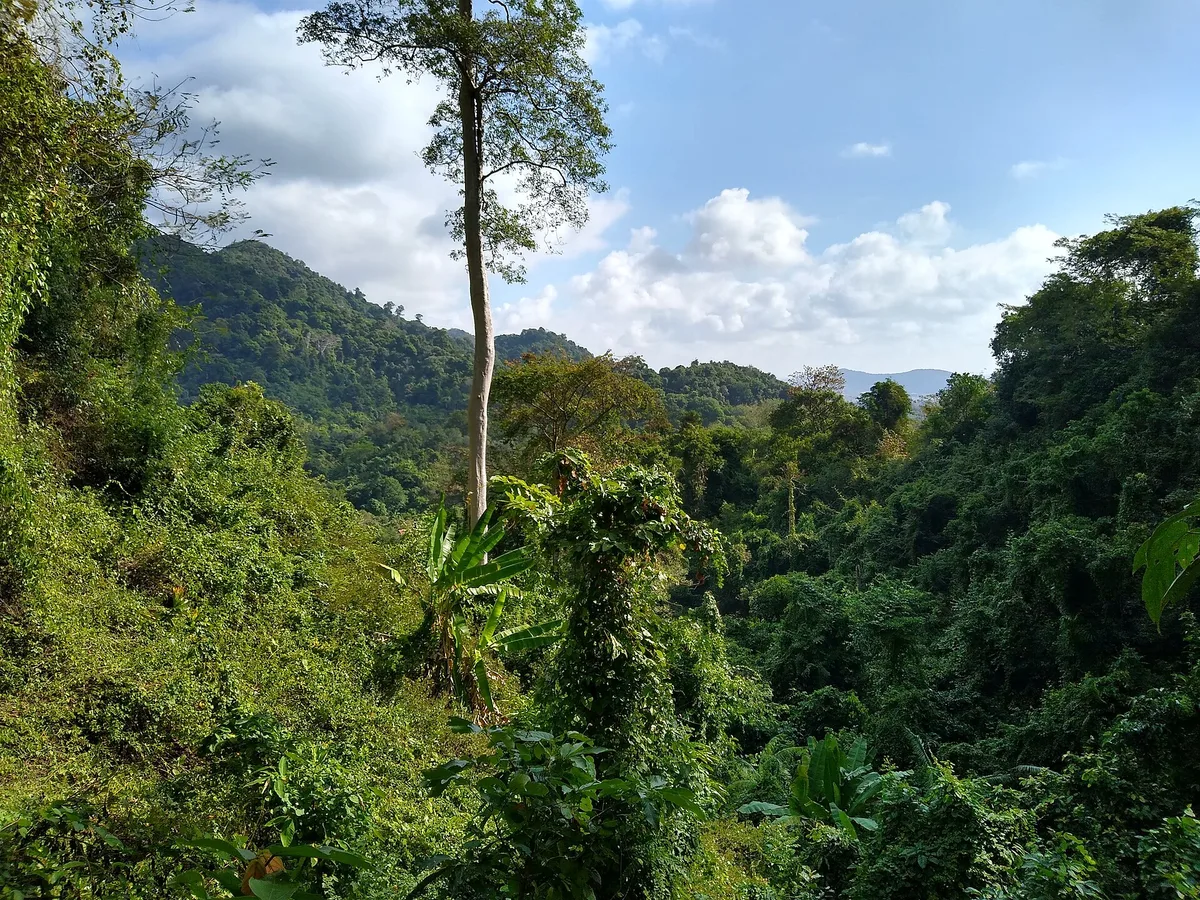
Kep National Park is not a jungle epic. It’s a compact ridge of forest rising straight from the Gulf of Thailand. It covers the hill behind Kep town, and the whole loop trail can be walked in a couple of hours. What makes it worth the detour is the payoff: gaps in the tree cover open onto sudden views of the coastline, Rabbit Island, and on clear days the hazy outline of Vietnam’s Phu Quoc.
Getting there
Kep town itself sits on Cambodia’s south coast, a few hours from Phnom Penh or Sihanoukville by bus or private taxi. The park entrance is a short tuk-tuk ride from the town’s crab market or seafront guesthouses, most drivers know it as “Kep National Park” or by the trailhead near Veal Renh road.
There’s no train or organized shuttle system here. Renting a scooter in Kep for the day is the simplest way to reach the trailhead and combine it with the beach or the market afterward.
What to see and do
The main draw is the circular ridge trail, roughly 8km around, dotted with wooden benches and clearings built for resting and taking in the view. Most visitors don’t do the whole loop, a shorter there-and-back to the first viewpoint takes under an hour.
Along the way you’ll pass:
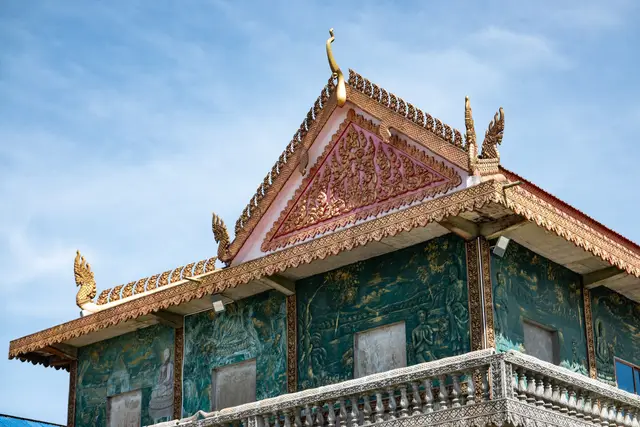
- A hilltop pagoda with panoramic views over the coast
- Several marked viewpoints looking out to the sea and nearby islands
- A small cafe near the park’s edge for a drink or coconut before or after the walk
The trail surface is packed dirt and root, shaded for long stretches but exposed at the viewpoints, enough sun exposure that timing your visit matters more than you’d expect on a “forest” walk.
When to go
Early morning is the most comfortable time to walk, before the heat builds under the canopy. The measured crowd pattern backs this up: weekend visits stay lightest early in the morning, while the busiest stretch runs from mid-morning into the afternoon as day-trippers arrive.
If you’re coming on a weekend, aim for that quieter early window rather than mid-morning. On weekdays the park rarely feels crowded at all. It’s still very much an under-the-radar stop compared to Kep’s beach and crab market, so you’re unlikely to be jostling for space on the trail regardless of when you go.
Dry season, roughly November through April, gives you the clearest views and driest footing. Rainy months make the dirt trail slick and can close off the best lookout points in cloud.
How to visit like a local
There’s no ticket booth drama and no fixed schedule to plan around here. It’s an open hillside park, so treat it like a casual half-day walk rather than a timed attraction.
- Wear closed shoes with grip; sandals struggle on the root-covered sections.
- Carry your own water. The cafe near the entrance is the only reliable stop, and there’s nothing partway up.
- Pay cash for the cafe and any small entrance donation; card machines don’t reach this hillside.
- Start the loop counter-clockwise from the main trailhead if you want the sea views to open up gradually rather than all at once near the end.
- Combine the walk with Kep’s crab market or beach for the rest of the day. The park itself is a half-day stop, not a full-day destination.
The mistake most first-time visitors make is underestimating the heat and skipping water, assuming tree cover means shade the whole way. It doesn’t. The viewpoints are deliberately cleared, and that’s exactly where the sun hits hardest. Go early, carry more water than feels necessary, and treat the pagoda stop as your natural turnaround point if you’re short on time.
Frequently asked questions
How long does it take to walk Kep National Park?
The full ridge loop is around 8km and takes about 2-3 hours at a relaxed pace. A shorter walk to the first viewpoint and back takes under an hour.
When is the quietest time to visit?
On weekends, the park is calmest between 1pm and 8pm. Arrivals pick up from 9am and stay busy until around 11pm, so plan around that stretch if you want the trail to yourself.
Do I need to book or pay an entrance fee?
There's no formal booking system. Bring small cash for any entrance donation and for the cafe near the trailhead, since there's no card payment on the hill.
How do I get to Kep National Park without a car?
Most visitors reach it by tuk-tuk or rented scooter from Kep town, a short ride from the crab market and seafront guesthouses. There's no public shuttle or train service to the trailhead.
What should I bring for the walk?
Closed, grippy shoes, your own water, and sun protection for the exposed viewpoints. The trail is shaded in parts but the lookout clearings get full sun.
Plan your trip to Kep
Cambodia eSIM & staying connected →
Some links above are affiliate links — if you book through them, Wander Atlas earns a small commission at no extra cost to you. It's how we keep every guide free.