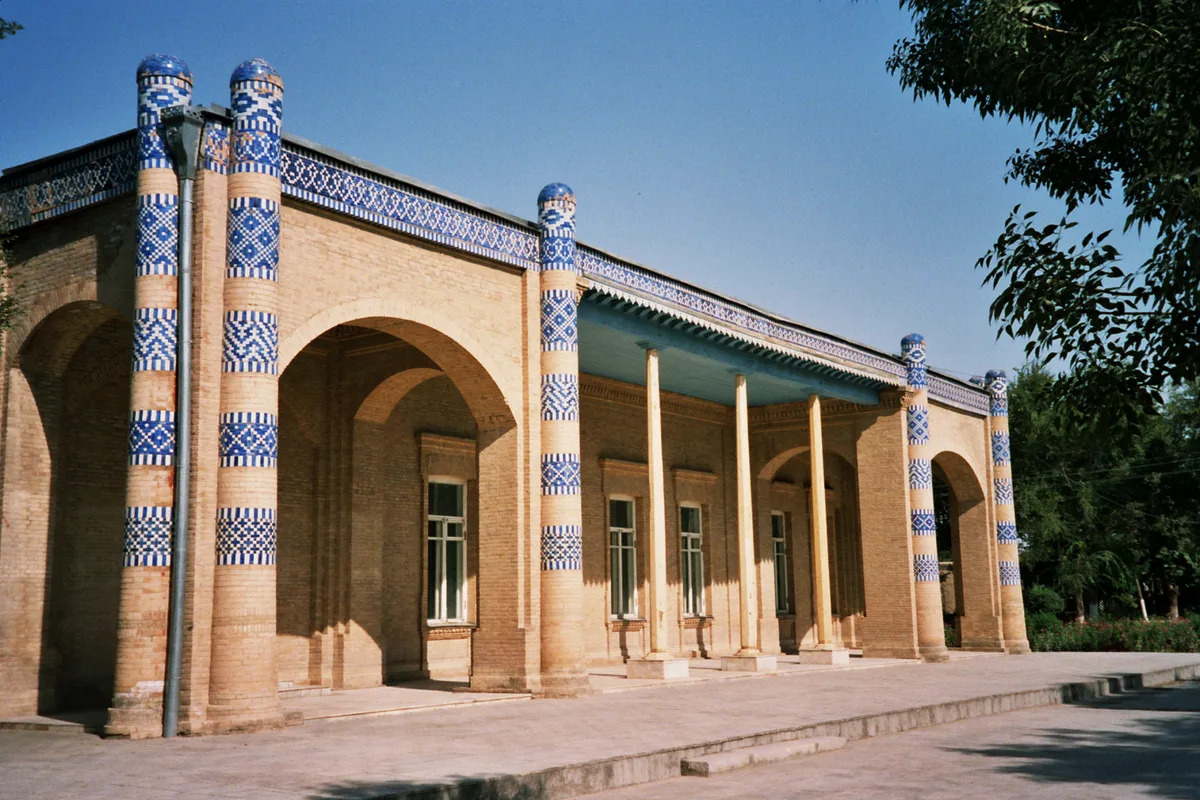
Most visitors to Khiva never leave the walled city, so Nurullaboy Palace tends to sit half-empty even on weekends. That’s its main appeal: a late-19th-century khan’s residence with European-style stucco ceilings and mirrored halls, and almost nobody in the rooms with you.
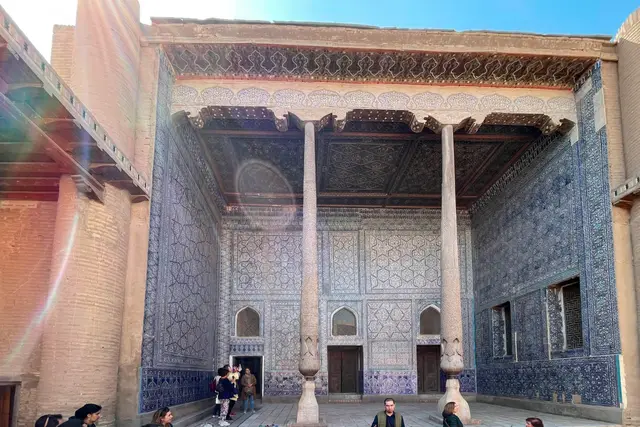
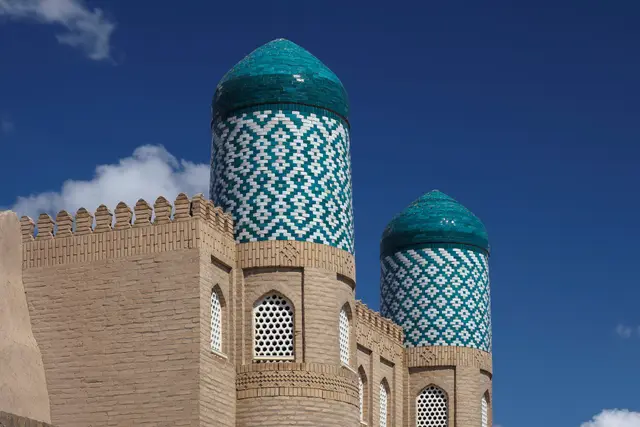
The palace was built in the early 1900s for Muhammad Rahim Khan II’s son, Asfandiyar Khan, at a point when Khiva’s rulers were borrowing decor ideas from Russian and European visitors. That shows immediately. The reception rooms have painted plaster ceilings, chandeliers, and imported furniture that look out of place next to the carved wooden pillars and blue-tiled facades you’ll have just seen inside Itchan Kala.
Finding it outside the old walls
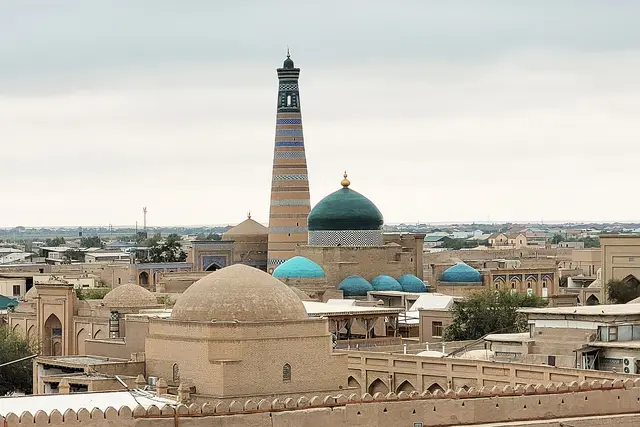
Nurullaboy Palace stands outside Itchan Kala’s fortifications, north of the Palvan Darvoza gate, at coordinates marked 99J4+P9C in Khiva. It’s a walkable 10 to 15 minutes from the old town’s northern entrance, past low mudbrick houses and a couple of tea stalls.
There’s no metro or bus system to speak of in Khiva. Most people arrive on foot from their guesthouse, or by taxi if they’re coming straight from the train station or airport on the day they arrive.
What the rooms actually show you
The complex splits into a few distinct sections, and it’s worth seeing them in sequence rather than doubling back.
- The reception hall (mehmonxona): ornate ceiling murals, European chandeliers, a throne-like seating area
- The harem courtyard: quieter, plainer brickwork, a sense of the building’s older, more traditional core
- Side rooms with museum displays: khanate-era coins, photographs, and everyday objects from the royal household
None of it is roped off dramatically; you can get close to the ceiling paintings and the tilework in a way that’s harder inside the more heavily touristed monuments back in Itchan Kala.
When to go
The palace is open every day of the week, 9am to 6pm, with no midday closure or day off. Weekend crowds stay light throughout those hours, so there’s no real bad time to show up on a Saturday or Sunday.
Because it draws fewer coach tours than the Kunya Ark or Tosh Hovli inside the old town, mornings right after opening tend to feel just as calm as mid-afternoon. If you’re touring Khiva in a single long day, save Nurullaboy for whenever your itinerary has a gap; you’re unlikely to hit a crowd regardless.
Summer afternoons in Khiva run hot and dry, so an earlier visit is more about your own comfort than dodging other visitors.
Reading the palace without a local guide
Signage inside mixes Uzbek and English, with enough detail to follow the building’s history room by room, but a guide adds context the plaques skip, like which rooms were reserved for foreign delegations and why the decor shifts so sharply from traditional to European partway through the complex.
Photography is generally fine inside, though it’s worth checking current signage at the entrance since rules can shift by room. Dress modestly, as you would anywhere in Khiva’s historic core; there’s no strict enforcement here, but it’s a former royal residence, not a beach town.
Tickets are bought at a small window near the entrance, in cash, and are separate from the general Itchan Kala entry ticket that covers the old town’s monuments. Keep some Uzbekistani som on hand rather than assuming card payment will work.
Combining it with the rest of Khiva
Nurullaboy Palace works best as a bookend to a day inside Itchan Kala rather than a standalone destination. Walk out through Palvan Darvoza, see the palace, then loop back for lunch near the old town’s tea houses.
Given its under-the-radar status compared to Khiva’s headline sites, it’s a reasonable stop even if you’re short on time, since you won’t lose half an hour standing in a queue. Visitors with only a single day in Khiva often skip it for that reason, which is exactly why it stays this uncrowded.
Frequently asked questions
Where exactly is Nurullaboy Palace in Khiva?
It's just outside the walled old town, Itchan Kala, north of the Palvan Darvoza gate, about a 10-15 minute walk from inside the walls.
What are the opening hours?
It's open daily, including weekends, from 9am to 6pm, with no midday closure.
When is it quietest to visit?
Weekends stay quiet throughout the full 9am-6pm window, so there's no need to time your visit around crowds here.
How long should I spend there?
Most visitors need 45 minutes to an hour to walk through the reception hall, harem courtyard, and museum rooms.
Do I need a separate ticket from the Itchan Kala entry pass?
Yes, Nurullaboy Palace has its own ticket window and isn't covered by the general Itchan Kala monument pass, so bring cash.
Plan your trip to Khiva
Uzbekistan eSIM & staying connected →
Some links above are affiliate links — if you book through them, Wander Atlas earns a small commission at no extra cost to you. It's how we keep every guide free.