Why Ichan Kala is worth the journey
Khiva sits far out in the Khorazm oasis, closer to the Turkmen border than to Uzbekistan’s other Silk Road cities. That distance is exactly why Ichan Kala feels different.
The whole inner town is enclosed by 2.2km of crenellated clay walls, and almost nothing modern has been allowed inside them. You walk down alleys of packed earth between leaning mud-brick facades, and there’s no traffic noise, no glass towers poking up behind a minaret. It’s UNESCO-listed in its entirety, not just a handful of monuments.
Getting there and getting in
Khiva is reachable by overnight train or a long shared-taxi ride from Bukhara or Urgench, whose small airport is about 35km away and the usual gateway for visitors flying in.
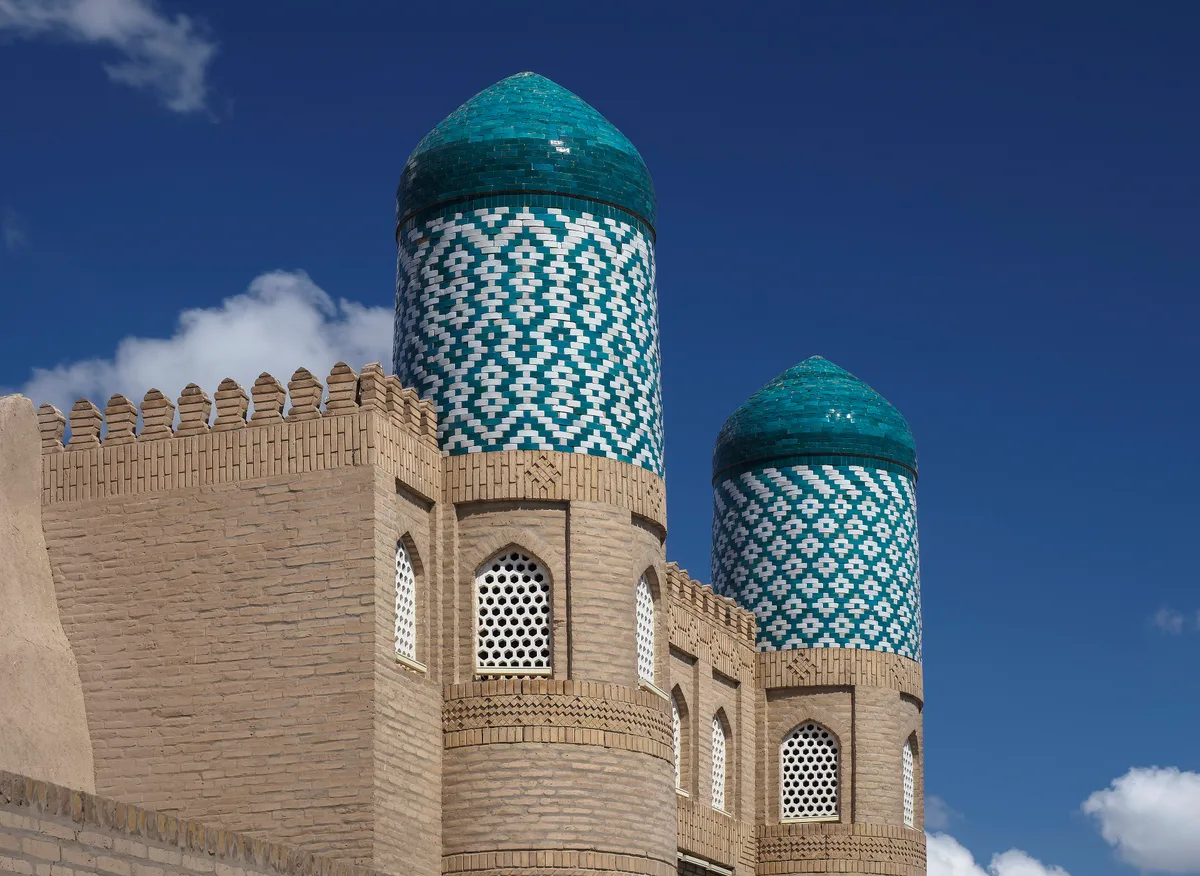
Ichan Kala has four gates (Ota Darvoza (West), Bog’cha Darvoza (North), Polvon Darvoza (East), and Tosh Darvoza (South)), and most travelers enter through Ota Darvoza, the West Gate, closest to the newer town of Dichan Kala outside the walls.
A single combined ticket usually covers entry to the walled city and most of the museums inside, sold at booths near the main gates. Prices and validity periods change, so confirm the current cost and whether it’s one-day or two-day before you buy.

What to see inside the walls
Give yourself unhurried time here. The walled town is compact enough to cross on foot without much effort, but the sites deserve hours.
- Kalta Minor Minaret, the squat, turquoise-tiled tower that was meant to be Central Asia’s tallest minaret before construction was left unfinished
- Kunya-Ark, the khan’s old fortress and residence, with a working sundial in its courtyard
- Juma Mosque, dim and cool inside, held up by rows of carved wooden columns, some of them very old
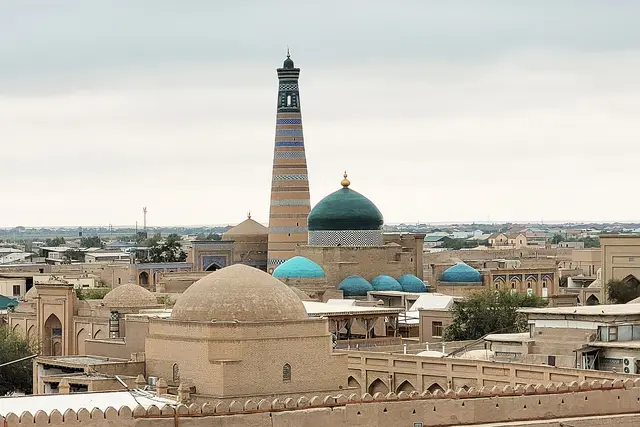
- Islom-Xo’ja Minaret, Khiva’s tallest, with a viewing platform reached by a narrow spiral stair
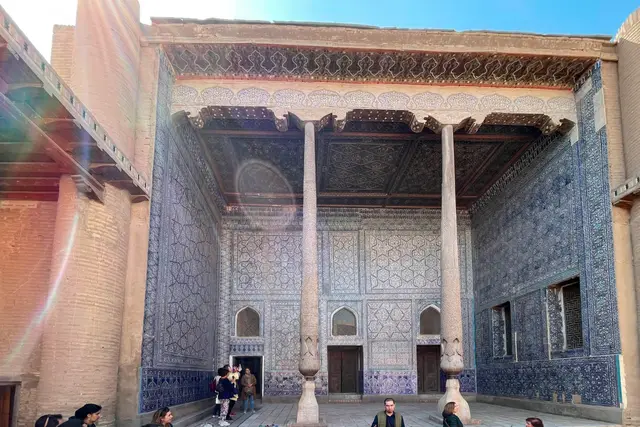
- Tosh-Hovli Palace, a maze of tiled courtyards and reception rooms built for the khan’s wives and guests
Climb whichever minaret is open when you visit. The view over Ichan Kala’s flat clay rooftops, with the desert beginning just past the walls, is the single best way to understand the town’s scale.
When to go
Spring (April-May) and early autumn (September-October) bring mild days and soft evening light without Khorazm’s brutal summer heat, which regularly tops 40°C in July and August.
Winters are cold but quiet, and you’ll have the courtyards nearly to yourself. Whatever season, aim for early morning or the last two hours before sunset, the low sun catches the clay and turquoise tilework in a way flat midday light never does.
How to visit like a local
Ichan Kala is still under-the-radar compared to Samarkand or Bukhara, so treating it casually is easy, but a little local know-how sharpens the visit.
- Enter through Ota Darvoza early, before the day’s tour groups arrive from Urgench
- Carry small cash (som) for museum add-ons, tea stalls and craft stalls that don’t take cards
- Greet shopkeepers with “Assalomu alaykum”, a small courtesy that’s noticed here
- Wear a hat and sturdy shoes; the packed-earth lanes get dusty and there’s little shade at midday
- Don’t rush the smaller museums tucked into former madrasas. They’re where you’ll dodge the crowds entirely
Most visitors treat Ichan Kala as a half-day stop between train connections. Locals and long-stay travelers know the real reward is staying overnight inside or just outside the walls, so you catch the town lit by lamplight after the day-trippers have gone and the walls glow orange at dawn before anyone else is up.
Frequently asked questions
How long do I need to see Ichan Kala?
Walking the whole walled city takes under 20 minutes, but plan a full day to actually enter the palaces, minarets and museums. Many visitors stay overnight to see it at both sunset and sunrise.
How do I get to Khiva?
Fly into Urgench airport, about 35km away, or take an overnight train or shared taxi from Bukhara. From Urgench, taxis and shuttles run regularly into Khiva.
Is there an entrance fee for Ichan Kala?
Yes, a combined ticket sold at the main gates covers entry to the walled city and most museums inside. Prices and validity periods change, so check current rates locally before buying.
When is the best time to visit?
April-May and September-October offer mild weather and good light. Early morning or the last couple of hours before sunset are best any time of year, both for light and for avoiding tour groups.
Is Ichan Kala crowded?
It's still relatively under-the-radar compared to Samarkand or Bukhara. Arriving through the West Gate (Ota Darvoza) early in the day is the easiest way to get quiet courtyards to yourself.
Plan your trip to Khiva
Uzbekistan eSIM & staying connected →
Some links above are affiliate links — if you book through them, Wander Atlas earns a small commission at no extra cost to you. It's how we keep every guide free.