Why go
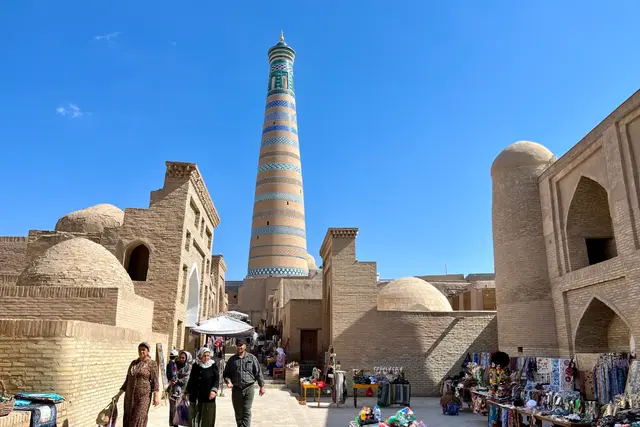
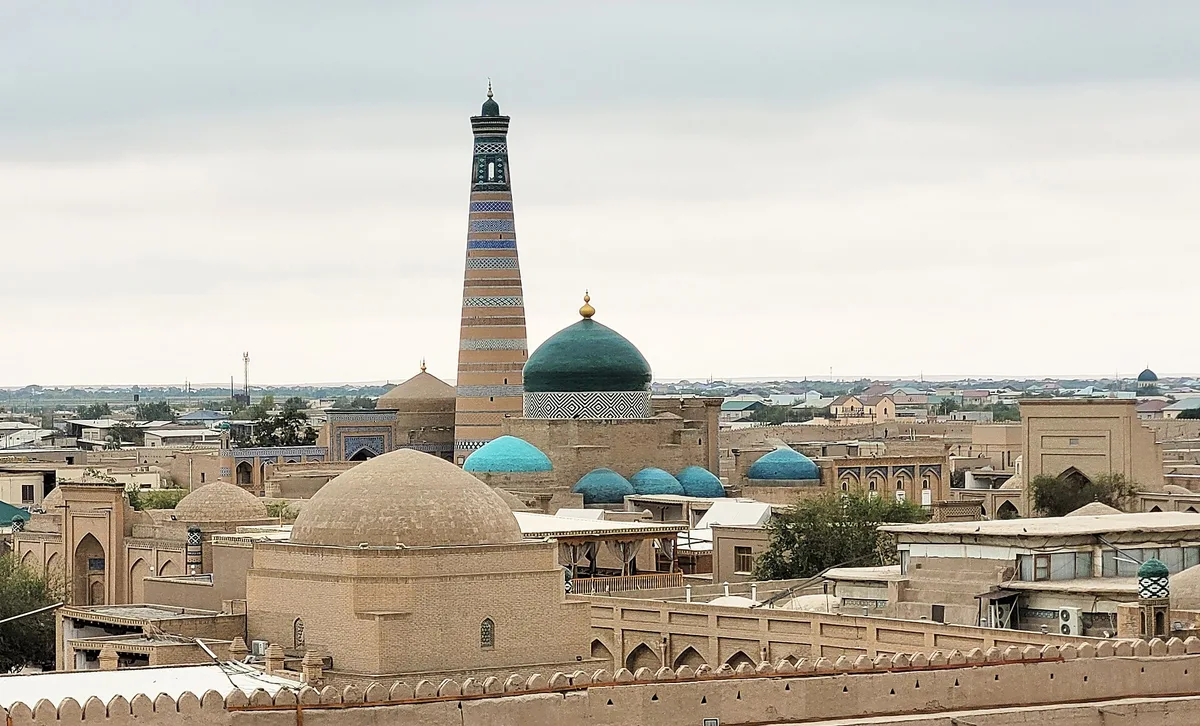
Itchan Kala is the old walled city of Khiva, sealed inside earthen ramparts that have stood since the 17th century. Inside, sand-colored madrasas, minarets, and mausoleums crowd together along narrow lanes, largely untouched by modern construction. UNESCO listed it as a World Heritage Site in 1990, and walking through it still feels like stepping into a single, continuous museum.
Getting there
Khiva sits in Uzbekistan’s far west, in Khorazm Province near the Turkmenistan border. Most visitors arrive via Urgench, the nearest city with an airport and train station, about 35 minutes away by taxi or shared car.
Itchan Kala itself is compact and walkable, once you’re in Khiva, everything worth seeing is inside or just outside the walls. Taxis and hotel pickups will drop you at one of the main gates, usually the West Gate (Ota Darvoza).
What to see inside the walls
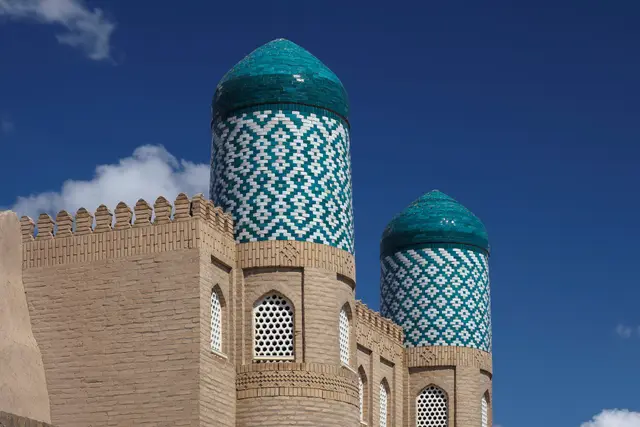
The turquoise-and-brown Kalta Minor minaret is the first thing that pulls your eye upward, squat, unfinished, and covered in glazed tile that catches the afternoon light differently every hour. It was meant to be the tallest minaret in Central Asia; construction stopped in 1855 when the khan who commissioned it died.
From there, the lanes fan out toward other essentials:
- Kunya-Ark, the khan’s fortress and former seat of power, with a working watchtower view over the rooftops
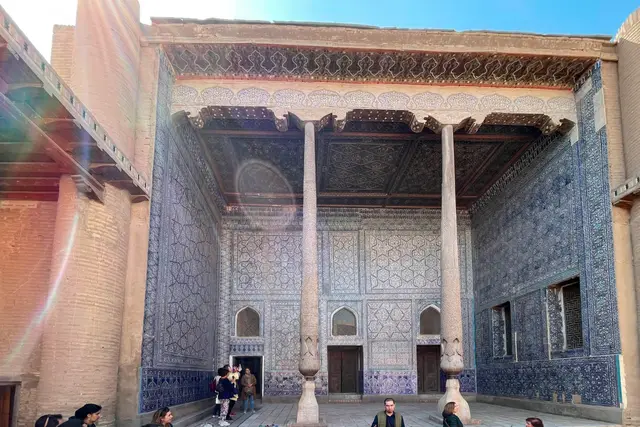
- Tosh Hovli Palace, carved wooden columns and tiled courtyards, once the khan’s harem quarters
- Islom Hoja Minaret, the tallest structure in the city, worth the climb for the view over the old town’s flat roofs
- Juma Mosque, dim and cool inside, held up by 213 wooden columns, some dating to the 10th century
Give yourself a half-day minimum; a full day lets you also duck into the smaller madrasas that most tour groups skip.

When to go
Itchan Kala is open every day from 9am to 7pm, with no variation across the week. Weekend afternoons, especially 12pm to 7pm, are the busiest stretch, tour buses from Urgench and cruise-style itineraries tend to cluster then.
Arrive between 9am and 11am instead. That window stays quiet on both weekdays and weekends, and the low morning light makes the tilework glow rather than glare.
Spring (April–May) and early autumn (September–October) bring mild daytime temperatures. Summer in Khorazm runs into the low 40s Celsius by midday, which makes an early start even more worthwhile.
How to visit like a local
Entry works on a combined ticket system, pay once at a ticket booth near the main gates rather than at each monument, and hold onto the stub since some sites check it. Prices and exact ticket structures shift year to year, so confirm current rates at the gate rather than relying on older guides.
Cash (Uzbek som) is still the safest bet for small vendors and tea stalls inside the walls, though card acceptance has grown at larger shops. Tipping isn’t expected but small change for a guide or photo request is appreciated.
Itchan Kala is genuinely popular, not a hidden corner of Khiva, so the way to “beat” it is timing rather than route. Skip the noon rush; come at opening instead, when the vendors are still setting up their stalls and the courtyards are close to empty.
Dress modestly, especially around mosque and mausoleum entrances, shoulders and knees covered is the norm. Remove shoes where signage indicates, generally at mosque interiors.
A few families still live inside the walls, so keep voices down in residential side-alleys away from the main monuments. If you want a rooftop photo over the old town, the Islom Hoja minaret climb is narrow and steep. Go early before it queues up, and wear shoes with grip.
Frequently asked questions
How much time do I need at Itchan Kala?
Plan on at least half a day to see the main monuments — Kalta Minor, Kunya-Ark, Tosh Hovli, and Islom Hoja minaret. A full day lets you explore smaller madrasas and museums inside the walls without rushing.
When is the quietest time to visit?
Between 9am and 11am, on both weekdays and weekends. Weekend afternoons from noon to 7pm are the busiest, as tour groups arrive in waves.
How do I get to Itchan Kala from outside Khiva?
Most travelers fly or take a train to Urgench, then drive about 35 minutes to Khiva. From central Khiva, the walled city is walkable, with taxis dropping passengers at the main gates.
Do I need to buy separate tickets for each monument?
No — a combined entry ticket sold at the gates covers most major sites inside Itchan Kala. Keep your ticket stub, as some individual monuments check it on entry.
What should I wear inside Itchan Kala?
Modest clothing covering shoulders and knees, especially near mosques and mausoleums. Comfortable, grippy shoes help for climbing the narrow stairs of the Islom Hoja minaret.
Plan your trip to Khiva
Some links above are affiliate links — if you book through them, Wander Atlas earns a small commission at no extra cost to you. It's how we keep every guide free.