
A lake that becomes a playing field
In January, Khar Us Lake freezes hard and flat. The reed beds around its edges stand stiff and pale, and the Altai foothills rise to the west. For the Mungulug Shagshuurga Ice Festival, that sheet of ice becomes a venue where games are played and crowds gather.
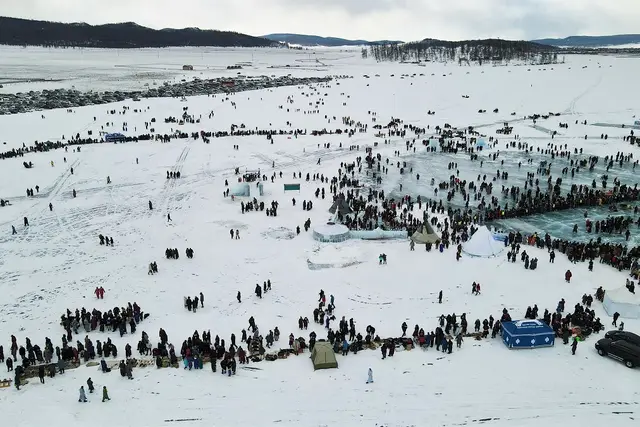
The festival happens every year in Khovd Province and draws tens of thousands of visitors, from Mongolia and from abroad. They come for ice games and cultural events. Few winter gatherings anywhere in the country’s far west reach this size, so on the main days you’ll find a large crowd on the ice.
The January window
The 2027 edition runs in mid-to-late January. The organisers fix the exact day within that stretch each year. This is the deepest part of the Mongolian winter, and it suits the event: the ice is at its thickest, and the lake stays solid enough to hold vehicles, stalls and crowds.
People who come from abroad usually leave a buffer of a day or two around the festival. In January, domestic flights and long road journeys in western Mongolia sometimes slip because of weather. Building that slack into the trip is the norm here, not an overreaction.
Getting from Khovd city onto the ice
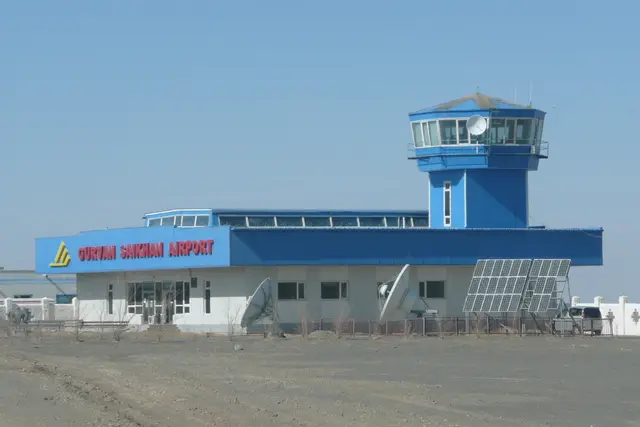
Khovd city, the provincial capital, is the base for nearly everyone. It has an airport with domestic flights from Ulaanbaatar. By road the capital is well over a thousand kilometres away, a multi-day drive across the steppe, so most foreign visitors fly in.
Khar Us Lake lies east of the city. It is part of Khar Us Nuur National Park, and the lake is Mongolia’s second-largest freshwater lake. The usual ways to get out there are:
- Hired car with driver: the most common choice for foreign visitors, arranged through hotels or tour operators in Khovd city.
- Organised tour: Mongolian operators often fold the festival into a winter itinerary of the western aimags.
- Shared rides: locals heading out for the day often travel together, though this works best if you speak some Mongolian.
On the lake, people park their vehicles in rows on the ice, a sight that unsettles first-timers. Experienced drivers only trust the ice where everyone else is parked.
What “ice games” means on Khar Us
The festival is built around ice games and cultural events. Mongolia has a deep tradition of winter contests. Expect competitive games played directly on the frozen surface, with spectators packed in around the edges, rather than a sculpture park you stroll through.
Khovd is one of Mongolia’s most ethnically mixed provinces. It is home to Khalkh, Zakhchin, Torguud, Ööld, Uriankhai and Kazakh communities, among others. Cultural programmes at western Mongolian festivals tend to draw on that mix, so you’ll often see more than one style of deel (the long traditional robe) in the crowd.
The full programme for each edition comes from the organisers. This guide doesn’t list specific events or start times, because they vary from year to year.
Dressing for open ice in deep winter
The cold on the lake is the main practical challenge. Daytime temperatures in Khovd in January regularly fall well below minus twenty, and there’s nothing on the ice to block the wind. The bare surface also reflects the low sun straight back at you.
Visitors who handle the day comfortably usually bring:
- Insulated boots rated for extreme cold, with a thick sole. Standing still on ice drains heat through your feet faster than anything else.
- Layers under a long down coat, plus a hat that covers the ears.
- Mittens over thin gloves, so you can take the mittens off for a photo without exposing bare skin.
- Sunglasses, because the glare off the ice is strong.
- Spare phone batteries kept in an inside pocket. Cold drains them fast.
Many locals wear the deel for good reason: the long wool or fur-lined robe and its high collar suit this weather.
Standing with the crowd on the ice
Most of the crowd are Mongolian families who drove in from Khovd and nearby soums. These small manners go a long way:
- Greet people with sain baina uu (“hello”). A simple attempt is warmly received.
- Take offered tea or food with your right hand, or with both hands, and at least taste it. Salty milk tea (süütei tsai) is the standard warm drink at winter gatherings.
- Give horses a wide berth, and never walk directly behind one. Herders bring animals to winter events, and a horse on ice is skittish.
- Ask before photographing competitors or older people in traditional dress. A gesture toward your camera and a nod is enough.
- Keep clear of the playing area. Games on ice move fast, and spectators know where the safe edge is. Stand where they stand.
As for payment, cards and QR payments are common in Khovd city. Out on the lake, small vendors and stalls are more likely to take Mongolian tögrög in cash. Visitors usually withdraw cash in town before heading out, since there are no ATMs on the ice.
Around Khar Us Lake in winter
The lake sits inside Khar Us Nuur National Park, a wetland system fed by the Khovd River. In summer it is known for its birdlife. Winter strips that back to frozen reeds, wide horizons and the occasional herder’s camp on the shore.
Within the lake is Agbash, a large island. The neighbouring lakes of Khar and Dörgön form part of the same basin to the south and east. Most festival visitors combine the trip with a day in Khovd city. They wander the town’s central streets and the provincial museum, then head back out to the lake for the main events.
Frequently asked questions
When is the Mungulug Shagshuurga Ice Festival in 2027?
The 2027 edition takes place in mid-to-late January, during the coldest part of the winter when Khar Us Lake is frozen solid. The organisers set the exact day within that window each year.
Where exactly is the festival held?
It is held on the frozen surface of Khar Us Lake in Khovd Province, western Mongolia, inside Khar Us Nuur National Park and east of Khovd city. Visitors usually stay in Khovd city and drive out to the lake.
How do international visitors get there?
Most fly from Ulaanbaatar to Khovd city on a domestic flight. From there they reach the lake by hired car with a driver or on an organised tour. Driving from the capital takes several days.
How cold is it, and what should I wear?
January daytime temperatures around Khovd regularly drop well below minus twenty, and the open ice offers no shelter from the wind. Visitors usually wear extreme-cold boots, layers under a long down coat, mittens over thin gloves, a hat that covers the ears and sunglasses against the glare.
What happens at the festival?
It centres on ice games played on the frozen lake and on cultural events that reflect Khovd's many ethnic communities. It draws tens of thousands of Mongolian and foreign visitors. The programme changes from year to year and comes from the organisers.
Plan your trip to Khovd
Mongolia eSIM & staying connected →
Some links above are affiliate links — if you book through them, Wander Atlas earns a small commission at no extra cost to you. It's how we keep every guide free.
Related guides
Winter Horse Festival (Steppe Horse Festival): Dates, Tickets & Venue (Batnorov)
 event
Thousand Camel Festival: Dates, Tickets & Venue (Dalanzadgad)
 event
Blue Pearl Ice Festival: Dates, Tickets & Venue (Khatgal)
 event