Getting there from Labuan Bajo
Bena isn’t a Labuan Bajo day trip. It sits in Ngada regency near Bajawa, roughly 4-5 hours east by car on the Trans-Flores highway.
Most visitors reach it as part of a multi-day overland route across Flores, often paired with an overnight in Bajawa. Hire a car with driver or join a Flores land tour that includes Bena, Wae Rebo, or the Kelimutu crater lakes further east. The road climbs and winds through volcanic highlands, so factor in rest stops.
What’s actually there
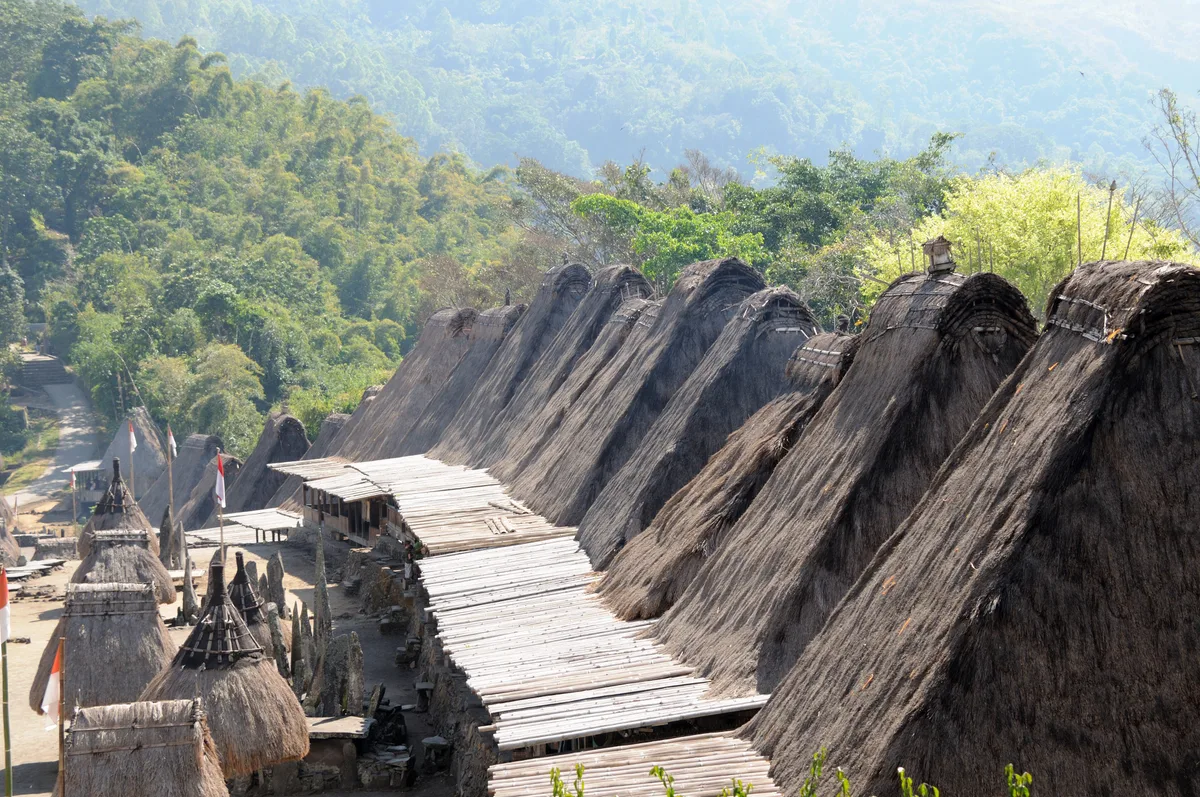
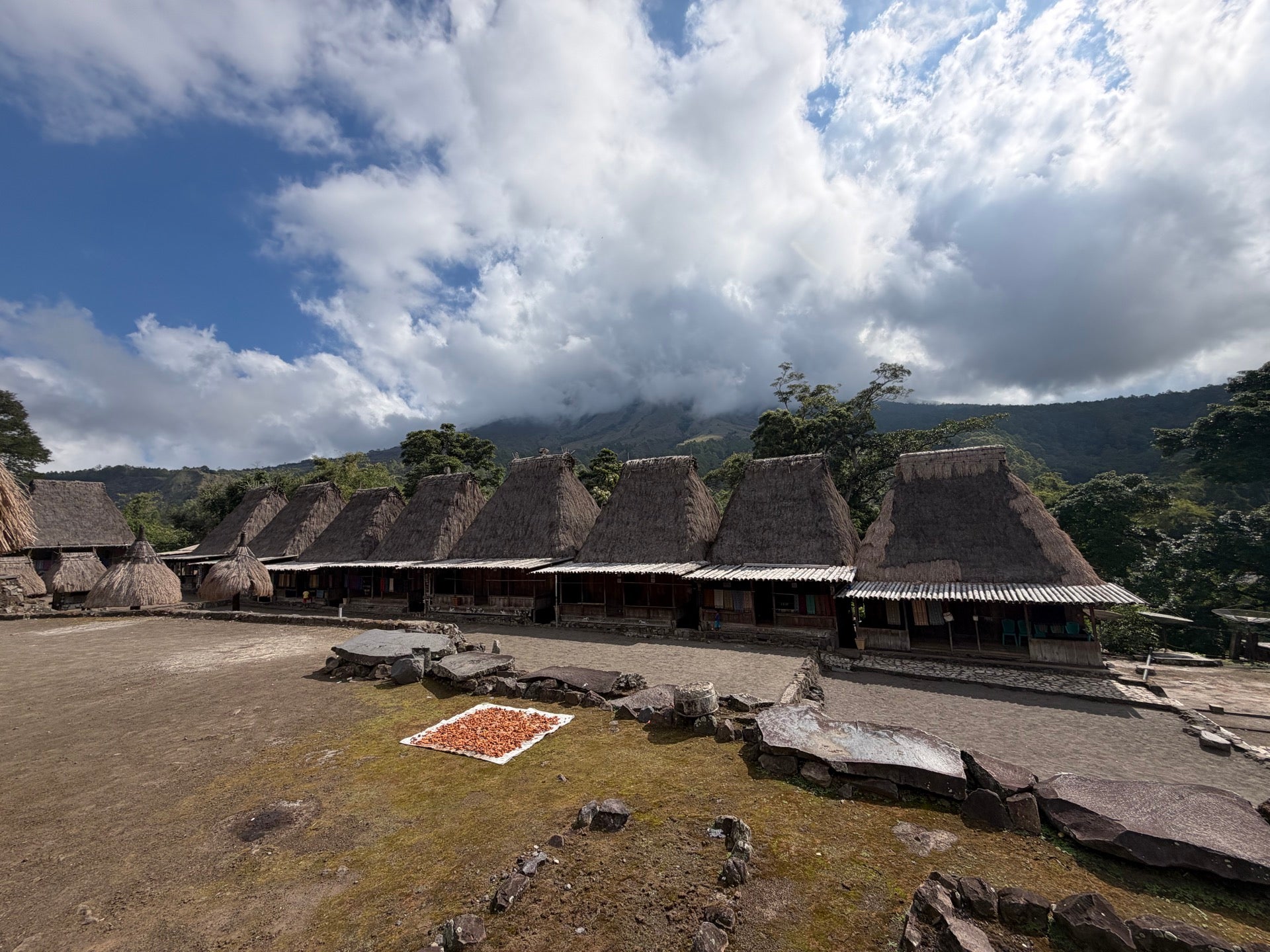
Bena is a working Ngada village of roughly 40 houses arranged in a long oval, facing the cone of Gunung Inerie. The steep black thatched roofs and wooden megalithic structures inside the compound are burial markers and ancestral shrines, still tended by residents.
Two rows of houses face each other across a central spine lined with stone altars called ngadhu and bhaga, male and female ancestor markers central to Ngada clan structure. This isn’t a reconstruction. People live here, weave ikat cloth on the porches, and farm the surrounding terraces.
A short walkway and viewing terrace above the village give the classic wide shot: thatched roofs stacked down the ridge with Inerie’s cone behind. Photographs taken here define most people’s mental image of highland Flores.
Walking through respectfully
Set aside about 45 minutes to an hour to walk the central path and viewing point.
- Entry usually involves a small donation or ticket at a booth near the entrance; bring small rupiah notes since card payment isn’t an option this far inland.
- Weavers sell ikat textiles from tables along the path; prices are negotiable but modest purchases support the household directly.
- Dress modestly and avoid stepping onto the raised stone platforms and megalithic markers; these are active ancestral sites, not props.
- Ask before photographing residents up close, especially anyone weaving or in the middle of daily chores.
- A local guide at the entrance can explain clan structure and the meaning of individual ngadhu posts, worth the small fee for context you’d otherwise miss.
When to go and what’s nearby
Morning light is best for photos, since cloud tends to build around Inerie by early afternoon and can hide the peak entirely.
Being a well-known stop on the Flores overland circuit, tour buses and clan-hopping groups arrive steadily through midday. A weekday morning gives you a quieter courtyard than a Saturday afternoon.
Combine the visit with nearby Bajawa, the regional hub with hot springs and traditional markets, or continue to other Ngada villages like Luba and Belaraghi, which see far fewer visitors than Bena but follow similar layouts. Wear real shoes; the stone paths are uneven and can be slick after rain.
Frequently asked questions
How far is Bena Village from Labuan Bajo?
About 4-5 hours by road, near Bajawa in Ngada regency. It's usually visited as part of a multi-day Flores overland trip, not a day trip from Labuan Bajo.
Is there an entrance fee?
Expect a small donation or ticket fee collected at a booth near the entrance, payable in cash rupiah. No card facilities are available on site.
Do people actually live in Bena?
Yes. It's an active Ngada clan village, not a museum reconstruction. Residents weave ikat, farm nearby terraces, and maintain the ancestral stone markers themselves.
Best time of day to visit?
Morning, before clouds typically build around Gunung Inerie in the early afternoon and obscure the mountain behind the village.
What else is nearby?
Bajawa town for hot springs and markets, plus other traditional villages like Luba and Belaraghi that see fewer visitors but share Bena's stone-roof layout.
Plan your trip to Labuan Bajo
Indonesia eSIM & staying connected →
Some links above are affiliate links — if you book through them, Wander Atlas earns a small commission at no extra cost to you. It's how we keep every guide free.
Related guides
 attraction
 Pondok Pohon Tanjung Bunga: Labuan Bajo Travel Guide
 restaurant
 La Moringa: Where to Eat in Labuan Bajo (4.8★)
 restaurant
 Taman Laut Handayani Seafood Restaurant: Where to Eat in Labuan Bajo
 trendy