A white mansion on top of a pyramid
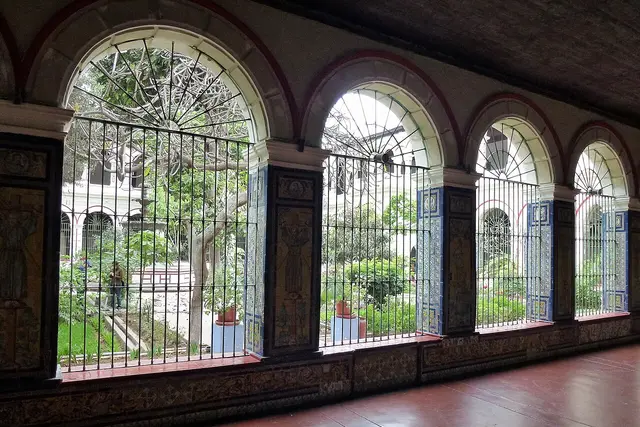
Start at the gate on Avenida Simón Bolívar. The walls are whitewashed, and the gardens behind them are thick with bougainvillea. It looks like a colonial country house dropped into a residential street in Pueblo Libre, and in a sense it is one. The viceregal-era mansion was built on top of a much older pre-Columbian pyramid.
Rafael Larco Hoyle started the collection in 1926 on his family’s hacienda in northern Peru. He moved it to Lima in 1958, and it is still privately run. The scale is unusual for a private museum: tens of thousands of objects covering several thousand years of Peruvian history.
It is one of Lima’s most visited and most reviewed museums. Expect company, especially in the smaller rooms.
How the galleries are laid out
The main route runs in roughly chronological order through the mansion’s rooms. Each room is built around one culture or theme, so you never have a long hall to wade through.
Look out for:
- Moche portrait vessels: ceramic heads modelled so closely on real faces that you can see individual scars and expressions.
- Gold and silver: crowns, ear spools, nose ornaments and ceremonial pieces from the north coast cultures, displayed in a darkened, vault-like gallery.
- Textiles: fragments from the desert cultures of the south coast, kept in colour by the dry climate.
- Stone and ritual objects: carved pieces and ceremonial vessels that show how far back Andean religious imagery goes.
The labels are written in English as well as Spanish. They are short enough that you can actually read them all.
The storerooms you can walk through
Most museums hide the bulk of their holdings. Larco puts them on view. Its open storage rooms are lined floor to ceiling with glass-fronted shelves, packed with thousands of ceramic vessels sorted by shape and subject.
Walking through feels nothing like the curated galleries. You get row after row of stirrup-spout pots, animal figures and faces. It is the clearest way to understand how much pottery these cultures made and how much survived.
Go slowly here. The repetition is the point. Pick one shelf and compare a dozen near-identical jars, and you start to see each potter’s hand.

The erotic gallery
The editorial line on Larco always mentions it, and so does nearly everyone who visits. The erotic ceramics have their own gallery, set apart from the main building across the garden.
The pieces are explicit, often funny, and frequently tied to ideas about fertility, death and the afterlife rather than simple titillation. The labels give that context, and reading them changes how the room feels.
If you are visiting with children, know that this gallery is separate. It is easy to skip, or to visit while someone else stays in the garden.
Taxis, tickets and the walk to Plaza Bolívar
Pueblo Libre is not on Lima’s Metropolitano bus spine in any convenient way. Most visitors arrive by taxi or by ride-hailing apps such as Uber or Cabify, which are widely used in Lima. Set the destination as “Museo Larco”. The drive from Miraflores or Barranco usually takes 20–40 minutes depending on traffic.
Practical points:
- Tickets: buy them at the entrance or through the museum’s official website. The current price is posted there.
- Hours: right now it opens 9am–7pm, Monday through Sunday. Museum hours change with holidays and seasons, so confirm on the official site before you go.
- Timing: you have no measured crowd data to plan around, but arriving close to opening usually puts you ahead of the tour groups that come in from Miraflores later in the morning.
- Language: staff at the front desk are used to international visitors. A “buenos días” at the counter is still the normal courtesy.
In Peru, tipping a taxi driver is not expected. Card payment is normal at the museum itself.
Lunch in the garden
The museum has a café-restaurant set among the gardens. Eating there means you don’t have to leave Pueblo Libre, where restaurant options are thinner than in Miraflores. It is a good place to break a long visit in two: galleries first, food, then the storerooms and erotic gallery afterwards.
Check the menu and prices on site. The café is popular at midday, so if you want a table at a specific time, ask at the entrance when you arrive.
Beyond the gates: Pueblo Libre
Larco is the reason most people come to Pueblo Libre. The district deserves another hour, though.
A painted blue line on the pavement links the museum to the Museo Nacional de Arqueología, Antropología e Historia del Perú on Plaza Bolívar. The walk takes about 15–20 minutes through quiet residential streets. The national museum has a state collection and colonial-era rooms that complement Larco’s private one. Check its schedule separately before you go.
Near the plaza, the Antigua Taberna Queirolo is a long-running bar known for pisco and traditional Lima snacks. Stop there before you call a ride back to the coast.
A full morning covers Larco properly. Add the national museum and you have a day built entirely around Peru’s deep past, without going near the tourist core of Miraflores.
Frequently asked questions
How do I get to the Larco Museum from Miraflores?
Most visitors take a taxi or a ride-hailing app like Uber or Cabify to Museo Larco on Avenida Simón Bolívar in Pueblo Libre. The drive usually takes 20–40 minutes depending on traffic.
How long should I spend at the Larco Museum?
Plan on 2–3 hours for the main galleries, the open storerooms and the erotic gallery. Add time if you want lunch at the garden café or plan to walk on to the national museum on Plaza Bolívar.
What are the opening hours?
At the moment it opens 9am–7pm every day of the week. Hours can change for holidays and seasons, so check the museum's official website before you go.
Is the erotic gallery suitable for children?
It is explicit, but it sits in a separate space from the main galleries. Families can easily skip it or take turns visiting it.
What else is nearby?
A painted blue line on the pavement leads about 15–20 minutes on foot to the Museo Nacional de Arqueología, Antropología e Historia del Perú on Plaza Bolívar. The historic Antigua Taberna Queirolo bar is close by too.
Plan your trip to Lima
Peru eSIM & staying connected →
Some links above are affiliate links — if you book through them, Wander Atlas earns a small commission at no extra cost to you. It's how we keep every guide free.