Barefoot, in maroon, all day
The Traslación is a day-long procession of devotees on foot. On January 9, 2027, hundreds of thousands of them fill central Manila. Many walk barefoot as a panata, a personal vow. Maroon and yellow shirts printed with the Nazarene’s face are everywhere.
At the centre is the image itself: a dark-skinned, kneeling Christ carrying the cross. It rides an andas, a wheeled carriage that the crowd pulls by two long ropes. Devotees throw towels and handkerchiefs to the men on the carriage, who wipe them on the image and throw them back.
The image came from Mexico with Augustinian Recollect friars in the early 1600s. The procession re-enacts its 1787 transfer from Bagumbayan, now Rizal Park, to Quiapo. That move is the meaning of traslación.
Luneta to Quiapo Church
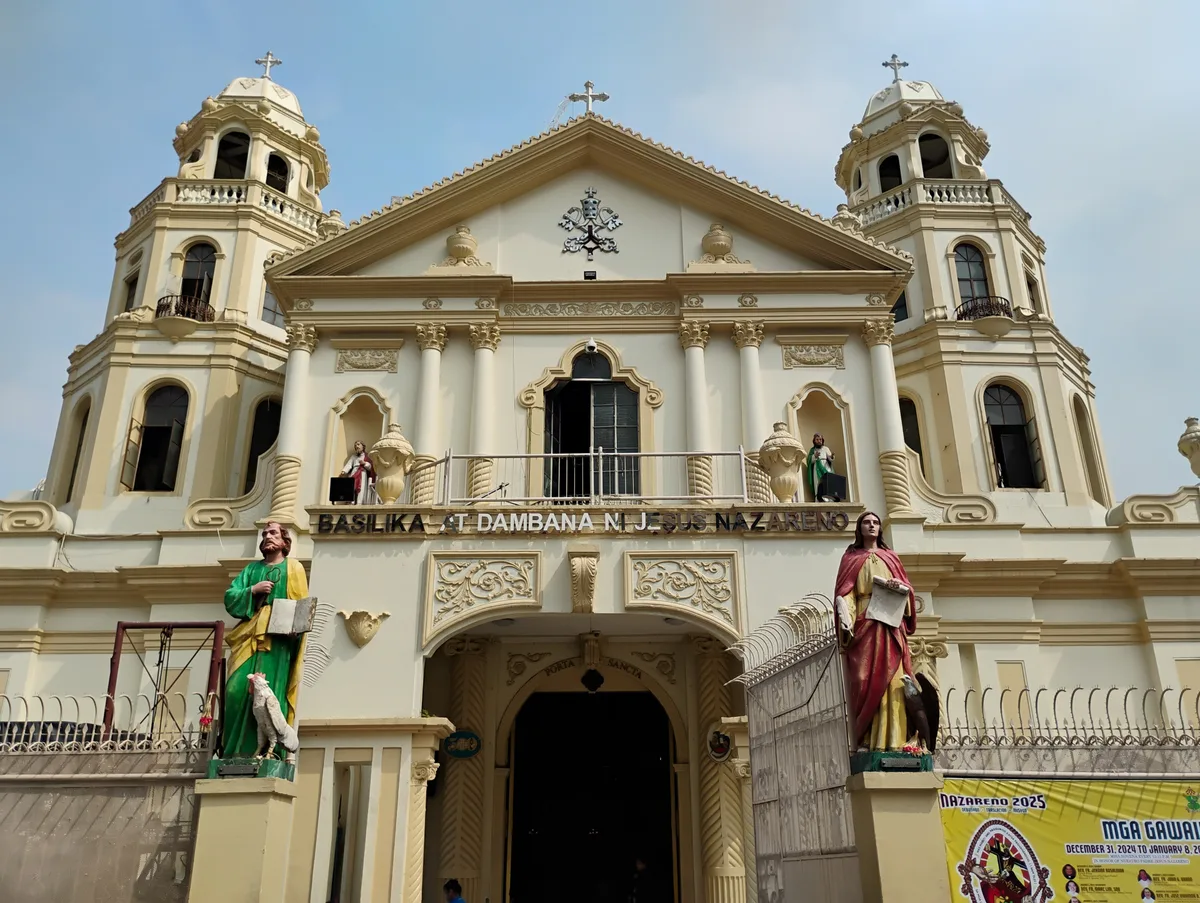
The procession traditionally sets off from the Quirino Grandstand in Rizal Park. It ends at the Minor Basilica of the Black Nazarene, known to everyone as Quiapo Church, on Plaza Miranda.
The carriage moves at walking pace or slower. In past years the full route has taken anywhere from about 15 hours to more than 20. On the days before, the Pahalik draws long lines of people waiting to touch or kiss the image. Novena masses at Quiapo Church run in the days leading up to the feast.
Quiapo Church’s official parish pages carry the mass schedule and route details for each year.
Holding your ground in the crowd
The crowd is the event, and it has rules of its own.
- Spectators stand back. Most visitors watch from side streets or overpasses well away from the ropes. The crush near the carriage is where people get hurt.
- Carry little. Regulars bring a phone, a small amount of cash in a front pocket and water in a clear bag. Backpacks have been restricted in past years.
- Expect no signal. Authorities have shut down mobile networks along parts of the route in previous years. Groups usually agree on a meeting point, such as Plaza Miranda or a church door.
- Dress for heat and feet. Closed shoes protect against being stepped on, even though devotees go barefoot.
- Treat it as worship. People are praying and fulfilling vows. Ask before photographing anyone up close, and never grab the ropes or the carriage unless you are taking part.
First-aid stations and Red Cross volunteers line the route. Medical teams typically treat cases of exhaustion and minor injuries throughout the day.
Tickets, transport and name mix-ups
There are no tickets, seats or entry fees. Anyone can stand on the street, and the masses at Quiapo Church are open to all.
The nearest rail stop is Carriedo Station on LRT Line 1, a short walk from Plaza Miranda. Central Station on the same line serves the Rizal Park end. Roads around Quiapo, Quezon Boulevard and the bridges over the Pasig River close for the procession, so most people arrive by train and on foot.
Quiapo’s streets also make the day worth the trip. The herb and amulet stalls by the church, the Carriedo shopping strip and the Muslim quarter’s Golden Mosque are all within walking distance.
One note on names: Cebu’s Fiesta Señor honours the Santo Niño, not the Black Nazarene, and is held later in January. In Manila, the January 9 feast is the Feast of the Black Nazarene.
Frequently asked questions
When is the Traslación of the Black Nazarene in 2027?
It takes place on January 9, 2027, the feast day of the Black Nazarene. The procession usually starts in the early morning and continues well into the night.
Do I need tickets for the Feast of the Black Nazarene?
No. It is a free public procession and religious feast. You don't need a ticket or registration to watch from the street or attend Mass at Quiapo Church.
Where does the procession start and end?
It traditionally starts at the Quirino Grandstand in Rizal Park (Luneta) and ends at Quiapo Church, the Minor Basilica of the Black Nazarene, on Plaza Miranda. Quiapo Church's official parish pages carry the route details.
How do I get to Quiapo during the feast?
Take LRT Line 1 to Carriedo Station, which is a short walk from Quiapo Church. Many roads around Quiapo and the Pasig River bridges close for the day, so rail plus walking is the usual way in.
Is it safe for tourists to watch?
The crowds are huge, and the crush near the carriage is dangerous. Spectators usually watch from side streets or overpasses and carry very little. They also agree on meeting points beforehand, because mobile signal has been shut down along parts of the route in past years.
Plan your trip to Manila
Philippines eSIM & staying connected →
Some links above are affiliate links — if you book through them, Wander Atlas earns a small commission at no extra cost to you. It's how we keep every guide free.
Related guides
 Ended
5SOS: Everyone's A Star! World Tour: Dates, Tickets & Venue (Manila)
 event
AIA Rock 'n' Roll Manila Marathon: Dates, Tickets & Venue (Manila)
 event
LE SSERAFIM World Tour PUREFLOW: Dates, Tickets & Venue (Manila)
 event