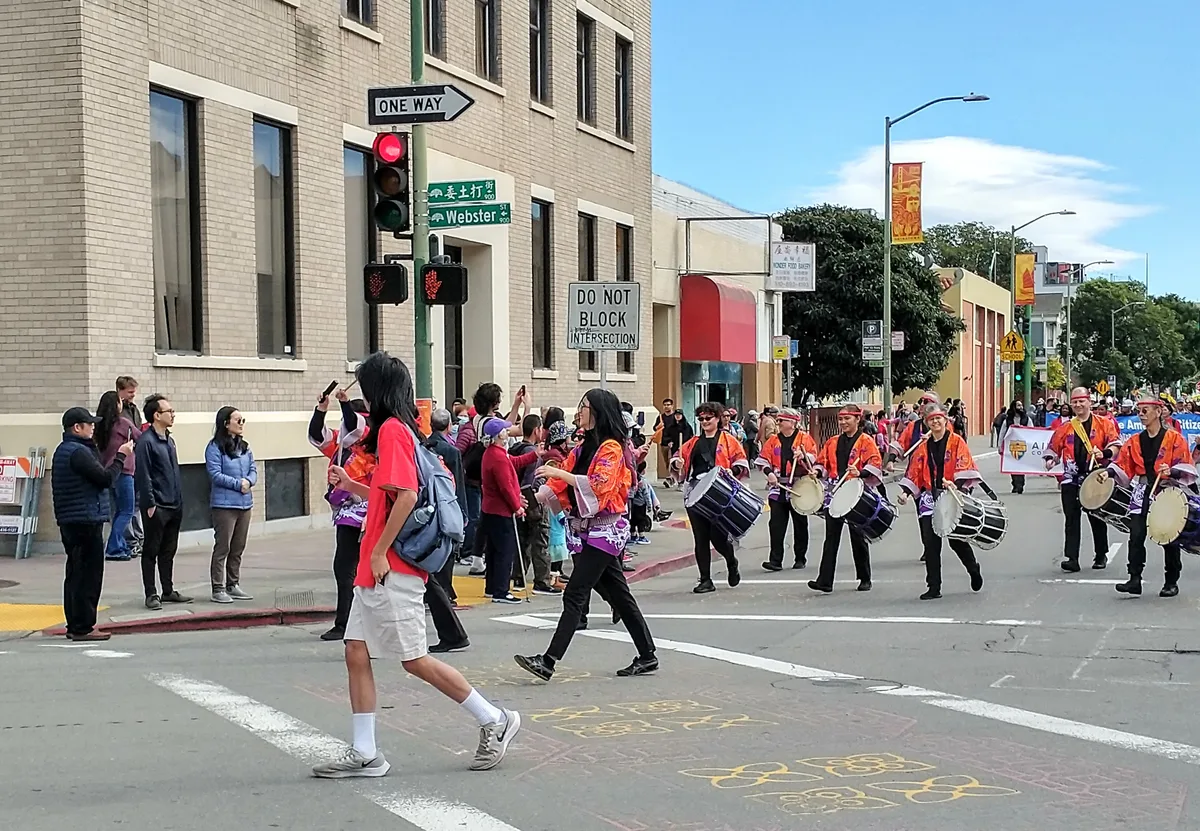
Drums on Mott Street
Before you see a lion, you hear the drum. Lion dance troupes march to a barrel drum, crash cymbals and a gong, and that beat carries for blocks down Chinatown’s narrow streets. On February 21, 2027, New York City’s main Lunar New Year parade fills Manhattan’s Chinatown with lion and dragon dancers, floats and marching bands.
The 2027 lunar year is the Year of the Goat. Expect plenty of goats on banners and floats, alongside the red and gold that marks every New Year in the neighbourhood.
What moves past you
The parade is a long procession, and it goes by one group at a time. Typical elements include:
- Lion dancers: two performers inside each costume, one working the head and blinking eyes, one as the hindquarters.
- Dragon teams: a long fabric body carried on poles by a line of dancers, rising and falling in waves.
- Floats carrying community organisations, businesses and civic groups.
- Marching bands, often from local schools.
The lions are the crowd favourites. They tend to pause, shake their heads and play to the curb, which is why children crowd the front row.
Getting to Chinatown on parade day
The subway is the only sensible way in. Streets on and around the route close to traffic, and parking in lower Manhattan is scarce on an ordinary day.
- Canal Street station: served by the J, Z, N, Q, R, W and 6 trains, it sits on the western edge of Chinatown.
- Grand Street station (B, D): drops you near Sara D. Roosevelt Park on the eastern side.
- East Broadway station (F): handy for the Manhattan Bridge end of the neighbourhood.
Chinatown is compact. From Canal Street, Mott Street is a few minutes’ walk east, and most of the neighbourhood’s core lies between Canal Street, the Bowery and East Broadway.
Holding a spot on the curb
Sidewalks along the route get crowded, so the best views go to people who stake out a stretch of curb. Families often settle in well before the first drums reach them, and regulars tend to choose the wider avenues over Chinatown’s tightest lanes.
Some things locals and regulars usually do:
- Dress for standing still. February in Manhattan is usually cold, and an hour on a curb feels colder than an hour walking.
- Keep small children at the front. Lion dancers often lean toward the kids lining the barriers.
- Follow police directions at crossings. Officers control where people can cross the route, and some intersections stay closed for long stretches.
- Greet with “Gung hay fat choy.” That is the Cantonese New Year greeting you hear most on these streets. “Xīnnián kuàilè” is the Mandarin version.
The Better Chinatown Society, which has long organised the parade, publishes the route and timing details on its site.
Eating your way out
Once the last float passes, the crowd scatters into restaurants, and the dim sum halls and noodle shops fill fast. Many visitors head somewhere a couple of blocks off the route, where the queues tend to be shorter.
Doyers Street, the short, sharply bent lane off Pell Street, is home to Nom Wah Tea Parlor. It has served dim sum there since 1920. Mott Street and the Bowery hold rows of bakeries selling egg tarts and pineapple buns. For a festive takeaway, look for the red-and-gold tins of New Year candies and dried fruits in grocery windows.
Nearby, once the confetti settles
Chinatown is worth a slow lap after the parade.
- Columbus Park: the neighbourhood’s main green space, where older residents gather to play cards and Chinese chess.
- Mahayana Temple on Canal Street: a large Buddhist temple with a big golden Buddha in its main hall, near the Manhattan Bridge.
- Museum of Chinese in America on Centre Street: covers the history of Chinese communities in the United States.
- Little Italy: Mulberry Street just north of Canal, a short walk away.
The parade comes a couple of weeks after Lunar New Year’s Day itself, so decorations and lanterns are still up across the neighbourhood.
Frequently asked questions
When is the Chinatown Lunar New Year Parade in New York?
The parade takes place on February 21, 2027, in Manhattan's Chinatown. It marks the Year of the Goat.
Do I need tickets to watch the parade?
No. It's a public street parade, and spectators watch from the sidewalks along the route. The Better Chinatown Society, the long-time organiser, publishes route details on its site.
Which subway station is closest?
Canal Street station (J, Z, N, Q, R, W, 6) is the main stop for Chinatown. Grand Street (B, D) and East Broadway (F) serve the eastern side of the neighbourhood.
What will I see in the parade?
Lion and dragon dancers, floats and marching bands. The lion dance troupes, with their drums, cymbals and gongs, are the highlight for most of the crowd.
What is there to do nearby after the parade?
Many visitors go for dim sum: Nom Wah Tea Parlor on Doyers Street has served it since 1920. Others walk to Columbus Park, the Mahayana Temple on Canal Street or the Museum of Chinese in America on Centre Street.
Plan your trip to New York
United States eSIM & staying connected →
Some links above are affiliate links — if you book through them, Wander Atlas earns a small commission at no extra cost to you. It's how we keep every guide free.
Related guides
 Ended
BOYNEXTDOOR Knock On Vol.2: Dates, Tickets & Venue (New York)
 Ended
Harry Styles Residency – Madison Square Garden: What to Know (New York)
 Ended
League of Legends World Championship Finals (Worlds 2026): Dates, Tickets & Venue (New York City)
 event