
Every street in Nuremberg’s old town seems to tilt toward it. Walk north from the Hauptmarkt and the cobbles start climbing. The half-timbered houses close in, and then a wall of reddish sandstone fills the top of the hill. That is the Imperial Castle, the Kaiserburg: one of the most important fortified palaces of the Holy Roman Empire, and still the shape the whole skyline is built around.
A palace built for emperors on the move
Medieval emperors had no fixed capital. They travelled between imperial castles, and from the 11th century onward Nuremberg’s was among the ones they used most. The Golden Bull of 1356 confirmed the city’s standing by requiring each newly elected king to hold his first Imperial Diet here.
What you climb today is really two complexes joined along the ridge. The Kaiserburg, the imperial castle, sits at the western end. The remains of the Burgraves’ castle lie to the east, alongside towers the city added itself, including the Luginsland. Much of it was badly damaged in the Second World War and carefully rebuilt afterward. Look for patches where newer stone sits against the old.
What’s inside the walls
Paying for a ticket gets you into the parts behind closed doors. The outer courtyards are free to walk.
- The Palas (royal palace): the great hall and imperial chambers, kept deliberately bare. The timber ceilings and stone floors show you how the emperors’ rooms were laid out.
- The Double Chapel (Doppelkapelle): a Romanesque chapel on two levels. The emperor heard Mass from the upper storey while his household stood below, and an opening between the floors connects them.
- The castle museum: displays of medieval weapons, armour and the workings of imperial rule, which put the bare rooms in context.
- The Castle Garden (Burggarten): terraced gardens along the walls, opened seasonally, so check before you plan around them.
Allow two to three hours if you want the palace, the museum, the well and the tower. A walk around the courtyards and viewpoints takes under an hour.
Down the Deep Well, up the Sinwell Tower
Two features here go in opposite directions, and both reveal how a hilltop castle survived a siege.
The Deep Well (Tiefer Brunnen) was cut straight down through the sandstone to reach groundwater, roughly 50 metres below the courtyard. Without it the garrison had no water. You see it on a short guided demonstration rather than on your own: a guide lowers a light into the shaft and pours water so you can count the seconds until it lands. Groups gather at set intervals, so ask at the ticket desk when the next one runs.
The Sinwell Tower (Sinwellturm) is the round keep rising above the inner courtyard. Its stairs are narrow, a real squeeze when two-way traffic meets. From the top you can see the whole old town: the red-tiled roofs, the twin spires of St Sebaldus and St Lorenz, and the line of the city walls bending away south.

Timing the climb around the crowds
The hours change halfway through the week, and that shapes your whole visit:
- Monday to Wednesday: 9am to 6pm
- Thursday to Sunday: 10am to 4pm
Our foot-traffic data puts the calmest weekday window at 9am to 11am. On Monday, Tuesday or Wednesday you get that full two hours, because the gates open at 9am. On Thursday and Friday the doors open at 10am, so only one quiet hour is left.
Weekends are the hard part. From 11am to 4pm is the busiest stretch, and that is everything except the first hour of opening. If Saturday or Sunday is your only option, be at the gate at 10am and head straight for the Sinwell Tower before the stairs clog. On a late-week day, closing at 4pm means an afternoon visit runs out quickly. Don’t come after lunch expecting to see everything.
Getting your ticket and moving through
The Kaiserburg is run by the Bavarian Palace Department, which publishes current ticket options and prices on its official site. They are also posted at the ticket office inside the walls. Buy there before you start, because the palace, museum, well and tower are all checked against the same ticket.
A few habits make the visit smoother:
- Arrive on foot. The lanes up from the Hauptmarkt along Burgstraße take about ten minutes and are steep cobbles all the way. There is no sensible driving route to the gate.
- Do the well before the crowds build. Demonstration groups fill up faster later in the day.
- Climb the tower first on busy days. The stairwell is where queues actually form.
- Keep your voice down in the Double Chapel. It is still a consecrated space.
- Leave big bags behind. The tower stairs and narrow passages are hard work with a backpack.
The Freiung terrace and the walk back down
The best free view in Nuremberg is on the Freiung, a terrace inside the outer castle. A low wall stands in front of a steep drop, and the whole Altstadt spreads out below. It costs nothing, so come back at the end of the day even if your ticketed visit was in the morning.
On the way down, the square at the Tiergärtnertor sits right below the castle’s western walls. Its half-timbered houses ring a small open space, and the Albrecht Dürer House stands on the corner. That is the painter’s own home, now a museum. Further down you pass St Sebaldus Church, then reach the Hauptmarkt with the gilded Schöner Brunnen fountain. In Advent the Christkindlesmarkt fills that square, and the castle on the ridge above becomes the backdrop to the whole city.
Making the most of a short stay
If you have half a day in Nuremberg, start at the castle and walk downhill. Since you’ll be coming down the slope, the old town goes in order: Kaiserburg, Tiergärtnertor, Dürer House, St Sebaldus, Hauptmarkt, then over the Pegnitz toward St Lorenz.
Choose Monday to Wednesday if you can. You get the 9am opening, the longest quiet window and a 6pm close, so nothing is rushed.
Frequently asked questions
When is the quietest time to visit the Imperial Castle of Nuremberg?
Weekdays between 9am and 11am. On Monday to Wednesday the castle opens at 9am, so you get that whole window. On Thursday and Friday it opens at 10am. Avoid weekends from 11am to 4pm, the busiest stretch.
What are the opening hours?
Monday to Wednesday 9am to 6pm, and Thursday to Sunday 10am to 4pm. Late in the week, the 4pm close means an afternoon arrival leaves little time.
How long should I spend at the castle?
Two to three hours covers the palace, Double Chapel, museum, Deep Well demonstration and Sinwell Tower. A walk through the free courtyards and the Freiung viewpoint takes under an hour.
How do I get to the castle?
Walk. It is at Burg 17, at the northern top of the Altstadt, about ten minutes uphill on cobbled lanes from the Hauptmarkt along Burgstraße.
What is nearby?
The Tiergärtnertor square and the Albrecht Dürer House are just below the western walls. St Sebaldus Church, the Hauptmarkt with the Schöner Brunnen and, in Advent, the Christkindlesmarkt are a short walk downhill.
Plan your trip to Nuremberg
Some links above are affiliate links — if you book through them, Wander Atlas earns a small commission at no extra cost to you. It's how we keep every guide free.
Related guides
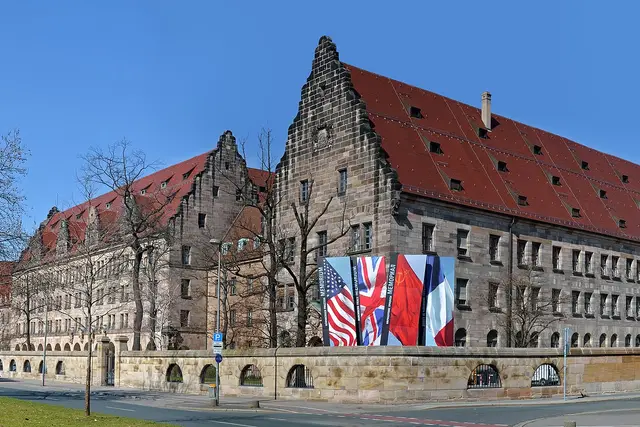 hidden gem
 Memorium Nuremberg Trials: Travel Guide (4.6★)
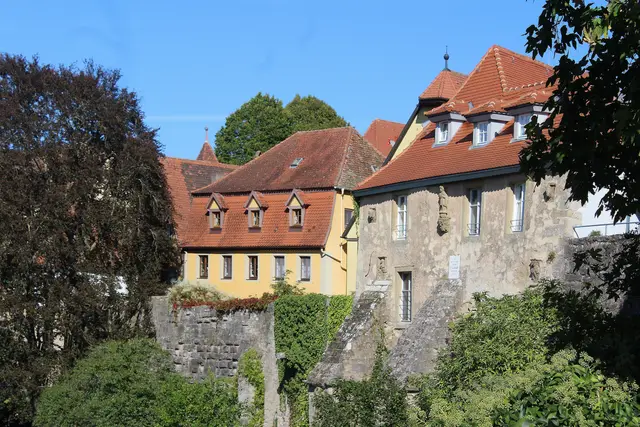 attraction
 Stadtmauer Rothenburg: Rothenburg ob der Tauber Travel Guide
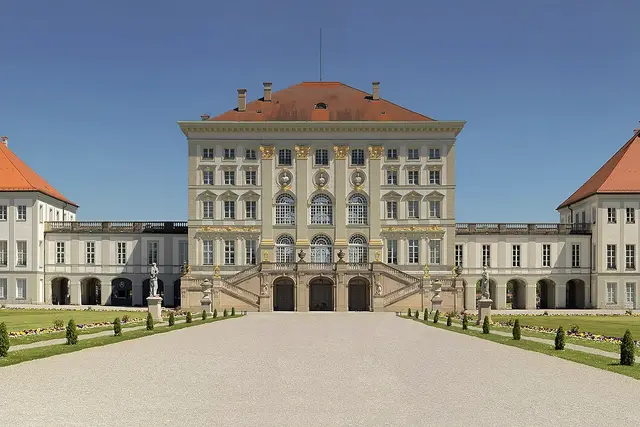 attraction
 Nymphenburg Palace: Munich Travel Guide (4.6★)
 attraction