
A month of photographs, city-wide
Photo Phnom Penh runs from October 22 to November 22, 2026. Its full name is the Phnom Penh International Photography Festival. The Institut français du Cambodge founded it in 2008, which makes it one of the longest-running photography events in Southeast Asia.
This edition overlaps with the 20th Francophonie Summit, which Cambodia hosts in 2026. Expect a strong French-speaking dimension in the partners and guest artists, in line with the festival’s roots.
The prints don’t all hang under one roof. Exhibitions spread across galleries, cultural centres and hotel spaces, and large-format panels have gone up outdoors in public spaces. Past editions have shown Cambodian photographers alongside artists from elsewhere in Asia and from Europe.
Where the walls are
The Institut français du Cambodge on Street 184 in Daun Penh is the festival’s historic base. The programme and venue list for each edition are held by the Institut. From there it’s a short walk to these:
- National Museum of Cambodia, the red sandstone-coloured pavilion of Khmer sculpture
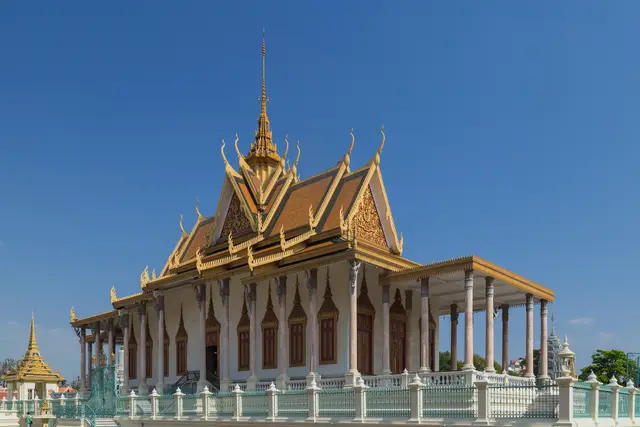
- Royal Palace and the Silver Pagoda, a few blocks east
- Sisowath Quay, the riverfront promenade along the Tonle Sap
Daun Penh holds most of the city’s galleries and riverside hotels. Visitors who base themselves there can reach many venues on foot or with a short tuk-tuk ride.
Entry, weather and what else is on
Photo Phnom Penh has traditionally been free to visit, and its exhibitions take walk-in visitors. Any ticketed talks or workshops appear in the festival programme alongside the exhibitions.
The dates fall where the rainy season meets the dry season. In October, afternoon downpours are still common. November usually turns drier and slightly cooler, which makes outdoor panels easier to linger over.
Two other events shape the city during these weeks:
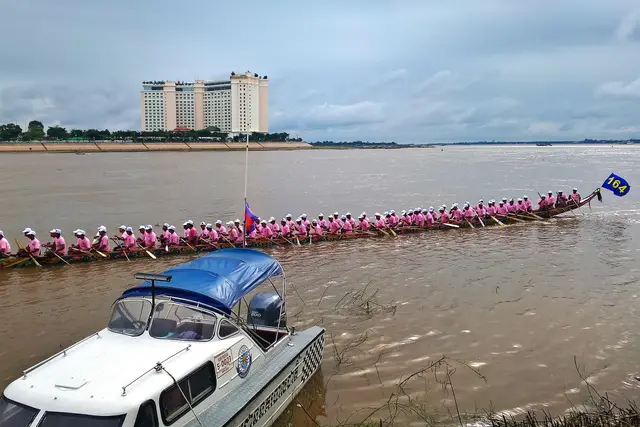
- Bon Om Touk (Water Festival) usually falls in late October or November. It packs the riverfront with boat races and crowds, and roads around the quay close.
- The Francophonie Summit brings delegations and motorcades, and host cities typically close roads around summit venues while it runs.
Moving between openings
Opening nights, or vernissages, are usually held in the evening. Crowds tend to spill out of the gallery onto the pavement, and visitors often hop between two venues in one night.
Here is how people get around and pay:
- Rides: PassApp and Grab are widely used and fix the fare in the app, which saves haggling with tuk-tuk drivers.
- Money: US dollars and Cambodian riel circulate together. Change under a dollar comes back in riel.
- Dress: If you combine a gallery walk with the Royal Palace, the palace requires covered shoulders and knees.
- Photography: Gallery staff decide whether visitors may photograph the work, and rules differ from venue to venue. Visitors usually ask at the desk.
- Pacing: The middle of the day is the hottest. Many visitors go to indoor venues then and leave the outdoor panels for late afternoon.
Short wall texts in English and French sit beside most series. Khmer appears at many venues too.
Frequently asked questions
When is Photo Phnom Penh 2026?
It runs from October 22 to November 22, 2026, at the same time as the 20th Francophonie Summit in Cambodia.
Where does the festival take place?
Exhibitions are spread across Phnom Penh, mostly in and around Daun Penh. The Institut français du Cambodge on Street 184 is the traditional hub, and its programme lists every venue.
Do I need tickets?
Photo Phnom Penh has traditionally let visitors walk into its exhibitions without a ticket. Any ticketed talks or workshops are listed in the festival programme alongside the exhibitions.
How long should I set aside?
Most visitors cover the main venues in two or three afternoons. Many add an evening opening to see the festival at its liveliest.
What can I combine it with nearby?
The National Museum of Cambodia, the Royal Palace with the Silver Pagoda, and the riverfront Sisowath Quay are all a short walk from the Institut français.
Plan your trip to Phnom Penh
Cambodia eSIM & staying connected →
Some links above are affiliate links — if you book through them, Wander Atlas earns a small commission at no extra cost to you. It's how we keep every guide free.
Related guides
 event
event AIA Pink Run 2026: Dates, Tickets & Venue (Phnom Penh)
 event
event Bon Om Touk (Cambodian Water Festival): Dates, Tickets & Venue (Phnom Penh)
 event
event Cambodia Independence Day: Dates, Tickets & Venue (Phnom Penh)
 event
event