Choeung Ek sits about 15km southwest of central Phnom Penh, past rice paddies and roadside noodle stalls that feel worlds away from what happened here. This was one of more than 300 killing fields across Cambodia, used by the Khmer Rouge between 1975 and 1979. Today it’s a memorial, not a museum in the traditional sense, and the quiet is the point.
You’ll notice it before you see anything: birdsong, the crunch of gravel, no traffic noise. The dirt paths wind between depressions in the ground, sunken pits where mass graves were exhumed in the 1980s. Small signs mark what was found at each one, some list the number of bodies, others simply note “mass grave.”
Getting there and what to expect
Most visitors arrive by tuk-tuk or a hired car from central Phnom Penh, a 30-40 minute ride depending on traffic. Many pair the trip with a stop at Tuol Sleng (S-21) prison museum on the way back into the city, since the two sites tell one continuous story.
Entry includes an audio tour available in a dozen-plus languages, narrated by survivors and researchers. Take it. The recordings guide you at your own pace, and without it the grounds can feel like an empty park rather than a place holding immense weight.
Budget 90 minutes to two hours. Rushing this place does it a disservice.
The stupa and the museum
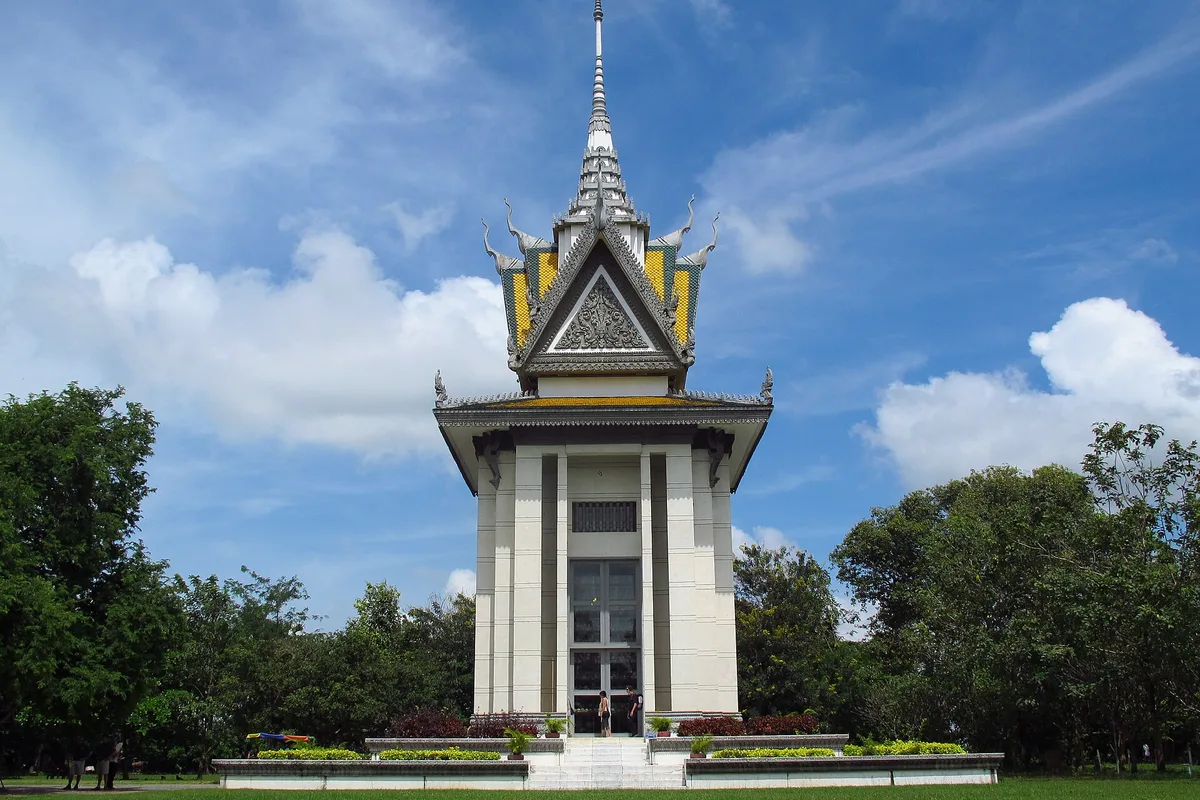
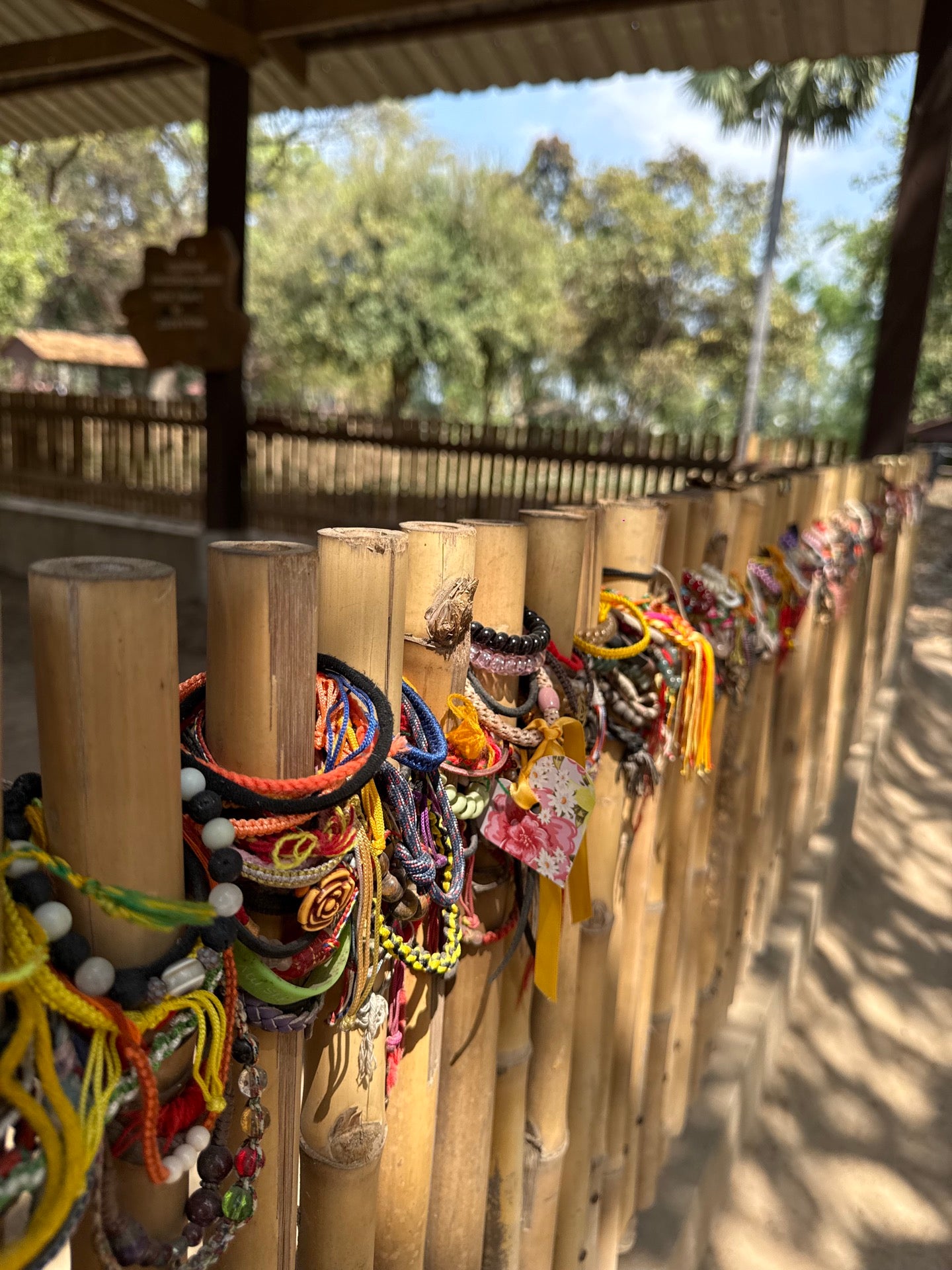
At the center of the grounds stands the Buddhist memorial stupa, its glass walls stacked with skulls recovered from the surrounding pits. Sunlight filters through the glass onto the shelves, and visitors leave bracelets and incense at its base.
Nearby, a small museum building traces the rise of the Khmer Rouge and the mechanics of what happened at Choeung Ek specifically. A documentary film plays on a loop inside, useful if you want context before or after walking the grounds.
Look for the “killing tree,” where loudspeakers once played music to muffle sound. It’s marked simply, without embellishment, the plainness of the signage throughout the site is deliberate and, somehow, more affecting than dramatization would be.
When to go
The grounds open at 7:30am and close at 5:30pm every day of the week. Crowd data shows the calmest window is 8am to 9am, whether you visit on a weekday or weekend.
Weekend mornings fill up fast after that. The busiest stretch runs from 11am to 1pm, when several tour groups tend to overlap on the paths. If you can only go on a Saturday or Sunday, arrive right at opening.
Midday sun here is intense with little shade, so an early visit is also simply more comfortable. Bring water and a hat regardless of when you go.
How to visit like a local
This isn’t a site Cambodians visit casually, and it draws a well-known, steady stream of international travelers rather than being any kind of hidden find. Treat the behavioral norms seriously.
- Dress modestly, shoulders and knees covered, as you would for a temple.
- Keep voices low throughout the grounds; this is an active memorial and burial site, not a photo backdrop.
- Photography is generally permitted outdoors but avoid posing at the stupa or pits.
- Pay the entrance fee and any audio-guide charge in US dollars or Cambodian riel, cash is standard here, and card facilities are limited.
- Skip the group-tour scrum by arriving at opening; most large groups arrive mid-morning.
The most common visitor mistake is treating this as a quick add-on stop, snapping a few photos, and leaving within twenty minutes. Give the audio tour its full length and walk the entire loop, including the areas near the lake at the back of the property, which most rushed visitors skip entirely.
Combine your visit with Tuol Sleng in the same morning if you want the fuller historical arc, but consider splitting them across two days if the subject matter is heavy for you. Many travelers find that’s the more sustainable approach emotionally.
Why it matters
Choeung Ek isn’t a comfortable stop, and it isn’t meant to be. It stands as one of Cambodia’s most important sites for understanding the Khmer Rouge period, and the consistently high visitor ratings reflect how effectively, and respectfully, the memorial communicates that history to outsiders.
Go with time to spare, go early, and go with the intention to listen rather than simply look.
Frequently asked questions
How do I get to Choeung Ek from central Phnom Penh?
It's about 15km southwest of the city center, a 30-40 minute tuk-tuk or car ride. Most visitors combine it with a stop at Tuol Sleng (S-21) museum.
How long should I spend at Choeung Ek?
Plan for 90 minutes to two hours, including the included audio tour, which is essential context and shouldn't be skipped.
What's the quietest time to visit?
Both weekdays and weekends are calmest between 8am and 9am, right after the 7:30am opening. Weekend mornings get busy from 11am to 1pm, so avoid that window if possible.
What are the opening hours?
Choeung Ek is open every day of the week, including weekends, from 7:30am to 5:30pm.
Is Choeung Ek appropriate to visit with children?
The site depicts genocide and mass graves in a direct, unflinching way, so it's generally recommended for teens and adults rather than young children.
Plan your trip to Phnom Penh
Cambodia eSIM & staying connected →
Some links above are affiliate links — if you book through them, Wander Atlas earns a small commission at no extra cost to you. It's how we keep every guide free.
Related guides
 attraction
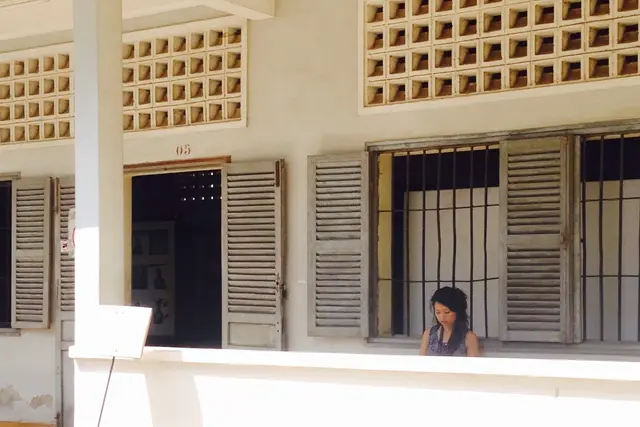
 Tuol Sleng Genocide Museum: Phnom Penh Travel Guide (4.6★)
 attraction
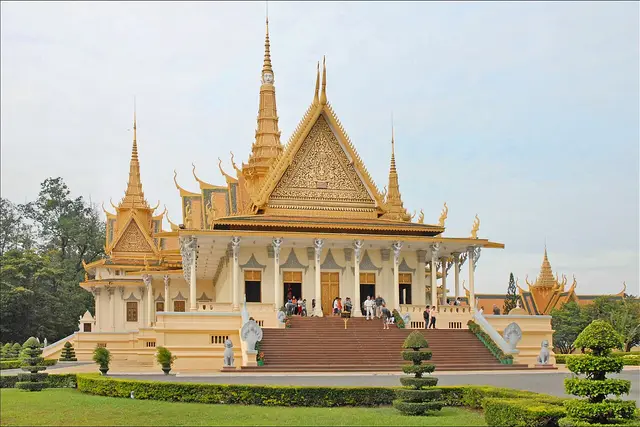
 Royal Palace of Cambodia: Phnom Penh Travel Guide (4.3★)
 attraction
 National Museum of Cambodia: Phnom Penh Travel Guide (4.2★)
 attraction