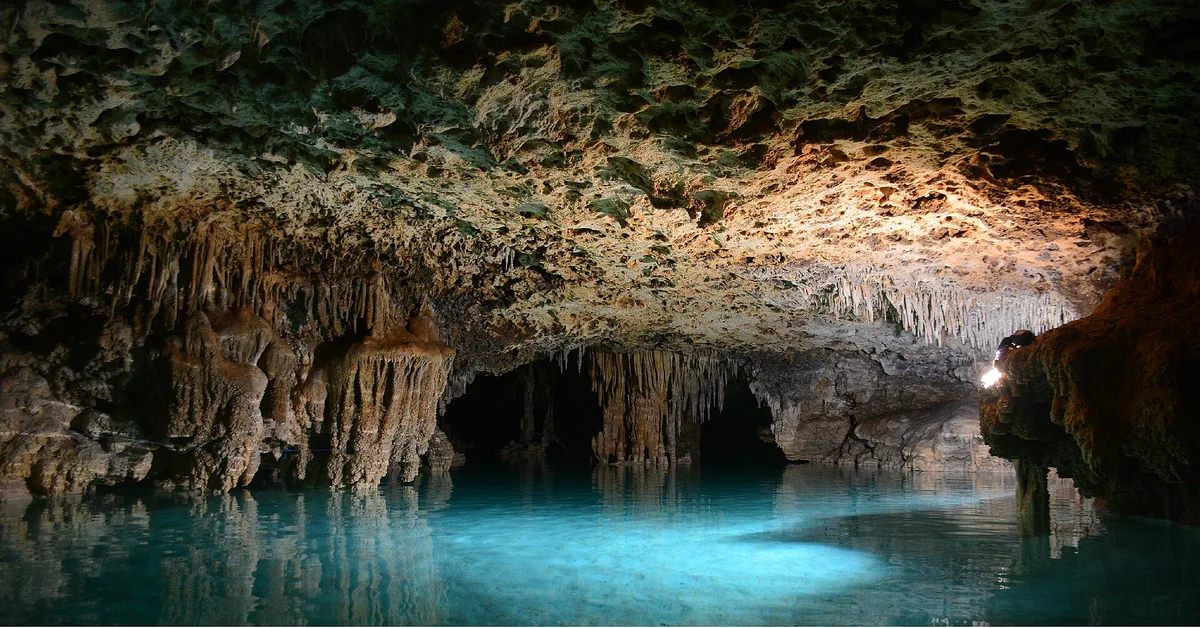
A river under the scrub
The highway south of Playa del Carmen looks like nothing much. There is low, dense jungle on both sides, billboards for theme parks, and trucks heading to Tulum. Río Secreto sits off that road at Km 283.5. The whole point of the place is below your feet.
Under the limestone runs a semi-submerged cave system, a stretch of the underground water network that drains the Yucatán Peninsula. The river is clear and turquoise where your light hits it. Above you, stalactites hang in clusters, and stalagmites rise to meet them. Many have joined into columns over a very long time.
This is not a quiet secret, whatever the name suggests. It is one of the best-known excursions on the Riviera Maya and consistently well rated by the people who go. Treat it as a popular tour and plan around that.
Getting to Km 283.5
The address is Carretera Federal Libre Chetumal–Puerto Juárez Km 283.5, in Ejido Sur. That road is Highway 307, the main coastal route linking Cancún, Playa del Carmen and Tulum. Río Secreto is a short drive south of central Playa, in the same stretch as the Xcaret park.
Your realistic options:
- Taxi from Playa del Carmen; agree the fare before you get in, as is normal locally.
- Rental car, with parking at the site; the turn comes up fast on a divided highway, so watch the kilometre markers.
- Colectivo vans running along Highway 307; ask the driver to drop you at Río Secreto.
- Hotel transfer, often sold as an add-on when you book the tour.
The rules of the dark
The cave makes its own demands, and the staff enforce them. These are the things that surprise first-timers most.
- No sunscreen, no repellent, no lotion. Chemicals on your skin end up in water that people downstream drink. Expect to rinse off before you enter.
- Gear is handed out. You are kitted up with a wetsuit, helmet with headlamp, and a flotation vest.
- No personal cameras or phones in the cave. Photos are taken by the site’s own photographer and offered for sale afterwards.
- Don’t touch the formations. Skin oils stop them growing, and some took millennia to form.
Wear a swimsuit underneath your clothes and bring a towel and a change for afterwards. Leave jewellery at your hotel.
Wading, walking, floating
The tour is a mix of movement, not a boat ride. Some sections are walking on uneven rock. Others are waist-deep wading, and some stretches are deep enough to float in your vest while the guide talks.
The light is entirely what you carry and what the guides point. When everyone switches their lamp off at once, the dark is total. That moment is part of nearly every group’s visit.
Water in the cave runs cooler than the Caribbean outside. The wetsuit handles most of that. If you feel the cold easily, that is the reason to keep moving rather than lingering.
Plan on roughly half a day in total once you count check-in, changing and the drive. You do not need to be a strong swimmer, but you need to be steady on wet, slippery ground.
Booking a slot before 2pm
The site keeps short hours: 9am to 2pm, every day of the week, with no closing day. That window covers tour departures, so an afternoon plan does not work here. Turning up at 1:45 hoping to join a group is the costly mistake.
How it actually runs:
- Book ahead online. Groups are small and guided, so slots fill, especially in the winter high season.
- Pick an early departure. Arriving near the 9am opening usually beats the cruise and day-trip traffic coming down Highway 307.
- Pay by card when you book. Check the official site for current packages; prices are not posted here.
- Tip your guide. In Mexico it is customary to tip tour guides in cash, pesos preferred.
- Arrive early for check-in. You need time to change, rinse and get fitted before the group sets off.
Spanish basics go a long way with staff, though tours are commonly run in English too. “Gracias” at the end, with the tip, is the local habit.
Who should think twice
Most able-bodied visitors manage the tour comfortably. It still asks more of you than a beach afternoon.
Think carefully if you are claustrophobic, have trouble on uneven footing, or are travelling with very young children. Check the official site for current age and health guidance. Anyone who wants to film every moment should know the camera rule before booking.
Building the rest of the day
Because the cave closes at 2pm, your afternoon is free. Use it for something on the same stretch of coast.
- Xcaret is right nearby if you want a full park day, though combining both makes for a long one.
- Playa del Carmen’s Quinta Avenida is a short ride north for a late lunch on foot.
- Punta Esmeralda, a beach at the north end of Playa where a cenote meets the sea, makes a mellow swim afterwards.
- Tulum lies further south on Highway 307 if you are heading that way.
Rinsed off, back in daylight, you can finally put the sunscreen on.
Frequently asked questions
Where exactly is Río Secreto and how do I get there from Playa del Carmen?
It is at Km 283.5 on Highway 307 (Carretera Federal Chetumal–Puerto Juárez), a short drive south of Playa del Carmen near Xcaret. Go by taxi, rental car, a colectivo van along the highway, or a hotel transfer booked with the tour.
What are the opening hours?
9:00am to 2:00pm every day, Monday to Sunday. Tours depart within that window, so plan a morning visit; it is not an afternoon activity.
Can I bring my phone or wear sunscreen?
No to both. Personal cameras and phones are not allowed in the cave; staff photographers take photos you can buy afterwards. Sunscreen, repellent and lotions are banned to protect the water, and you rinse off before entering.
How long does the visit take, and do I need to swim?
Allow roughly half a day including check-in, changing and travel. The tour mixes walking, wading and floating in a flotation vest, so strong swimming is not required, but you must be steady on wet rock.
Do I need to book in advance?
Yes, booking online is strongly advised. It is a very popular, small-group guided tour and slots fill, especially in high season. Current packages and prices are on the official website.
Plan your trip to Playa del Carmen
Some links above are affiliate links — if you book through them, Wander Atlas earns a small commission at no extra cost to you. It's how we keep every guide free.