What this place actually is
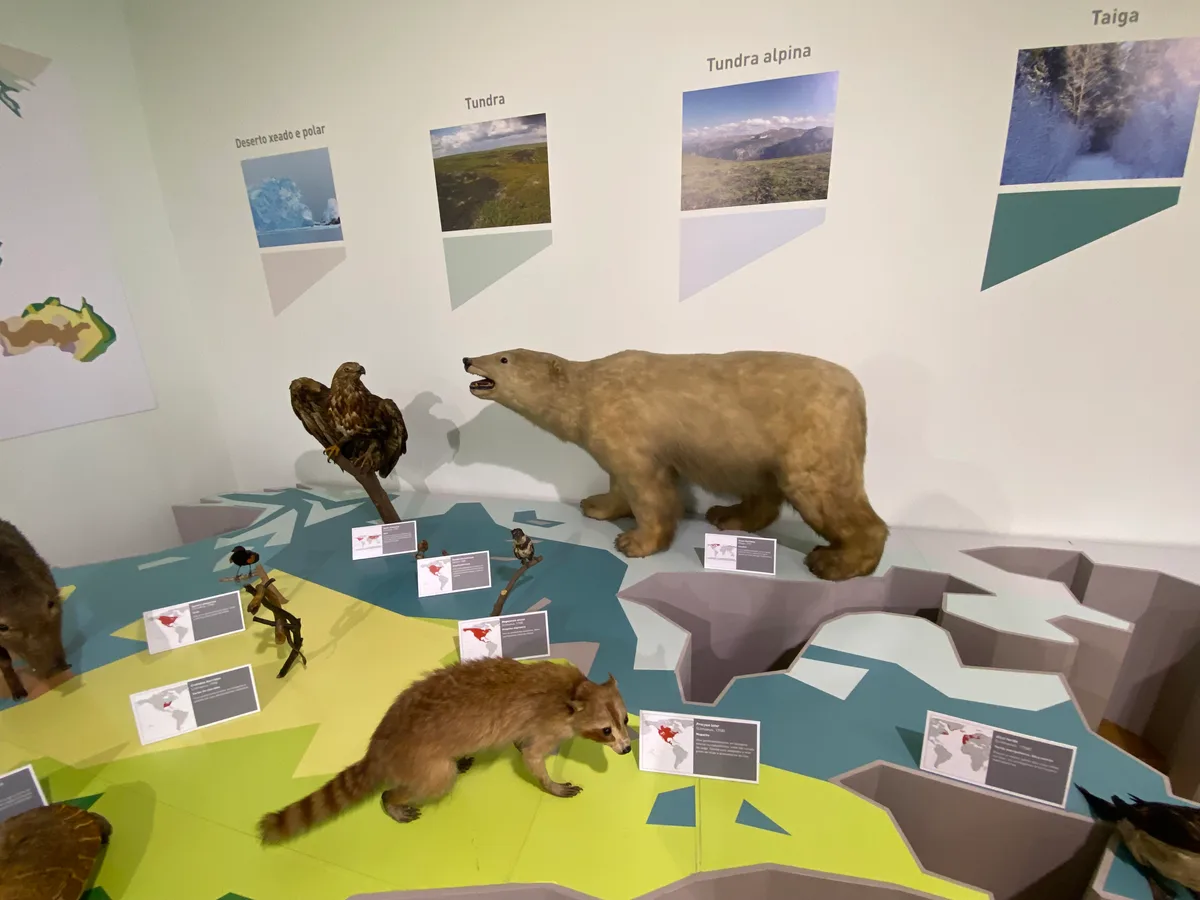
The Museo de Historia Natural-USC belongs to the University of Santiago de Compostela, and it shows. This isn’t a polished national institution with gift-shop branding; it’s a working academic collection of mounted birds, mammals, fish and skeletons, built up over more than a century of teaching zoology students. The specimens range from local Galician wildlife to exotic animals collected on old expeditions, arranged in wood-and-glass cases that feel more curated by scientists than by marketing departments.
That academic feel is part of the appeal. Labels lean informative rather than flashy, and you get the sense the collection was assembled to teach, not to dazzle.
Finding it in Parque Vista Alegre
The museum sits inside Parque Vista Alegre, a green pocket south of the historic center, rather than on any of the pilgrim-trodden streets around the cathedral. From Praza do Obradoiro it’s roughly a 15 to 20 minute walk, mostly downhill on the way there. There’s no metro system in Santiago, so most visitors either walk or take a short taxi ride.
Once inside the park, look for the museum building set among the trees; it reads more like a park pavilion than a grand museum facade, which catches first-time visitors off guard.
Working around the split hours
The opening hours here are unusual and worth planning around. Tuesday through Saturday it runs 10:30am to 2pm, closes for the afternoon break, then reopens 4:30 to 8pm. Sunday it’s mornings only, 11am to 2pm, and Monday it’s shut entirely.
- Tuesday-Saturday: 10:30am-2pm and 4:30-8pm
- Sunday: 11am-2pm
- Monday: closed
If you’re building a Santiago itinerary around cathedral visits and pilgrim routes, slot this in either as a late-morning stop before lunch or an early-evening one after the afternoon reopening. Confirm hours on the university’s site before you go, since academic museums sometimes shift schedules around exam periods or holidays.

Why the reviews run so high
With a rating around 4.6 from over a thousand visitors, this is one of the better-reviewed things to do in Santiago that has nothing to do with the Camino. Part of that comes from scale: it’s compact enough to see properly in 45 minutes to an hour, so nobody leaves footsore or overwhelmed.
Part of it is the kid factor. Mounted animals at eye level, from foxes to birds of prey to marine specimens, tend to hold children’s attention in a way that Romanesque architecture doesn’t. Families traveling with kids on the Camino often use this as a deliberate break from church interiors.
Visiting without the crowds
This museum still counts as under-the-radar in a city dominated by cathedral tourism, and that’s a real advantage if you use it right. Weekday afternoons after the 4:30pm reopening tend to be the calmest window, since day-trippers and tour groups are usually still clustered around the old town at that hour.
Check current admission terms locally, since university-run sites sometimes adjust access for students versus the public. There’s no formal booking system to navigate: you simply walk in during opening hours, which is part of what makes it such an easy add-on to a Vista Alegre park stroll.
Bring a bit of curiosity about Galician wildlife specifically. The regional specimens, foxes, wolves, seabirds, and freshwater fish from Galicia’s rivers, are the sections local naturalists tend to linger over longest, even if the exotic mounts get more photos.
Pairing it with the park
Because the museum sits inside Parque Vista Alegre, it’s worth treating the visit as one stop on a longer walk rather than a standalone errand. The park itself has shaded paths and benches, a pleasant contrast to the stone plazas of the old town.
Combine a morning session (10:30am-2pm) with a picnic lunch in the park, or save it for the evening slot and let the museum bookend a day that started at the cathedral. Either way, budget the walk to and from the old town as part of your time, not just the hour inside.
Frequently asked questions
How do I get to Museo de Historia Natural-USC from the old town?
It's about a 15-20 minute walk south from Praza do Obradoiro into Parque Vista Alegre; there's no metro in Santiago, so walking or a short taxi are the main options.
What are the opening hours?
Tuesday to Saturday it's open 10:30am-2pm and again 4:30-8pm; Sunday it's 11am-2pm only; it's closed all day Monday.
How much time should I plan for the visit?
Most visitors get through the collection comfortably in 45 minutes to an hour, making it easy to pair with a park walk or another nearby stop.
Is it good for kids?
Yes, the mounted animal specimens, from foxes to birds of prey, tend to engage children well, and families often use it as a break from church-heavy Camino itineraries.
Is this a well-known tourist attraction?
Not really; it's a university museum that stays under most tourists' radar, so it's usually far quieter than the cathedral sights, especially on weekday afternoons after the 4:30pm reopening.
Plan your trip to Santiago de Compostela
Spain eSIM & staying connected →
Some links above are affiliate links — if you book through them, Wander Atlas earns a small commission at no extra cost to you. It's how we keep every guide free.
Related guides
 attraction
 Mosteiro de San Martiño Pinario: Santiago de Compostela Travel Guide
 attraction
 Parque de Galeras: Santiago de Compostela Travel Guide
 attraction
 Pórtico da Gloria: Santiago de Compostela Travel Guide
 hidden gem